
THE CREATIVE CURRENCY PROJECT
THE CREATIVE CURRENCY PROJECT
THE CREATIVE CURRENCY PROJECT THE CREATIVE CURRENCY PROJECT
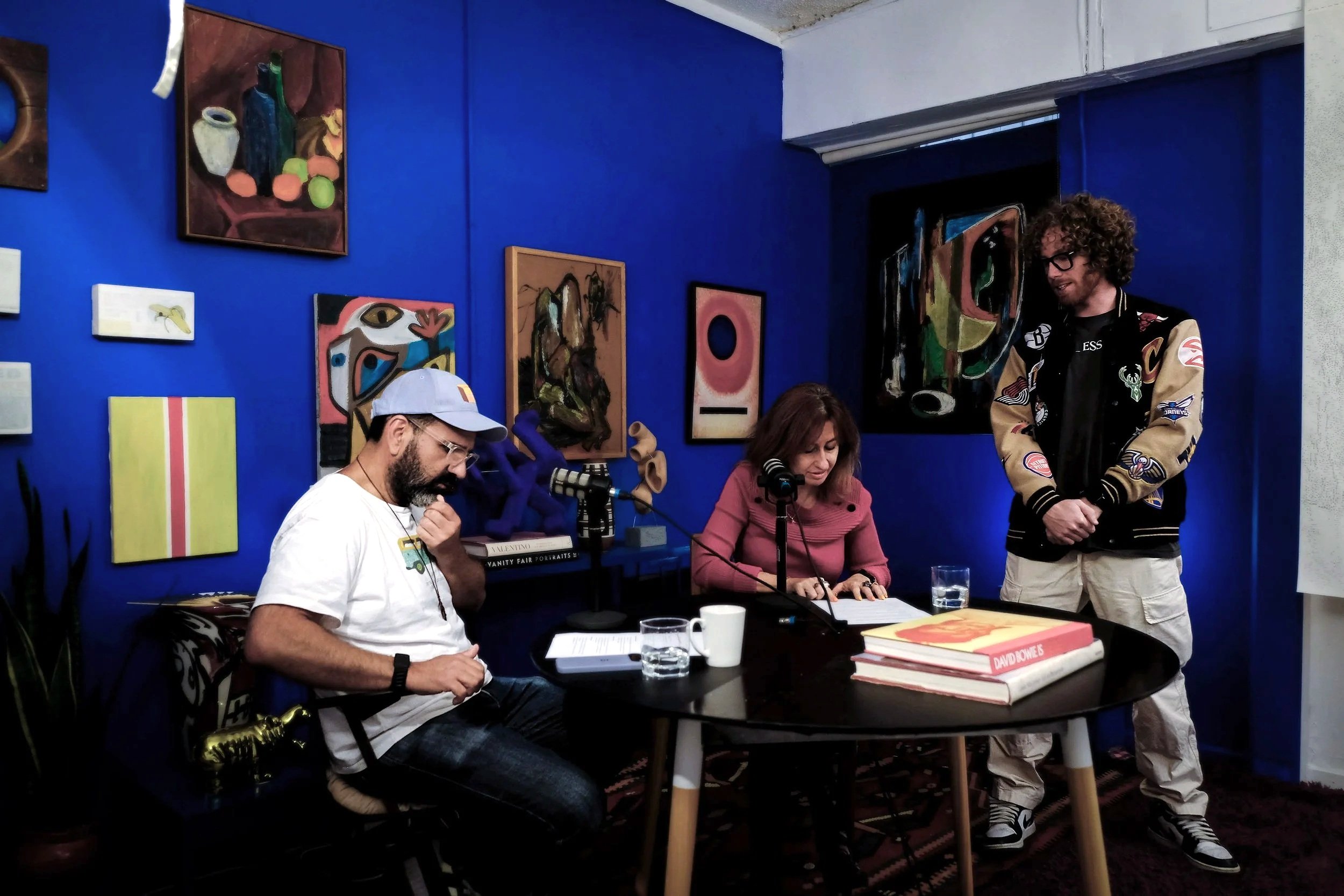
THE CREATIVE CURRENCY INTERVIEW SESSIONS
December 15
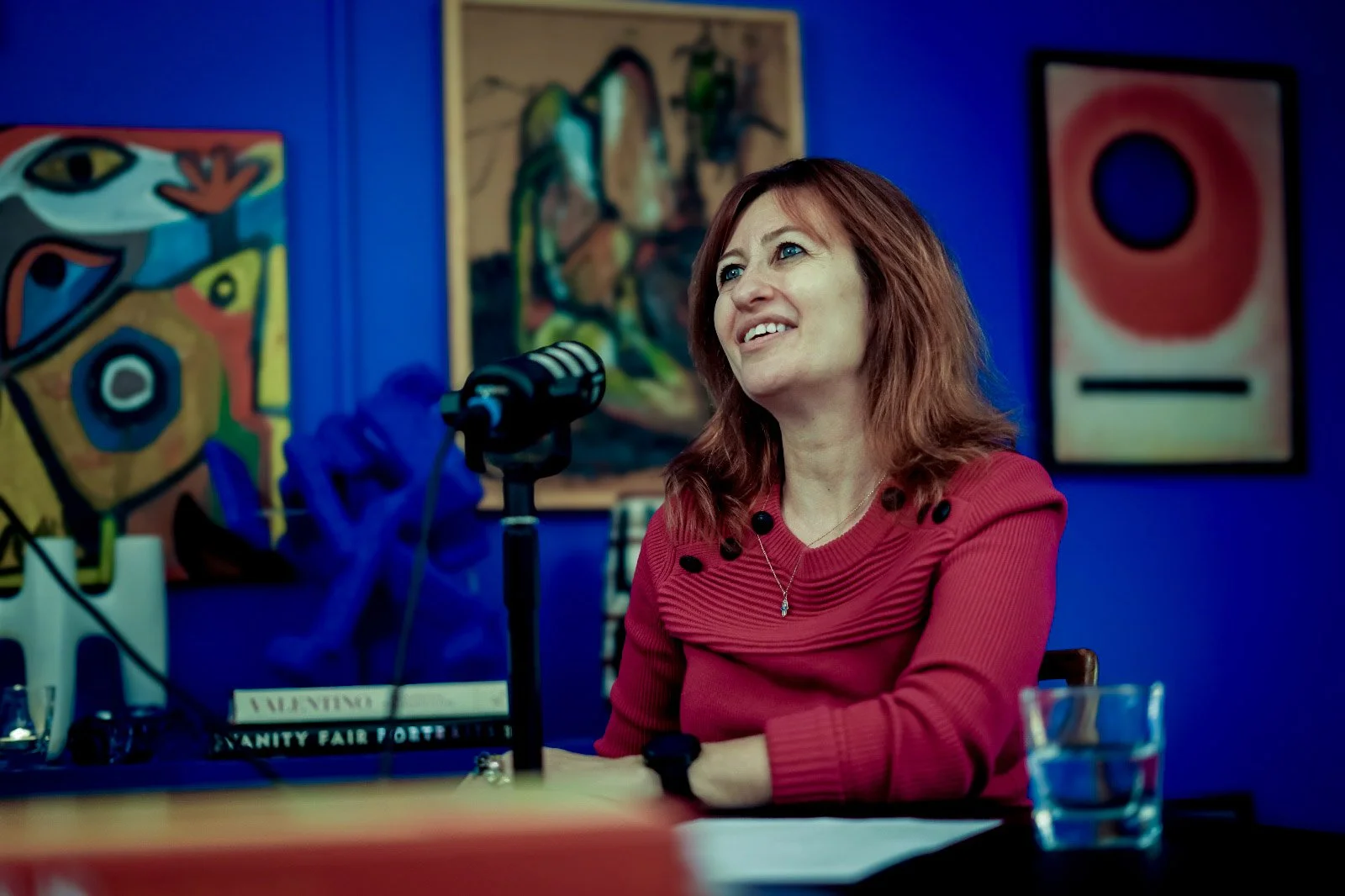
DR. Lee Kofman & Adam Krongold
Recorded on December 15, 2025, approximately 12 hours after the despicable Bondi Beach terrorist attack on a gathering of the local Jewish community, this conversation took place at a moment when the ordinary act of sitting down to talk and reflect had acquired a different kind of significance.
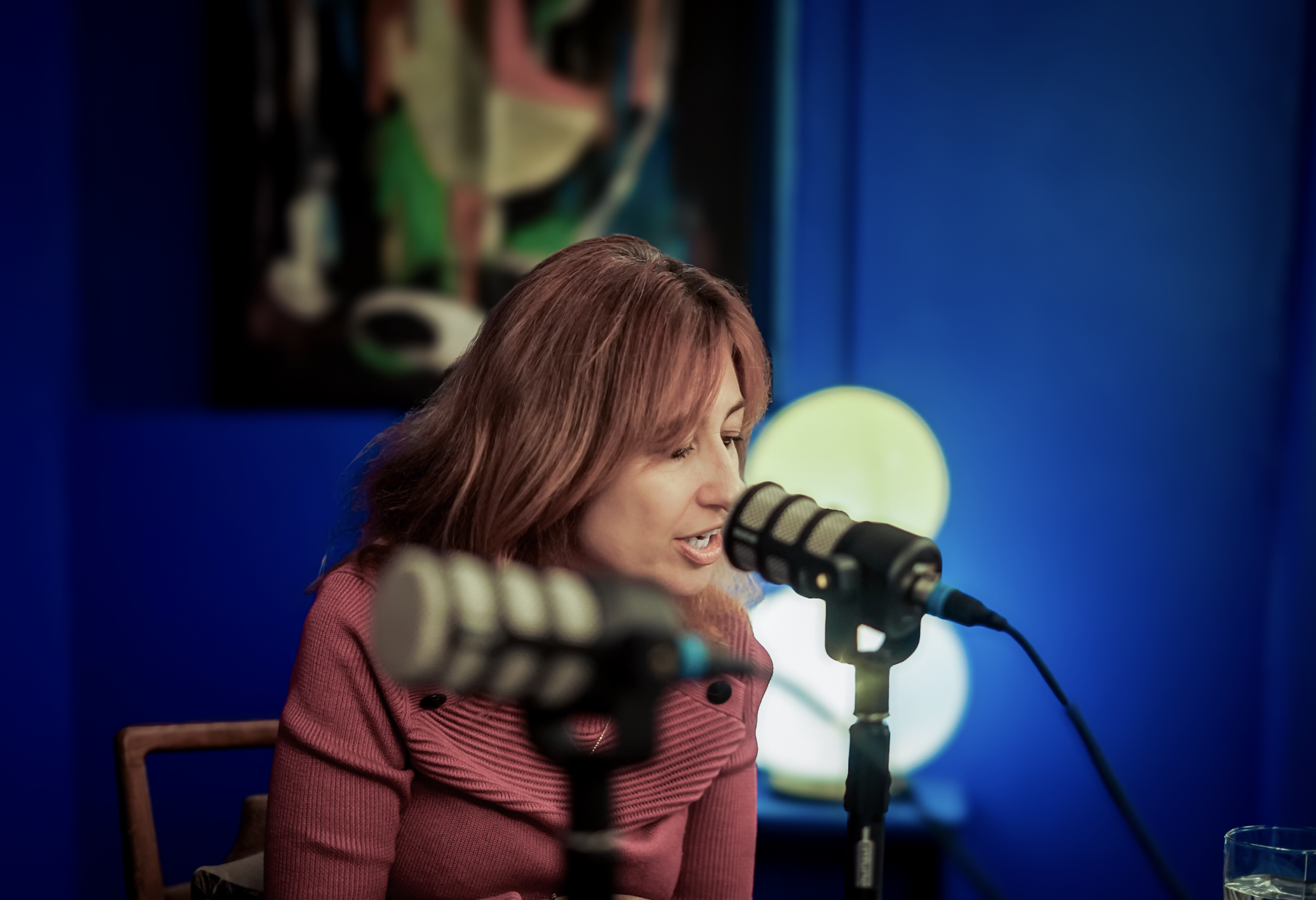
Jewish artists are currently in a situation similar to the underground Samizdat of the Soviet Union. Let us keep creating and get our stories out there to humanise our people.
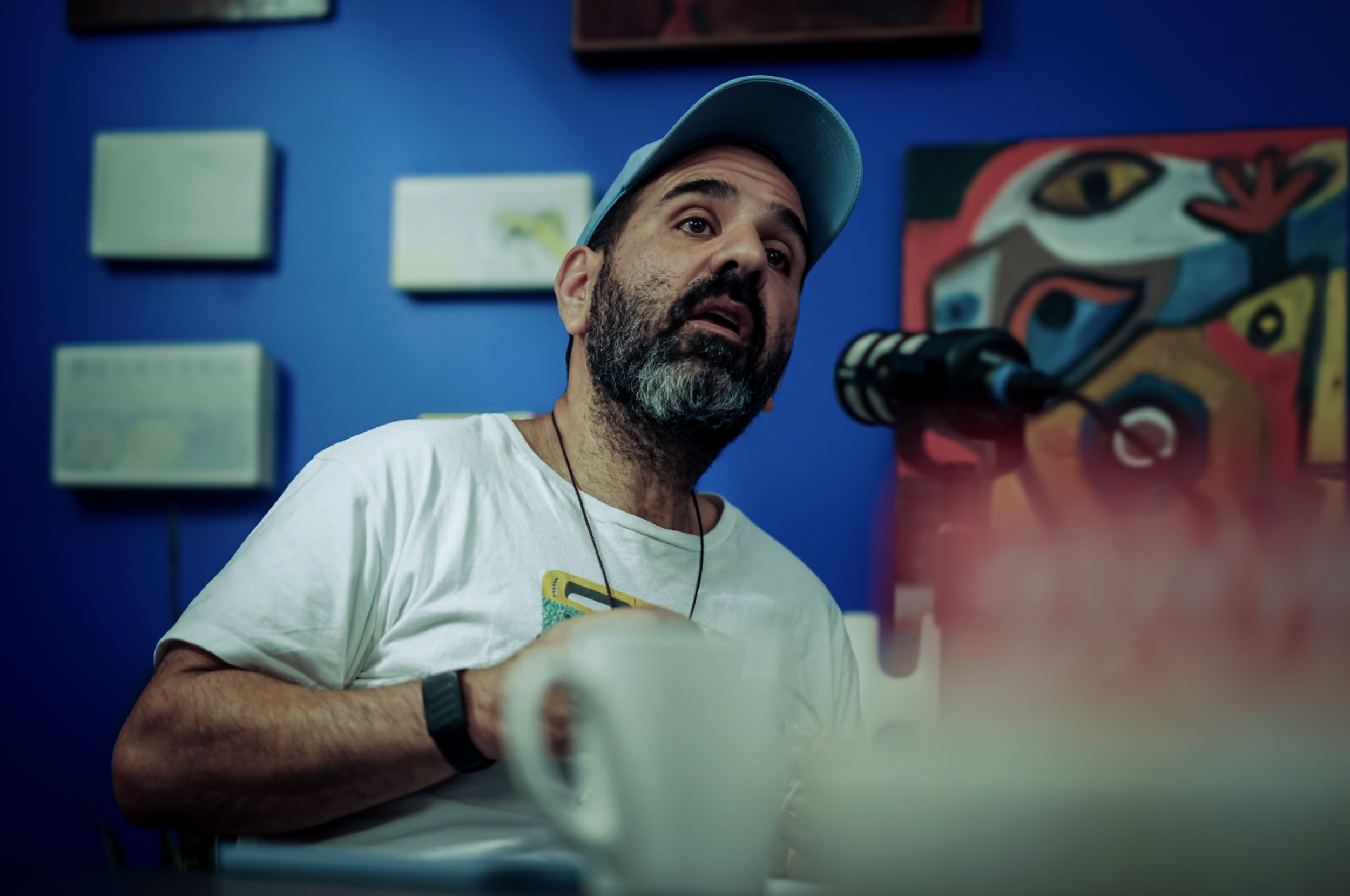
I have followed your work since it was comfortable to be on Twitter. You are a famous author, so interacting with you on social media was unbelievable.
ADAM KRONGOLD
Lee Kofman and Adam Krongold speak about migration, Jewish identity, creativity, adversity and the experiences that become embedded in an artist’s voice.
Lee reflects on a life shaped between Siberia, Israel and Australia - moving between languages, cultures and accents, and the perspective that comes from never belonging entirely to just one place. Adam traces his creative instincts to childhood, remembering the influence of his father’s photography and the early impulse to create, long before he understood where that instinct might lead.
Their conversation moves beyond biography into questions of how artists sustain a creative life, who helps them along the way, and what remains when conventional pathways fall away.
Adam speaks with generosity about mentorship and collaboration: the people who offer guidance, open doors, share knowledge and create the conditions for another artist to develop. Lee offers a more complicated proposition — that artists also have to learn when to question advice, resist expectations and trust the voice they have developed for themselves.
There is humour alongside vulnerability, and an understanding that resilience is not always dramatic. Sometimes it is simply the decision to continue working, observing, creating and telling the truth about what you see.
For Lee, the events of October 7 and their aftermath have sharpened the responsibility of Jewish artists to speak, create and preserve their perspectives at a time when Jewish voices can feel increasingly contested or pressured into silence.
Recorded in the immediate aftermath of the Bondi attack, those reflections carry an additional gravity. The conversation becomes less about creativity as a career and more about creativity as a form of continuity — the human insistence on interpreting experience, preserving memory and telling stories even when the circumstances around us become difficult to comprehend.
Ultimately, this is a conversation about artistic life: the people who shape us, the histories we carry, the voices we inherit and the courage required to contribute our own.
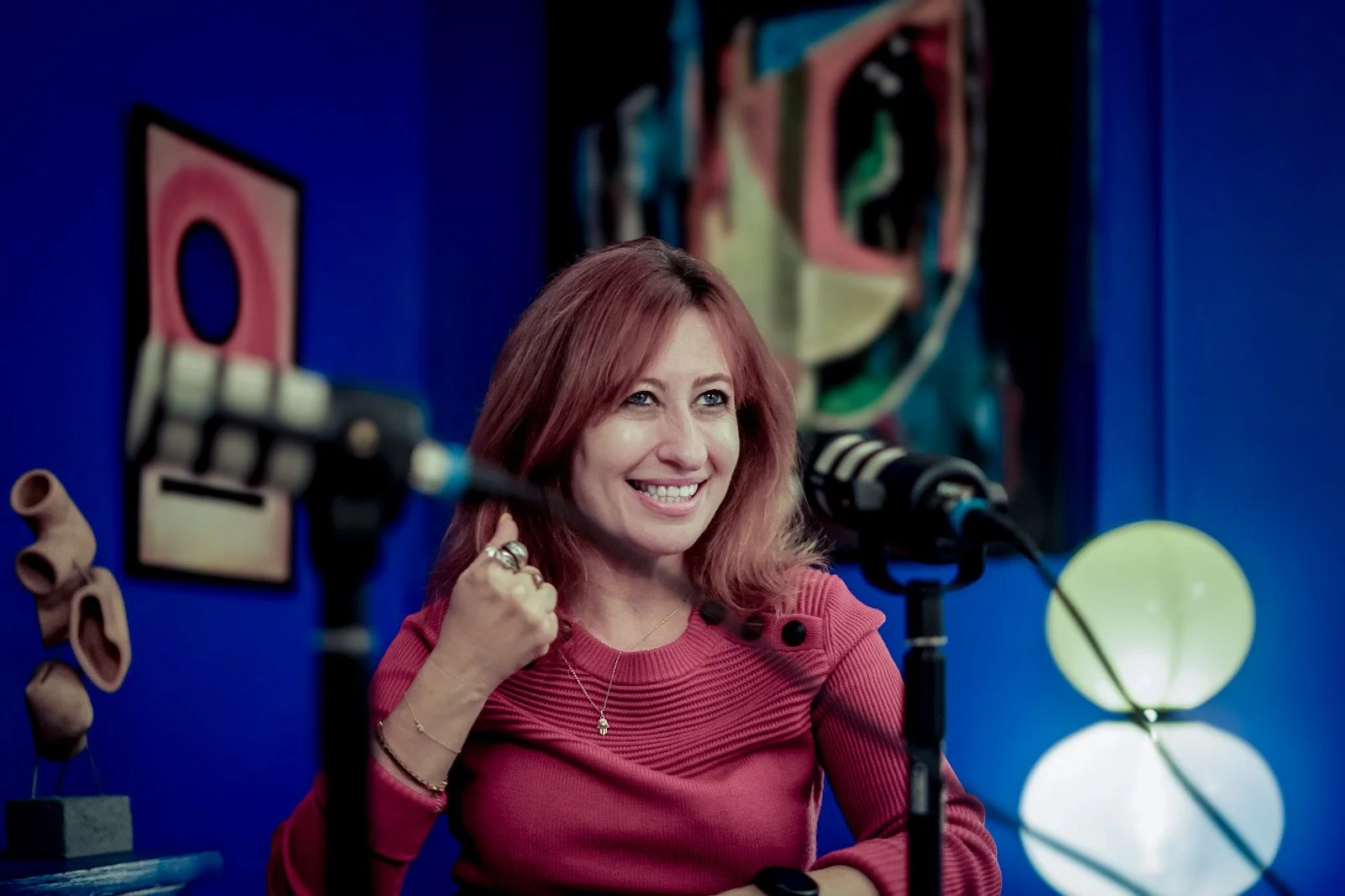
Adam Krongold
The first thing I noticed about you, Lee, is your accent. Where and how did it develop?
Lee Kofman
I laugh because I have been asked this all my life. It is not a straightforward answer. I was born in Siberia, but when I was six my parents moved to Odessa. My father is a Ukrainian Jew and my mother is a Russian Jew. We moved to Israel when I was 12, so I have mixed accents. Russians usually think I am Israeli and Israelis think I am Russian. I am a mixture. Because I came to Australia when I was 26, I never lost the accent, but it became even more unusual.
Adam Krongold
Was there an issue between someone from Odessa and a Russian having a relationship? Did families feel they had to stick with their own groups?
Lee Kofman
I would love to tell you a Romeo and Juliet story, but not really. In the Soviet Union, universities had quotas for Jews. If you were Jewish, you could not easily get accepted, even if you were brilliant. My father had to travel from Odessa to Siberia because they would accept him into a quality degree there. That is how he met my mother. Tell me about yourself, Adam. Did your childhood influence your creative work? I am interested in the nature of your work because I do not know enough about you.
Adam Krongold
My late father was the friend in his group who always took photos. We have many photos and Super 8 footage that I am digitising to show his past. When I was eight, I picked up his camera and directed a friend in a couple of short skits. It was my first film. I acted in and directed it, but got someone else to be the cinematographer. I still have this footage. I re-edited it and added sound. It gives me joy to think I started my creative journey at eight, even though I find it challenging to refer to myself as an artist. I am surrounded by artists like you who have a body of work to back up their occupation. I have things I like making, but I often joke that I am simply the first to market with something from Photoshop.
Lee Kofman
It seems to me that you live your life as if it is an artwork. Perhaps you have perfected the art of creative living.
Adam Krongold
I appreciate that. My life only really started recently. I was born at the age of 24.
Lee Kofman
This is great. Can I steal this line for a short story?
Adam Krongold
You are welcome to it. At 24 I realised I had to make decisions for myself and look after myself. I had lived my life through others advocating for me. I did not have the skills to understand I had to do it for myself. My first experience with this was falling in love without knowing how to take it forward. I had these feelings but needed someone else to tell the person to make it happen. It was juvenile. More recently, an ADHD diagnosis and medication gave me the ability to take control of my life. In the past, I would aim for a direction and end up somewhere totally different. Now I am able to follow a path and move towards the person I want to be. I find that incredible. I have reframed the question from what do you want to be to what sort of person do you want to be. As I walk this path, I am that person, and that gives me strength.
Lee Kofman
I have several friends with ADHD who use medication and are very successful artists. I am glad you found what works for you.
Adam Krongold
So I've reframed that for myself. What sort of person do you want to be when you grow up? So as I'm walking down this path and working on the person I want to be, it doesn't matter what I do, I am that person, and that gives me a lot of strength to be a better person.
Lee Kofman
Can I just say that I've got a few friends with ADHD who, like yourself, take medication now, and they're all artists, and they're very successful. So I'm really glad you found your way, how it works for you.
Adam Krongold
Thank you. I have followed your work since it was comfortable to be on Twitter. I remember messaging you and you replied. You are a famous author, so interacting with you on social media was unbelievable.
Lee Kofman
We have an uncanny commonality because my creative life also started around the age of eight. I think I really became a writer when I was three years old in Siberia. I wrote my first poem about a blue bird flying high. The babushkas in the village loved it. I think I still seek that approval. When I was eight, I was bedridden. I was born with a congenital heart condition. In Russia in the 1970s, it was a death sentence. My parents had to wait eight years before I was fit enough for open-heart surgery. If I were born in the West, I would have been operated on immediately. During those years I was sickly and spent weeks in hospitals. Books were my friends. To escape my situation, I created other worlds with words. Before the surgery, I did not know if I would survive. It became urgent to write as a survival mechanism and to leave something behind.
Adam Krongold
You were actually concerned with your mortality as a child.
Lee Kofman
I knew from the age of four that it was unclear if I would live. Just before the surgery, writing became urgent.
Adam Krongold
What inspired that poem? Older people are encouraged to live each day as if it is their last, but children tend to do that anyway. Has that understanding of mortality stayed with you?
Lee Kofman
My mother is a great storyteller and I likely inherited it from her. She told me stories about movies, books and her own childhood. I was breastfed on storytelling. Regarding mortality, my artistic sensibility is always tragicomic. That is how I see life, as a tragedy and a comedy at once.
Adam Krongold
Like Shakespeare, where as soon as things get good, you know they will come down.
Lee Kofman
More like Woody Allen. How important is humour in your creative life?
Adam Krongold
Humour is everything. It comes out as a way to soften things. I remember at my late grandfather's funeral, a relative's kippah blew off and landed on a grave. I made a flippant comment that made someone laugh. To be expressive in a way that brings meaning to the moment is very important.
Lee Kofman
I struggle with this. Since social media, we have become hyper-self-conscious and worried about misinterpretation. As a culture, we now demand constant respect for everything, which interferes with a sense of humour. It makes us careful and boring. I feel like I am writing against the zeitgeist. Social media is destroying our sense of humour, which is inherent in all creative expression.
Adam Krongold
The zeitgeist is almost written in a communist fashion. It is a blanket for everyone. Everyone is expected to think, clap and laugh in unison. There are no ups and downs that make comedy and tragedy.
Lee Kofman
It is even politically incorrect to say that talent matters. Students ask if anyone can write a good story. The supposedly correct answer is yes, if you work hard. I always say only if you have the talent. If you put two talented writers together, the hard-working one will do better.
Adam Krongold
If you put me against you, you would come out on top. You are amazing.
Lee Kofman
Initially, the internet was amazing for subcultures. When I was writing my first book in English, which was creative non-fiction, I wrote about non-monogamous relationships. In the early 2000s, this was a huge taboo, but I could research and find communities online. Now, the internet is about tribalism and bonding around the same opinions.
Adam Krongold
People are not sharing new ideas.
Lee Kofman
How do you remain creative in a world where a sense of humour and standing out are becoming problematic? What inspires you?
Adam Krongold
I am inspired by the people around me. Our community has incredible individuals who live lives of active service. My creative interests are varied. I went to drama school and realised I was a terrible actor, but discovered there is a market for bad actors.
Lee Kofman
I love how modest you are.
Adam Krongold
I find my space in helping others create and elevating them. A festival director once told me that the process of jumping through hoops for grants takes artists away from their art. He suggested there are too many artists now. In the past, a patron would seek out the best practitioners and nurture them. Now, people go to art school, but that does not necessarily make them good at it. Talent will rise to the top, but it is challenging when you cannot get a job in your field. It is about expectations.
Lee Kofman
One of the best things about being creative is being in a flow of inspiration. Reading is my biggest source. I look for writers with bold voices who are not echoing received wisdom. I never read the latest releases everyone is talking about. My current literary crush is Karl Ove Knausgaard. He does not care what anyone thinks. He analyses life with great nuance and courage.
Adam Krongold
Expectations of inspiration?
Lee Kofman
I don't know. Can I talk about inspiration? Because that's something that really excites me. I just think that one of the best things about being creative, and it sounds cliche but it's so true, the best is when you manage to be in this sort of flow of feeling inspired and wanting to create. I find one of my biggest sources of inspiration is reading. I started reading when I was four, and I always read many books at the same time. But these days, I selectively look for writers with really bold voices, those who are real individuals, those who are not echoing received wisdoms but get into trouble, and reading them makes me feel better about the world. So I never read, like many people around me do, the latest releases that everybody is talking about. This kind of reading doesn't interest me. One of my greatest contemporary Literary crushes is Karl Ove Knausgaard, a Norwegian writer who wrote six very thick books that you just breeze through. He is an extraordinary writer, and he really doesn't give, excuse me for saying this on the podcast, a shit about what anybody thinks about him when he writes. He analyzes both history and contemporary life with great nuance, courage and boldness.
Adam Krongold
Is there a specific truth he articulated that resonated with you?
Lee Kofman
He pushes the boundaries between fiction and creative non-fiction, memoir and essay. He writes about mundane tasks like shopping for broccoli but then transitions into an essay about Dostoevsky. He does this with confidence and does not try to please the reader. He is an explorer of the human psyche. He shows what it is like to be a human being, warts and all.
Adam Krongold
What would you be doing if you were not a writer?
Lee Kofman
So he really sort of took on this role of, you know, being a kind of an adventurer, an explorer of the interiority of human psyche. And look, people around him suffer. I mean, his ex wife was hospitalized after a mental breakdown, and he was even sued by someone. But then he really shows you what it’s like to be a human being, with warts and all. Look, I wouldn't want to be related to him, but I love his books, because he's the real deal.
Adam Krongold
What happens? He writes his first thing, his first story, and he goes to someone and shows them, and I go, this is awful. The end. So was it? I mean, I like the whole creative process where you mentioned that when you were four, you wrote a poem, and the babushkas loved it, and that encouraged you to go on and become an author. But had they not love that what would like, is there another side you'd be doing? Is there something else that where you would find yourself
Lee Kofman
I tried other art forms. I was a bad painter and I am tone-deaf, so I cannot sing. But I love cooking. It is self-expression for me. I hate cooking for my kids because it is boring, but I love cooking for adults. If I were not a writer, I would probably open a restaurant.
Adam Krongold
What is your signature dish?
Lee Kofman
I get bored cooking the same thing. I go through cookbooks methodically and make whatever the next dish is. You have been modest about your creativity, but you stand out in the community for how you nurture artists. Tell me about your investment in others' art.
Adam Krongold
know, just putting it out there. I just don't like balsamic vinegar, anything else. Thank you.
Lee Kofman
You’re coming for Shabbat dinner? Yeah, amazing. I haven't been doing shabbat dinners, but for you I will. So far, you’ve been very modest when it cames to your own creativity, but you're really also, apart from being an artist yourself, you're really standing out in the Jewish community and beyond in terms of how much you've nurtured our artists and art spaces. I really would love you to talk a bit about your investment into other people's art, and whether you find it creative to nurture other artists.
Adam Krongold
Last year I was in Israel for the first time since October 7. I woke up with an epiphany followed by a panic attack. For thousands of years, Jewish people have been on the run, carrying only their stories and songs. Our values and history are passed through these words, but now they are being rewritten and thrown back at us. If we do not act, future generations will hate themselves because of an incorrect narrative. I realised I must push back so Jewish creatives can have a stage. This is not the case now. I have been involved with the Jewish Museum for 15 years and the Kadimah Centre for Jewish Culture from the beginning. My heart is in the not-for-profit Jewish art space. I am ridiculously positive. I find lessons in everything. After the recent violence in Sydney, I am still processing, but I find resilience in moving forward. Being in a creative space has allowed me to find my own journey.
Lee Kofman
Talking to you about creativity is a lifeline. In our tradition, we rejoice in the face of hardship. This conversation is my way of saying we are here and we will keep going.
Adam Krongold
In happy times you remember the sad times and in sad times you remember the happy times. Feelings like anger only stop you from doing the work that is needed.
Lee Kofman
Do you think Jewish artists have a particular duty for the next generations?
Adam Krongold
Most people think creativity is a luxury, but for indigenous people, as Jews are, it is the base. Before food and shelter, there is creativity and story. It is the bulwark of civilisation. Without it, we lack the framework of how to pass things on.
Lee Kofman
I used to believe you could only write something good if it came from personal urgency. After October 7, I could not write for months. I saw hyper-educated writers jumping on bandwagons and talking in uninformed ways. I wondered what the point was if people who write for a living try to be crowdpleasers. But then I realised I do not have the luxury not to write. There are not many Jews in the world. We must speak. I was always accepted by progressives because I never said anything controversial. Now, since so many Jewish writers have been cancelled, I feel I have nothing to lose. I write whatever I want and it has been creatively liberating.
Adam Krongold
When your world is small, it affords you freedom. I imagine you feel alive writing things you might not have done in the past. Speaking authentically and connecting with people provides validation. I feel the family of Jewishness within that and it gives me strength.
Lee Kofman
I am working on a story about growing up with parents who were religious Jewish dissidents in the Soviet Union. I always rebelled against them. Then October 7 happened. I founded a WhatsApp group for Jewish creatives and we were doxxed. I was abused online. Some organisations would no longer employ me. I visited Nina Sanadze's gallery for cancelled artists and realised I am like my parents. Every Jewish artist who does not deny our indigeneity to Israel is a dissident. This gave me the structure to write my book.
Adam Krongold
I find myself saying things my late father would say. I tried to run away to cast my own shadow, but I find I am repeating his actions. Perhaps it is genetic memory.
Lee Kofman
Did you have mentors who creatively nurtured you?
Adam Krongold
I like mentoring people now because I did not really have that. I did not have the wherewithal to ask for it. I was too shy for youth groups. However, everything in my past worked out for me to be here now. If anyone asks for a chat, I love to meet with them.
Lee Kofman
Do you mentor people who are excited about the same things you are?
Adam Krongold
I find ways to spend time with people who have the energy I want. I am always learning. The capacity to learn from someone younger is significant because they speak a different language. In the exchange of stories, I get great joy and learn from those around me.
Lee Kofman
So maybe your mentoring relationships, they're almost like…
Adam Krongold
like always learning. I'm always learning. And you just the capacity to learn from someone younger than you is so much there, because younger people speak a different language, and people in different industries and with different skills speak a different language. As an author, you have words around the craft that I don't know what even they mean. You might say something. What does that mean? And it's a new way of looking at something, a new way of understanding something. So in the backwards and forwards, where someone says they're going through something, and I will then try and find a story that's similar and tell them the story good, bad or ugly or otherwise, without telling the person what directly to do, because that's on the person. I get great joy from that, and I find I'm learning so much from the people around me.
Lee Kofman
Has the challenge of growing up with ADHD fed into your creativity?
Adam Krongold
I liked my own company as a child. While friends were sporty, I played with Lego and watched science fiction. I preferred being around one person rather than groups. I have close friends from kindergarten, but I also pick up new groups through different careers. It is difficult to define what I do because it is not neat. I traveled by myself until recently, but I have a beautiful girlfriend now and love traveling with her.
Lee Kofman
What about artistic collaboration?
Adam Krongold
I recently discovered artistic collaboration. My model is the Beastie Boys, three unique individuals creating something incredible. In my collaboration, we writing a project based on Isaac Babel's Odessa stories. We often spend two hours talking about our families before doing any writing. Story is the basis for everything creative.
Lee Kofman
I am a huge fan of Isaac Babel. Benny Krik was the hero of my childhood. He is the archetype of a physically strong Jew.
Adam Krongold
Yes, Simon came to me with a story idea, and we started and I love story and everything, for me, the basis for anything are creative, the very, very bottom is story. Doesn't matter if it's cooking or writing or dancing or doing shadow figures on the wall. Story is the very bottom. So for me, the strong story makes everything, and a weak story doesn't matter how good book cover is or how good the food is, whatever. So I loving the process. It is a story. Actually. It's from Isaac Babel, loosely based on Benny Krik.
Lee Kofman
Actually at the moment I'm reading this Odessa cycle of short stories, yeah. I'm a huge fan of Isaac Babel. I grew up on his stories,
Adam Krongold
Wow, because I've heard the name, but I'm actually very new to him. So this is, this is one of this is loosely based.
Lee Kofman
Benny Krik was the hero of my childhood. Just to fill in for people who don't know Benny Krik character - he is actually based on a real person, a real gangster who lived in Odessa, where I'm from. So Benny is the archetype of a sort of a naughty and physically strong Jew.
Adam Krongold
To be strong as a Jew was not a common narrative. Having someone who pushed back against the system is powerful.
Lee Kofman
In Russia, they called the real life gangster Mishka Yaponchik, which in Russian means Japanese, Mishka the Japanese.. Why do they call him the Japanese? I can't remember the story. I think something about his looks, maybe.
Adam Krongold
But yes, to be strong as a Jew was not a thing because the Jew was hunched over praying, not doing anything exactly, and it was Yeah. So having someone who had physical strength, who pushed back against the system, yes, who pushed back against evils of the system that wanted to keep him down.
Lee Kofman
I write side by side with friends sometimes. Would you feel comfortable talking about a project and asking for feedback?
Adam Krongold
I've seen pictures of you with Noe, doing writing. Amazing.
Lee Kofman
She's one of the friends I write side by side sometimes.
Adam Krongold
Would you feel comfortable sitting with someone you trusted, talking about a project you're currently working on, and asking what they think about it?
Lee Kofman
I used to, but it was counterproductive. If I talk out an idea, I get bored with it. The mystery disappears. I have to maintain the tension of not knowing what I am doing in the first draft. I once talked a novel to death by discussing it in grant applications and public talks. I lost all motivation to write it.
Adam Krongold
You get the dopamine before you have done the work. Do you ever hear something from friends that is perfect for what you are writing?
Lee Kofman
All the time. I write from life, so I make notes if someone says something interesting.
Adam Krongold
There are people who want to be in your book and those who know what you write and definitely do not.
Lee Kofman
That is true. When I wrote about non-monogamous relationships, I was worried about my ex-husband and parents reading it. When it came out, I received an angry email from a woman who shared a pseudonym with a minor character. She was upset that people might associate her with the woman in the book who owned a crazy cat. It was very funny.
Adam Krongold
You mentioned failed relationships. I once attended a workshop where someone said a good relationship is not a period of time, it is simply a good relationship. You can have a three-minute relationship on a train that inspires you. If the work I do elevates others, then it inspires my work.
Lee Kofman
Well, clearly she didn't. She was very upset that people may associate her the woman who owns this crazy cat that I was looking after while housesitting…
Adam Krongold
You've inspired me. You mentioned, you said, the term failed relationship many years ago, in my single Doom, I went to a workshop on how to find love, and there was someone at the front teaching, and it was a bit whatever, but one of the students come to me. one of the things one of the students said and basically turned everything on its head. And something I quote now, a good relationship isn't a period of time. A good relationship is a good relationship. So you're on a bus and you sit with someone, and I mean, I've fallen in love on the train in Melbourne. I've fallen in love on the bus in Israel. That's beautiful. And I remember looking across the way on the Girl on the Train here, and just feeling giddy. And at the end we got off the same stop, I said I was looking at you, and we sort of had a giggle, and we walked away. And I don't remember what she looks like, but I remember the feeling. So this was an amazing relationship, three four minutes. Would it inspire your work? It probably inspires my life. You know, the work that I do. So if the work that I do is, you know, elevating people or activating people or assisting others, then yes, it inspires my work.
Lee Kofman
If you could meet your 22-year-old self, what advice would you give regarding your creative life?
Adam Krongold
I would tell myself to find a mentor. I used to think I was an open book, but I knew nothing about myself. What about you?
Lee Kofman
I would say to sit down and write. For many years, I prioritised writing low on the list. I had different careers and degrees.
Adam Krongold
You had to live in order to have fodder for the story.
Lee Kofman
I agree. I would tell my younger self to be prepared to fail and write consistently. Rilke said a poet becomes a seer by imbibing the poisons of the world. I did all those things, but I sometimes forgot the part about writing.
Adam Krongold
The artist's job is to create the art. It is not up to you to say why someone needs to like it. People focus on the one person who hates it rather than the 99% who love it.
Lee Kofman
I relate to that. Any final advice for young Jewish artists?
Adam Krongold
I believe we are in a Jewish Renaissance. There has never been a better time to find your voice and create without expectation.
Lee Kofman
I agree. We are experiencing institutional repression, but that has given a boost to our creativity. Jewish artists are currently in a situation similar to the underground Samizdat of the Soviet Union. Let us keep creating and get our stories out there to humanise our people.
Adam Krongold
Just do it.
Lee Kofman
Now is the time to capture what it is like to be Jewish in today's world.
THE CREATIVE CURRENCY PROJECT
Lee Kofman
If you could meet your 22-year-old self, what advice would you give regarding your creative life?
Adam Krongold
I would tell myself to find a mentor. I used to think I was an open book, but I knew nothing about myself. What about you?
I would say to sit down and write. For many years, I prioritised writing low on the list. I had different careers and degrees.