1 AUGUST 2026
TRIPLE AXEL formally committed to rejecting AI today.
A Reflection on Art, AI and Roman Polanski’s Warning
By Belle Stewart
Let's face it: artificial intelligence is struggling to live up to expectation. Two years ago we witnessed a mass-panic in the maelstrom of pre-launch hype, at least for Australian creatives.
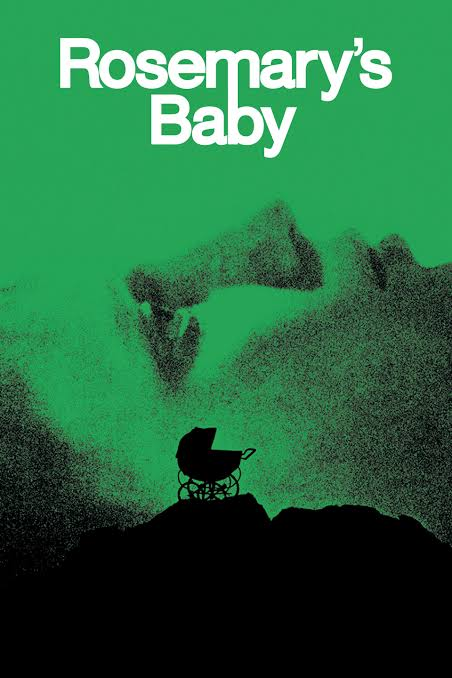
Like Roman Polanski's 1968 horror Rosemary's Baby, tension builds through the second and third trimesters, with the escalation reaching its natural conclusion without any monster reveal, Socratic epiphany or Shakespearean paradox.
Polanski builds dread and doom not through spectacle, but through isolation, loneliness and gaslighting. The lead-up to the birth proves far more terrifying than the reality of Satan's child being breastfed by a young, sleep-deprived mother. By placing The Evil in a mundane, middle-class living room, Polanski creates a terrifying reality where politeness is used as a weapon and survival requires submission.
The child is born. It's business as usual. Mother nurturing child. Life goes on.
Embracing new technology hit a nerve for many artists I know. But two years into common usage, much like delivering Satan's baby, the entire spectacle is turning out to be an anti-climax. The apocalyptic dread that AI would devour human artistry has given way to a prosaic reality: the monster unveiled is merely a glorified pattern-recognition machine churning out statistical averages. When output is stripped of human intent, the threat of synthetic culture dissolves into banal routine.
Two years into life with AI, how’s everyone doing?
Let's be honest. We all know someone who relies heavily on AI to the point of co-dependence. It is a new romance, and I respect their carefully worded prompts and the commercial benefits they are enjoying. But for so many of us artists, writers, and filmmakers, particularly in the Gen X demographic, AI feels less like a revolution and more like an irritation. Like a time-wasting, sycophantic, people-pleasing narcissist that mirrors back exactly what its algorithmic mind-set wants to see.
I recently imagined AI as a bright, new student named Ally in an art class where I am the teacher. Ally is eager to please, punctual, diligent and organised. She never misses a deadline. Every assignment is submitted on time, and every brief is followed precisely.
Yet Ally fails my class.
Why did Ally fail? Not because she lacks discipline, but because she lacks heart. Her paintings might be technically competent. She can imitate, and her work might even impress at first glance. But her paintings reek of soullessness: no sign of lived experience, no hint of vulnerability, no risk, no nuance, no contradiction, and no life force.
It is so difficult to define art in words. But art to me is the hardship of a life captured in something unexpected: the whispering of an ancestor through a breeze across old plane trees, an oil portrait ruined by an accidental paint spill, or a quiet meditation on being alive.
This stance is not about fearing technology. Technology has been slowly accepted as a comfortable companion for artists - from early photography replacing portrait painters to digital tools transforming a graphic design project; new mediums have disrupted creative livelihoods. But tools, even disruptive ones, still demand human hands, human eyes and human intent at the helm. Generative AI feels fundamentally different because it is being deployed to automate the very act of creation rather than simply support it.
And that is where we must draw the line.
It is a refusal to let the heartbeat of our schools, creative industries, and civic institutions be replaced by the cold flicker of an algorithm.
Content creation can sometimes feel transactional or collateral. But creating visual stories, just like making art, is the mirror in which a community and its culture recognise themselves. It celebrates milestones and human achievements. It brings people together. Isn't that what it is all about?
The stories a community tells about itself shape its values, preserve its memory, and reveal what it believes is worth protecting. When we exchange human reflection for algorithmic prediction, we risk losing more than just a creative service: we weaken the relationships, conversations, and shared experiences that make culture possible in the first place.
I believe creativity is a sacred gift. Not in a religious way (although there is that), but sacred like a quiet, complex sibling whom you won't really understand until you're both octogenarians. Or a close friend you took for granted until they moved overseas.
Creativity is sacred like that. It deserves curiosity, craftsmanship, disagreement, and failure. Above all, it deserves people.
That's why every film, photograph, music score, and programme we build at Triple Axel will remain 100% human-crafted.
Machine-made shortcuts may ease the suffering in the lead-up to the birth. But to me, handing over the process of creating art to a machine is an oxymoron. Machine-made art is not art at all; it is a baby that will remain perpetually soulless.
Herein lies the banality of evil, much like portrayal of a gaslighting husband and cult-leaders disguised as friendly neighbours - collectively presented as a caring family unit in the final scene. This scene delivers no grand monster reveal: just everyday conformity.
Perhaps by accepting culture in fear, we step into that warm living room and walk towards the cradle. Through Polanski’s 1968 film, we are presented with an opportunity to heed a warning: that the ultimate terror is the quiet weight of conformity.