
Bridging the Literacy Gap:
A New Phase in Australian Education
Educators are currently managing challenging behavioural shifts from standard schoolyard friction to complex, ideologically driven conflict and division.
Language of Flowers™
Strengthening Social Cohesion and Digital Literacy in 2026
Australia’s education system has entered a critical intervention phase. The National Taskforce to Combat Antisemitism has identified an urgent requirement for structured, school-based programming that moves beyond passive awareness toward active civic development.
Language of Flowers™ is designed to meet this moment. Developed over eighteen months, our multidisciplinary workshop programme replaces traditional instruction with immersive, creativity-building pedagogy. By employing design thinking to enhance learning outcomes, we empower students to recognise, name, and counter antisemitic and divisive propaganda in real time.
Pedagogical Evolution
The curriculum is an evolution of The Beauty Myth: Decoding Social Media Propaganda—a framework developed and delivered by educator and photographer Belle Stewart at RMIT University (2017–2019), LCI Melbourne (2020), and Byron Community College (2026).
While the original framework used photography and marketing analysis to help students decode clever beauty industry marketing, Language of Flowers™ adapts this proven methodology to decode sophisticated political marketing and digital propaganda.
In collaboration with a multidisciplinary cohort of leading Jewish educators, artists, and community leaders - including Eva Migdal, Lee Kofman, Nina Sanadze, and Glen Eira Mayor Simone Zmood - we have developed a pilot to equip students and educators with a framework for ‘Peaceful Agency’ and the critical interrogation of digital media.
Restoring Expert Voices: The systemic silencing of Jewish voices in Australia's arts sector since October 2023 has removed from our institutions the very experts best placed to address rising antisemitism. Language of Flowers™ positions Jewish arts and media professionals in key facilitation roles—not as subjects of debate, but as leaders of pedagogy.
Social Cohesion Objectives
The objective of Language of Flowers™ is to fortify social cohesion by pivoting student engagement from emotional conflict toward logical discernment. In an era of digital fragmentation, our pedagogy provides a practical framework for maintaining a functional, pluralistic society:
Neutralising Polarisation: Equipping students to resist binary "us-vs-them" narratives driven by social media algorithms.
Identifying Dehumanisation: Providing the literacy required to recognise how propaganda uses selective framing to strip individuals of their humanity.
Bridging History and the Present: Providing the transition currently missing from the student experience following a visit to the Melbourne Holocaust Museum. We move beyond lecturing on historical facts to providing the tools to apply that history to the digital present.
Evidence Base: The Urgency of Action
Recent POLIS analysis indicates that hostility is increasingly driven by social media algorithms.
With 93.8% of religious Jewish respondents and 81.0% of secular Jewish respondents reporting experiences of racism, the need for student scaffolding is urgent. Failure to provide students with the skills to decode online misinformation leaves school cultures vulnerable to digital propaganda that frequently bypasses standard anti-bullying policies.
The systemic silencing of Jewish voices in Australia's arts sector since October 2023 has removed from our institutions the very people best placed to address rising antisemitism.
Strategic alignment
National Plan to Combat Antisemitism and the federal Gonski-led Education Taskforce
Victorian Social Cohesion Values Commitment and Anti-Hate Taskforce
Melbourne Holocaust Museum 'safely in, safely out' educational philosophy
Victorian School Saving Bonus eligibility
VIT annual professional learning compliance — 20 hours inclusive education
Evidence base for submission to the Royal Commission into Antisemitism and Social Cohesion
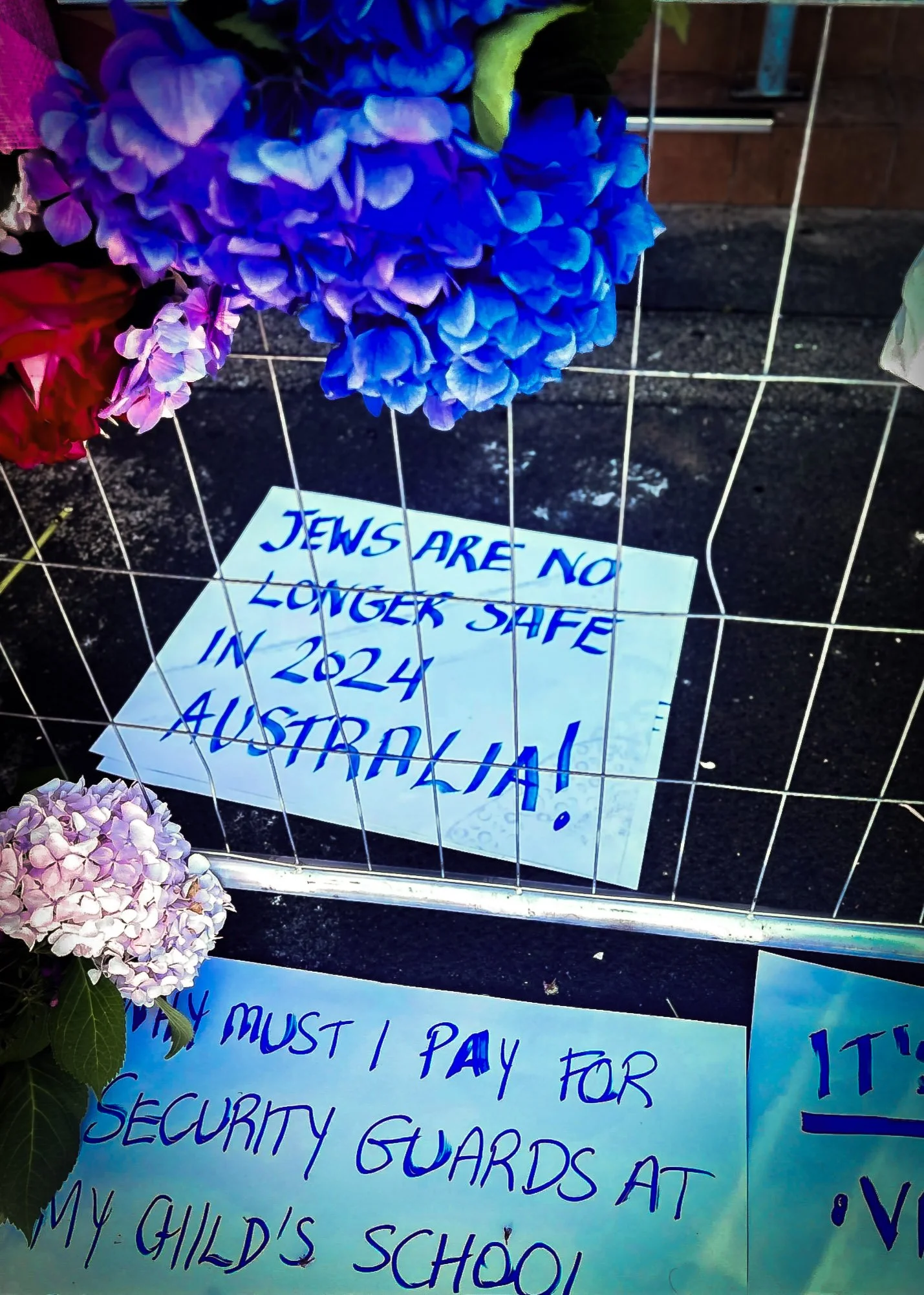
Photos: Belle Stewart
Power of Design Thinking
Design thinking enhances learning outcomes by fostering empathy, creativity, and critical thinking through an iterative process of understanding user needs. This methodology shifts education from teacher-led instruction to learner-centred co-creation, improving engagement, problem-solving skills, and real-world application.
Students move from being passive consumers of content to active architects of a respectful school culture.
Problem: Divergent Media Ecosystems
Young people and their parents are navigating entirely different media landscapes, often without a shared vocabulary to interrogate what they consume.
Neither generation is currently provided with a robust critical framework to decode these influences. Language of Flowers™ addresses both pipelines; our methodology applies equally to a cropped social media reel and a selectively framed evening news bulletin.
Education Leadership Failure
Failures in education leadership are many, but prominent cases such as Brighton Secondary College serve as the definitive benchmark for this programme, proving that:
Systemic Negligence: The State of Victoria was found vicariously liable for its principal’s failure to adequately respond to antisemitic bullying, establishing that not knowing is not a valid legal or pedagogical defence.
Structural Insufficiency: Standard wellbeing protocols and generic anti-bullying policies are structurally inadequate for addressing the unique, ideological nature of antisemitic hostility.
Legal and Financial Exposure: Schools remain legally vulnerable when they lack specific antisemitism pedagogy and the expertise to identify dog whistles and coded propaganda.
Pedagogical Necessity: A critical need to implement design thinking tools that empower leadership to move from doxa (eg. normalising a swastika on a desk) to epistēmē (understanding and dismantling the systemic harm it represents).
Photography, Propaganda and the Beautiful Lie
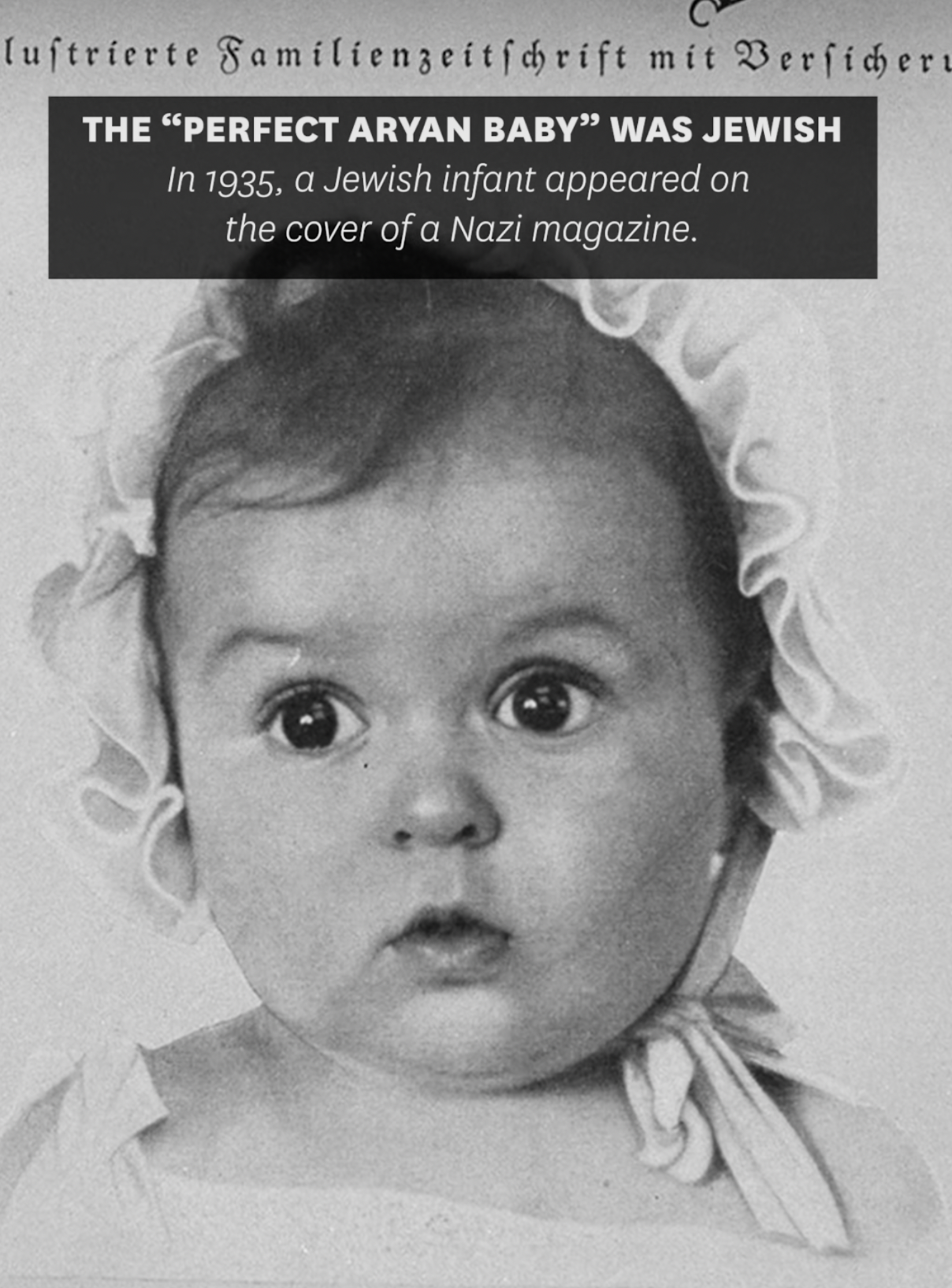
A photograph carries an authority it has not earned. It presents itself as evidence — this happened, this is real — while concealing every decision made to produce it: what was framed, what was excluded, what moment was chosen, what light was arranged. The image is not a window. It is an argument dressed as a window.
This is not a recent problem. But social media has industrialised it. Students encounter hundreds of images daily, each one cropped, filtered and algorithmically selected to produce a specific emotional response before rational thought can intervene. By the time they are thinking, they have already felt — and feeling, once triggered, is extremely difficult to revise.
Antisemitism has always understood this. It has always been, at its core, an image problem: the construction of a figure — the greedy banker, the disloyal citizen, the manipulator behind the curtain — that is emotionally vivid, aesthetically coherent and factually hollow. The image precedes the argument. The argument merely confirms what the image has already made the audience feel.
The Language of Flowers gives students the experience of making the lie - so they can recognise it when it is made for them.


THE LANGUAGE OF FLOWERS
DESIGN THINKING PROCESS
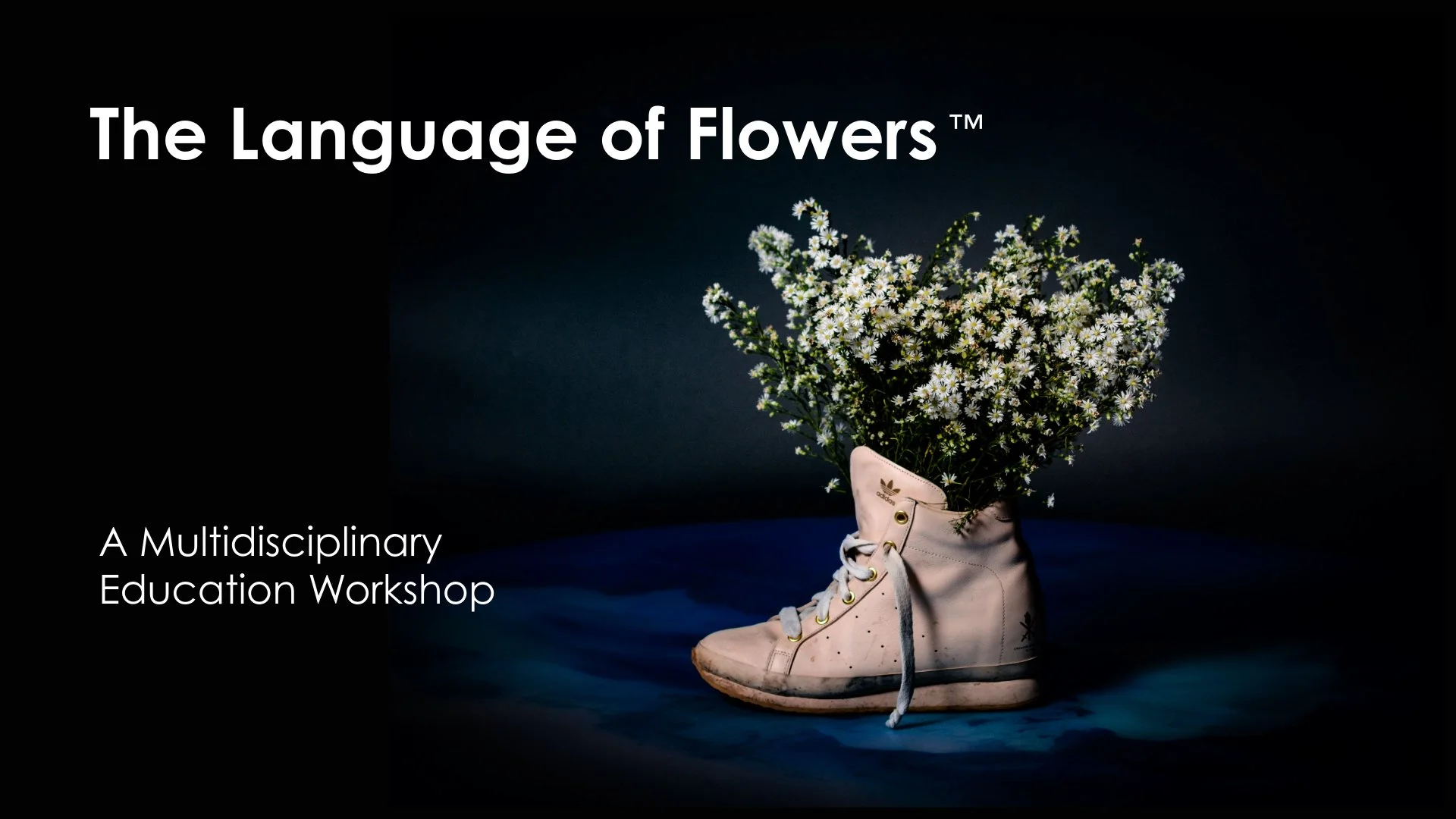
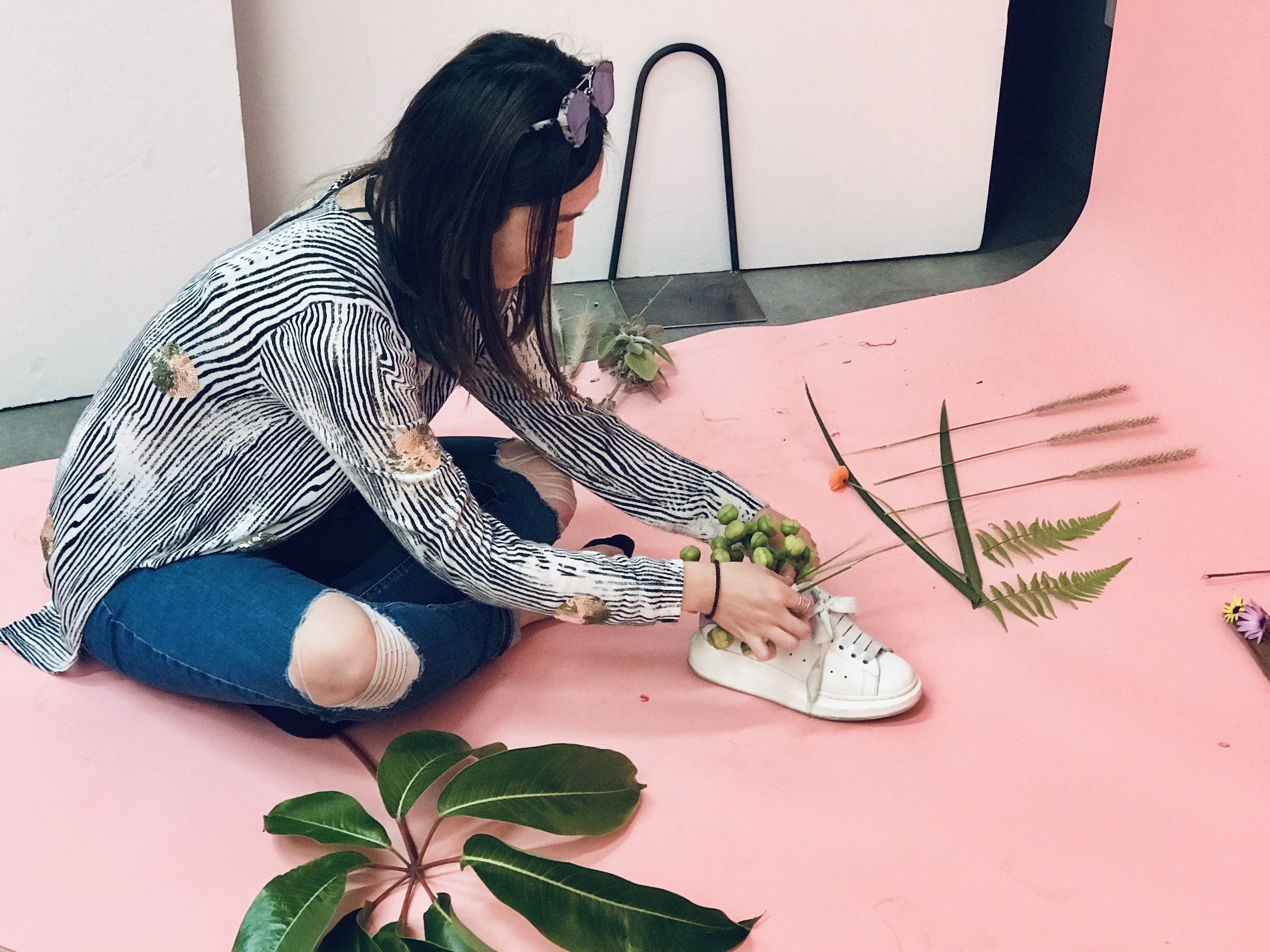
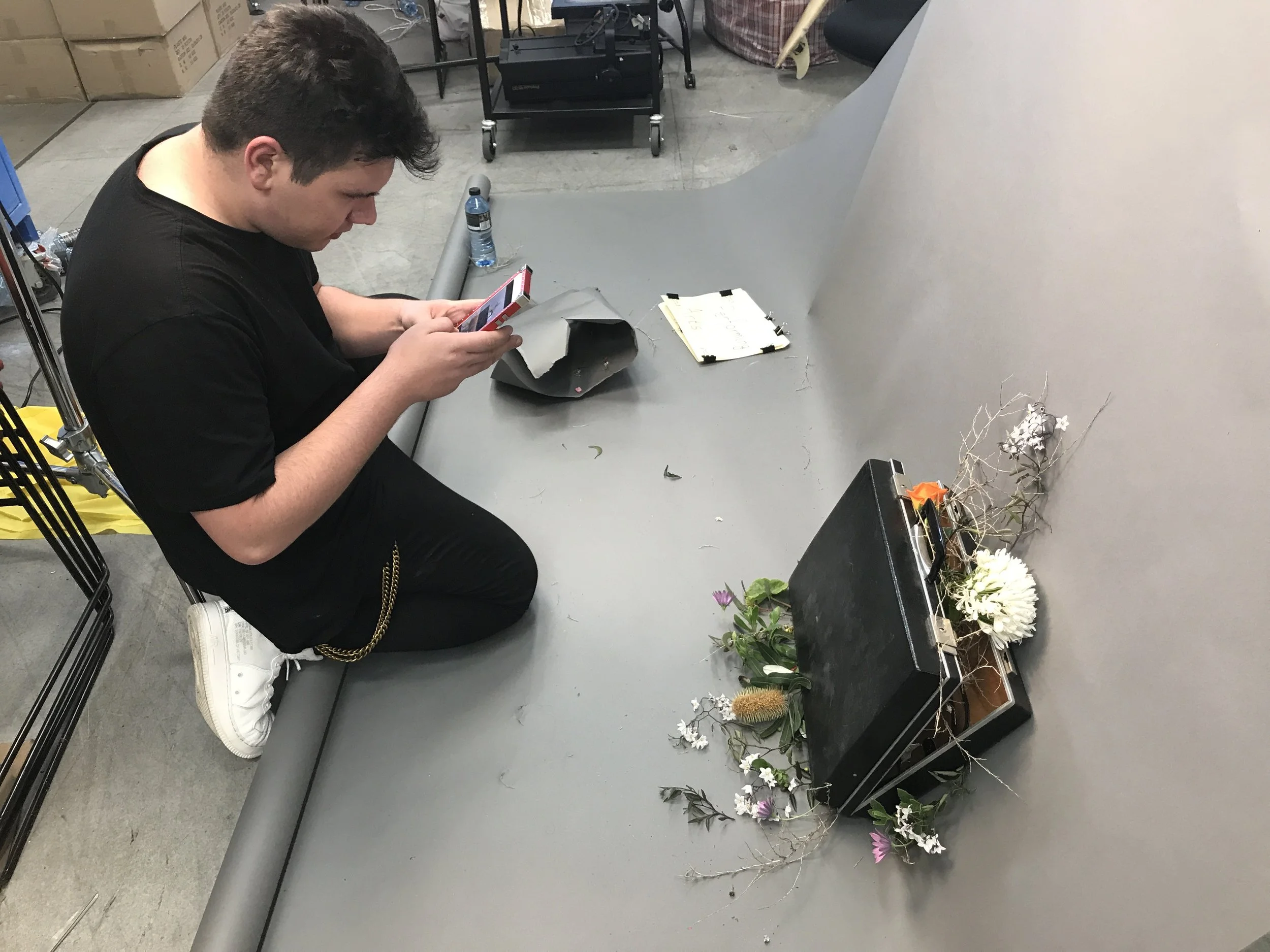
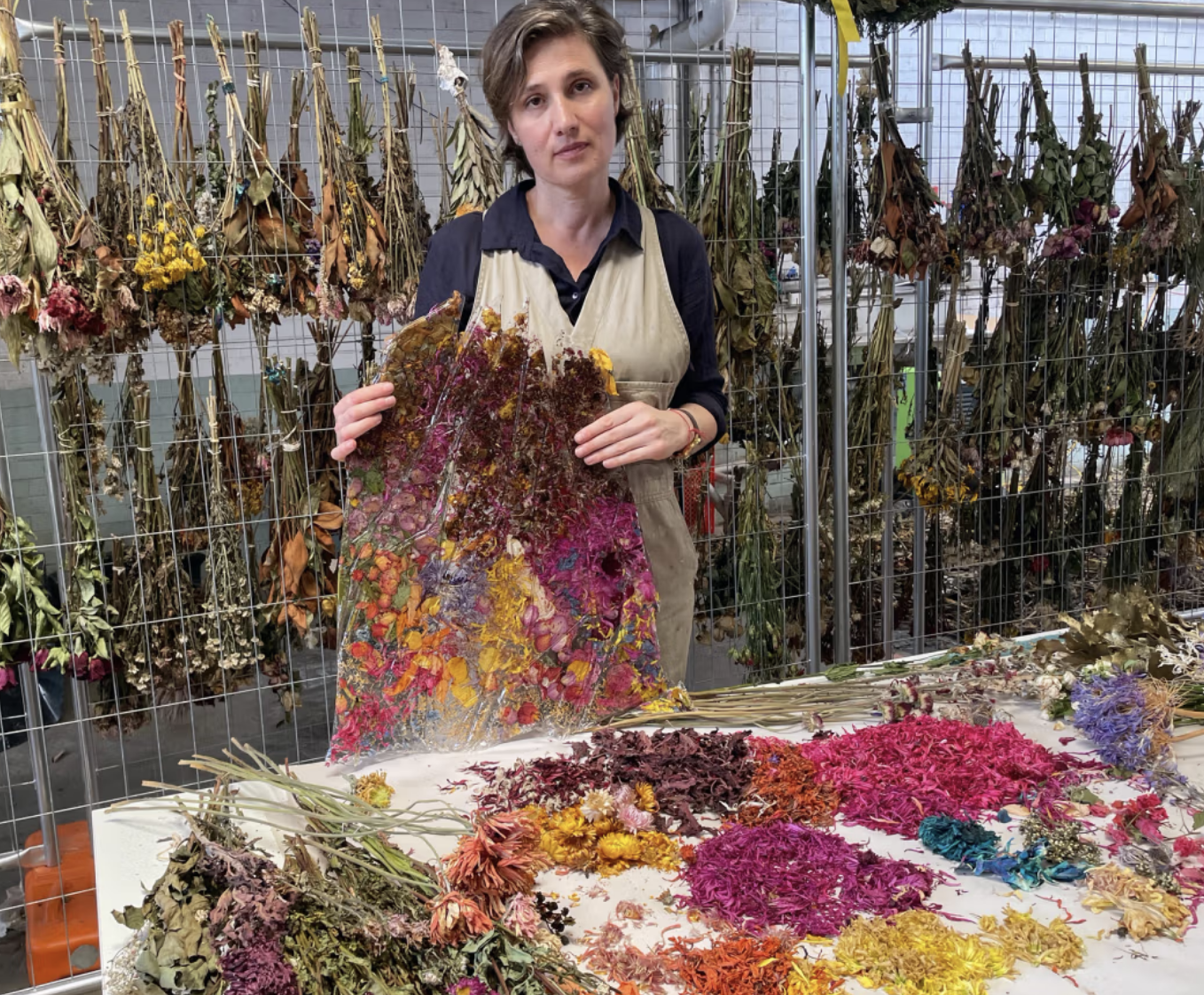
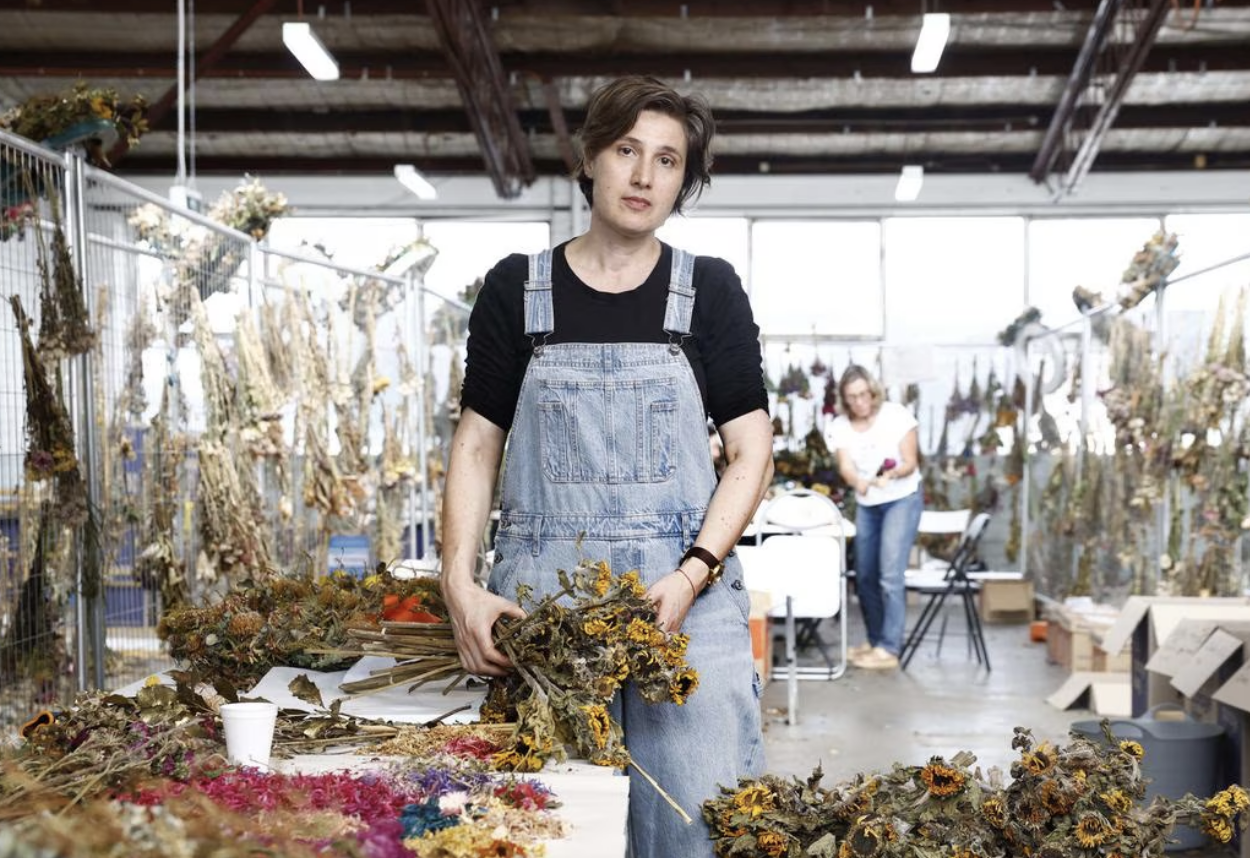
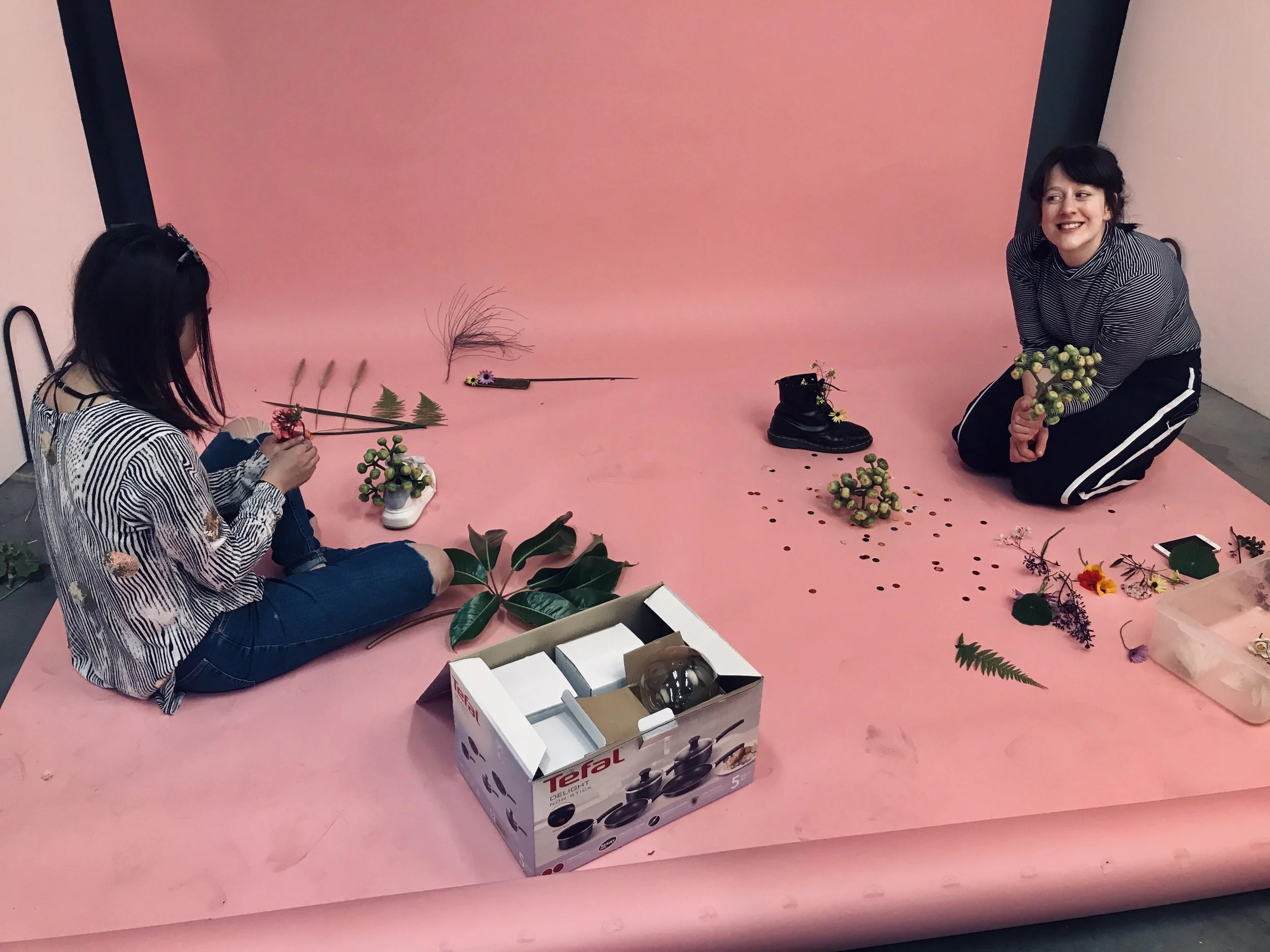
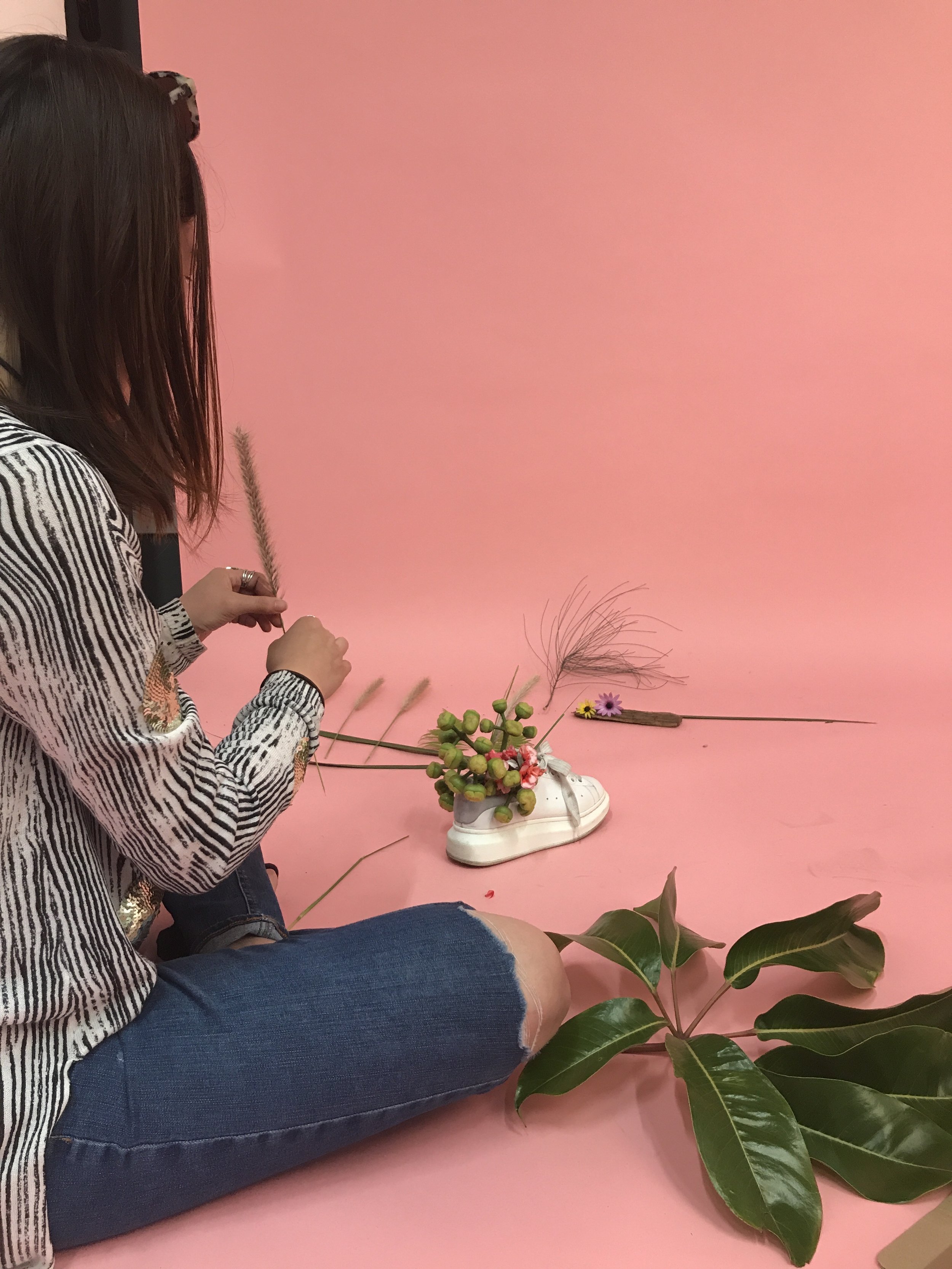
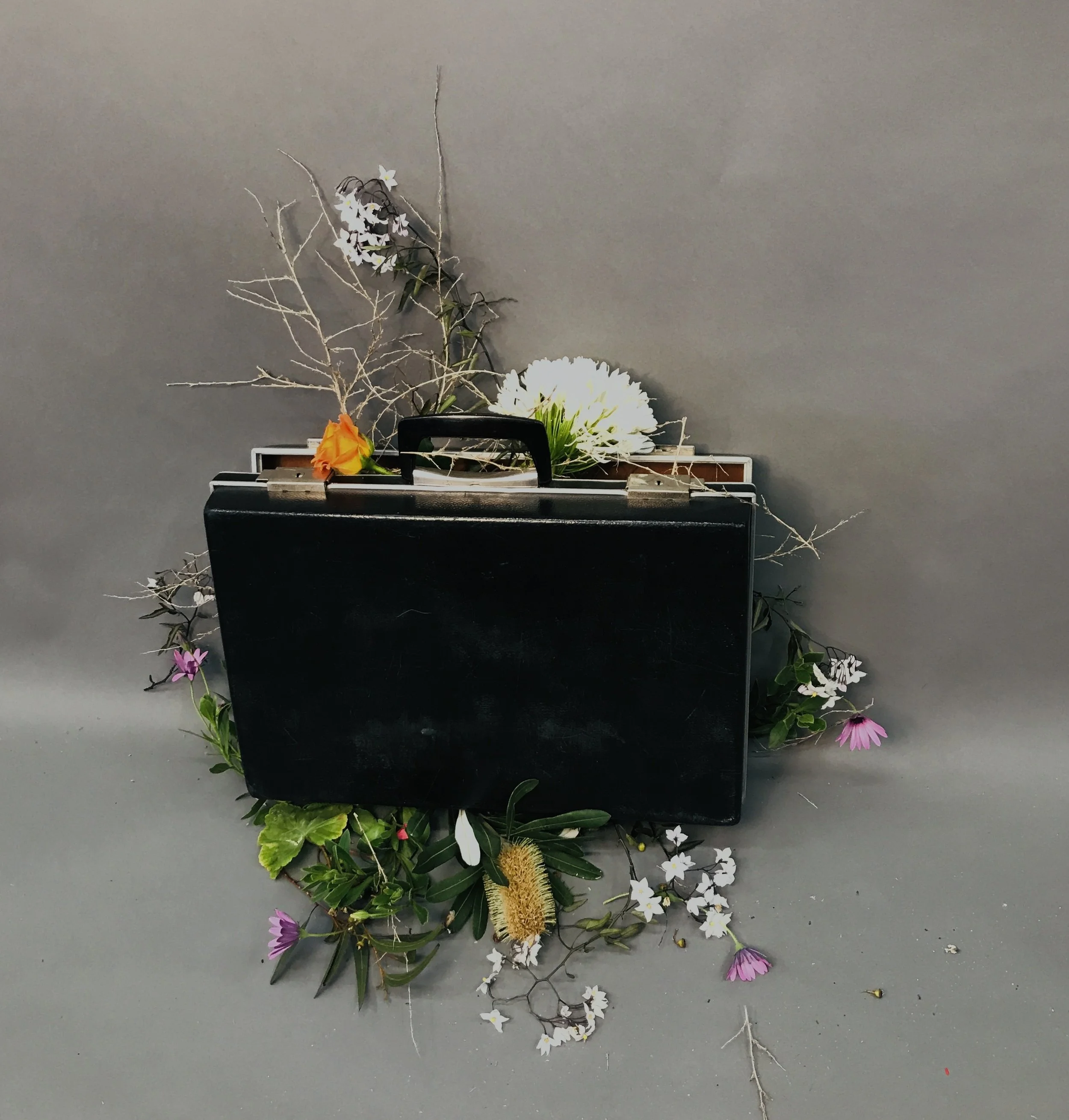
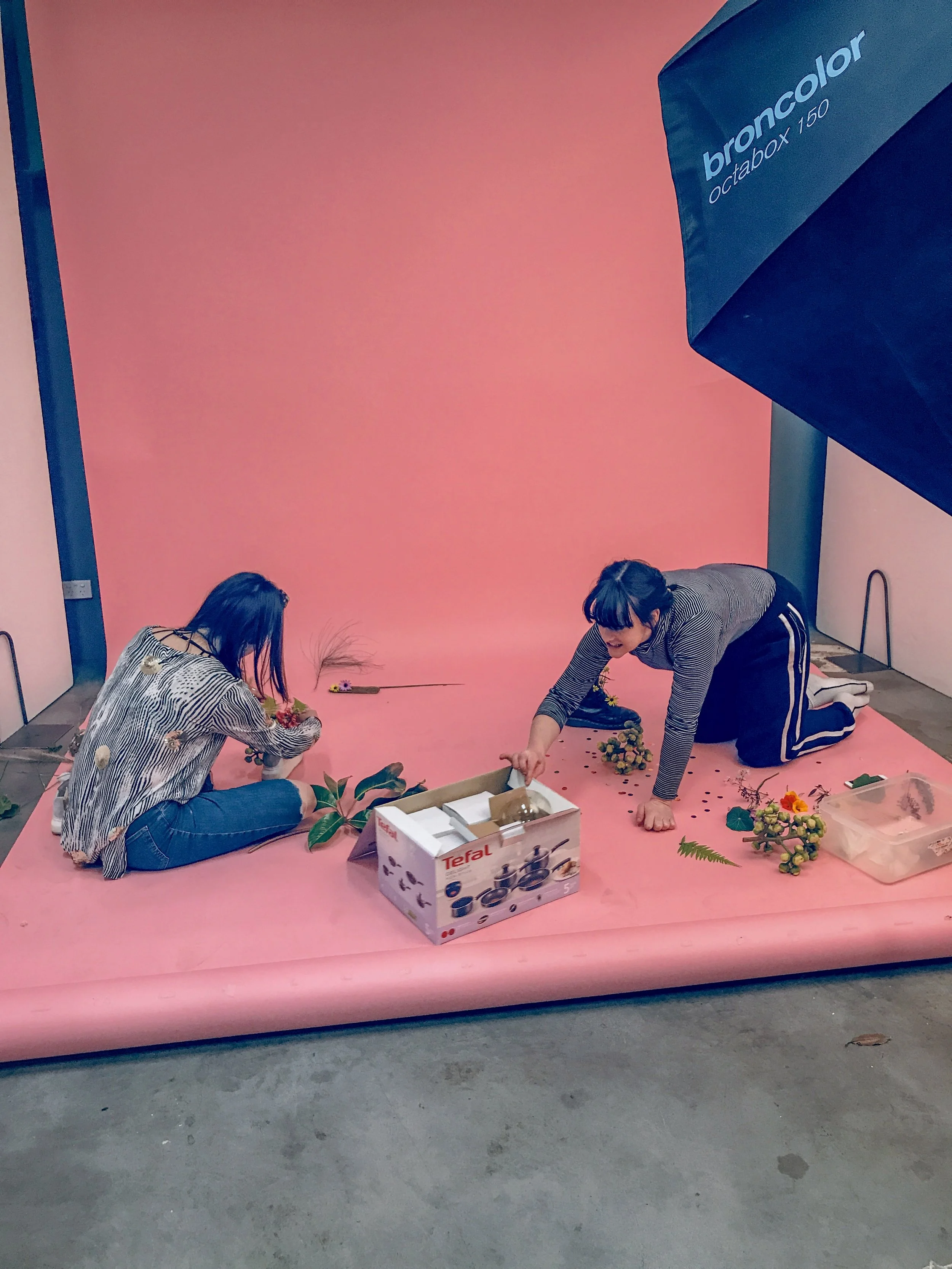
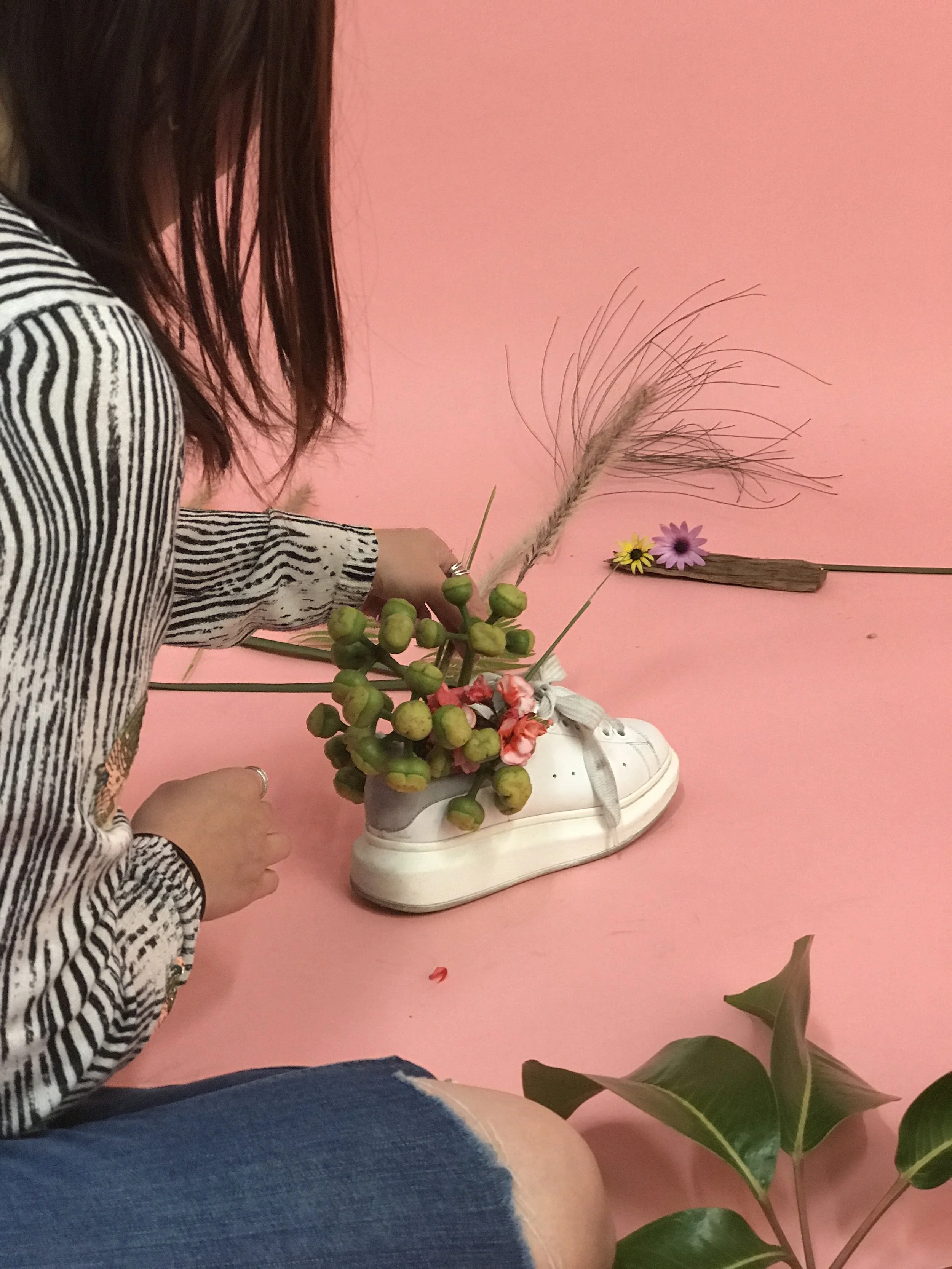
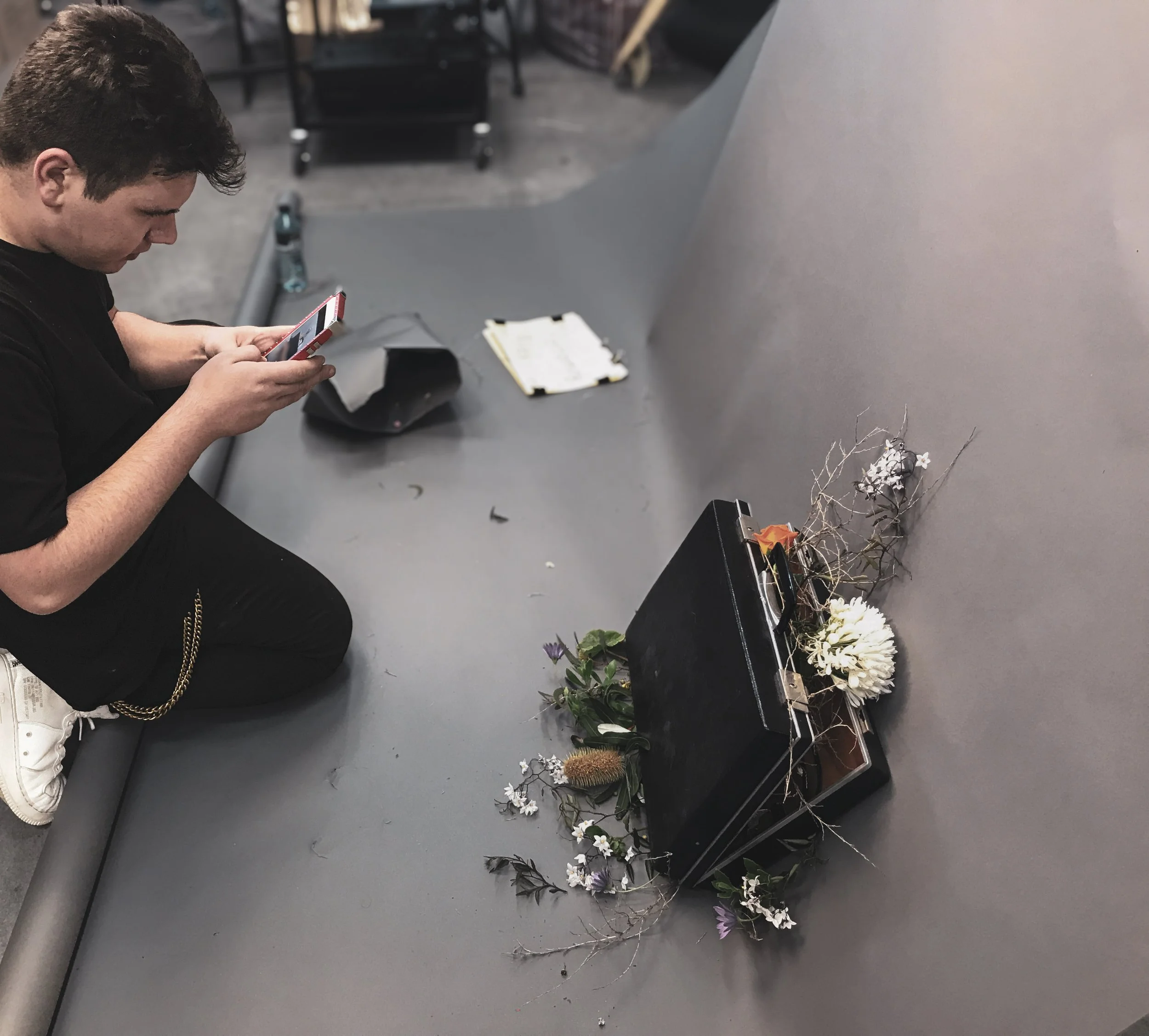
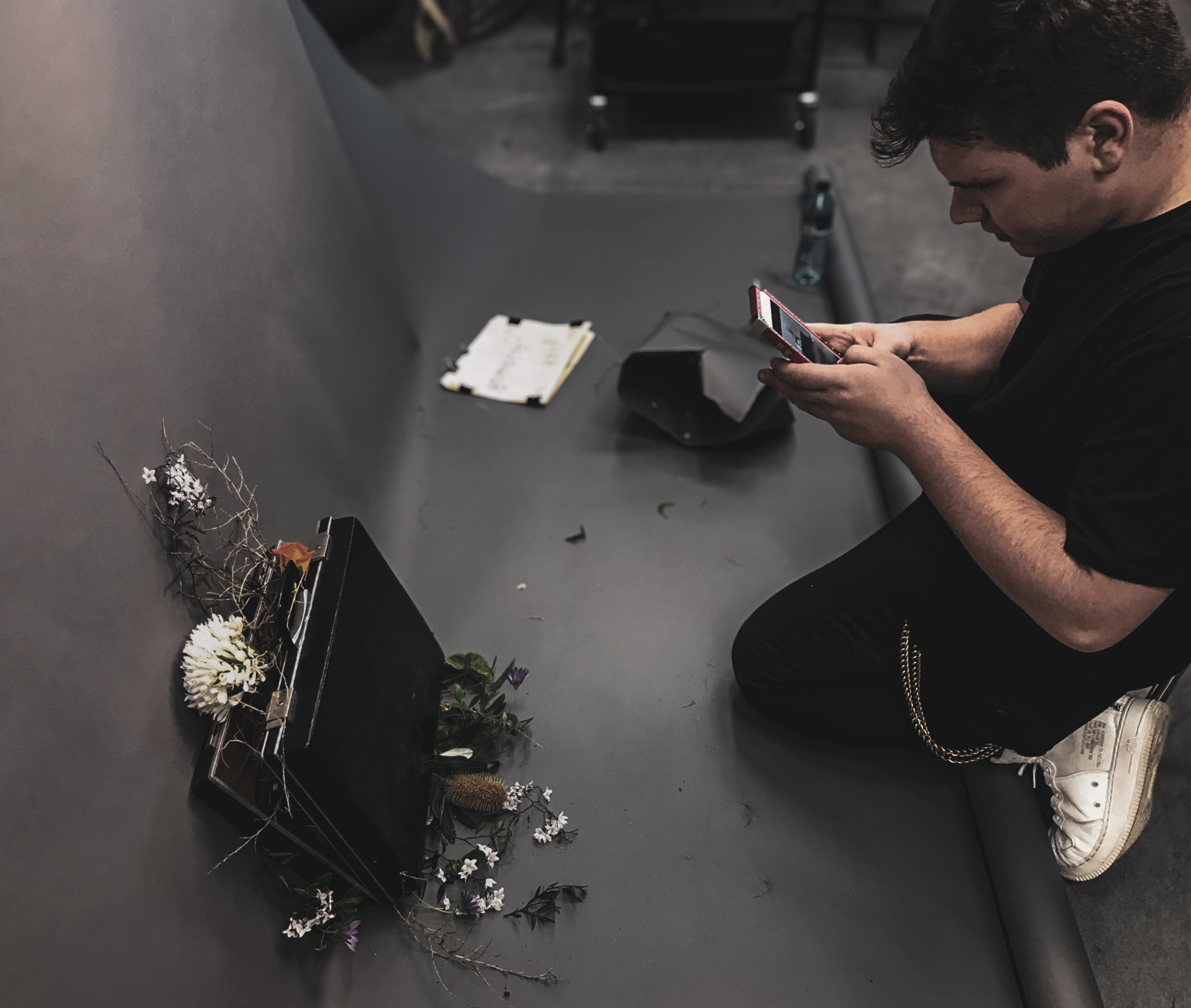
Students forage for flowers, then arrange flowers into ‘irrational’ vessels - a shoe, a briefcase - with no water or soil.
Photographed up close, the arrangement looks considered, beautiful.
The flowers appear to thrive - healthy, attractive.
But they are already dying.
The image is a lie.
Precisely how propaganda works.
Pedagogical Model: Four Progressive Stages
The workshop follows a four-stage sequence:
immersion, reflection, realisation & creation.
Each stage builds the 'muscle memory' of discernment and moral agency.
Facilitators
Photography & Media Literacy - Belle Stewart
Modelled on 2017–2019 RMIT framework. Students use photography and critical thinking literacy to decode marketing strategies, building cognitive defence against ‘group-think’.
Wellness Strategist & Author - Eva Migdal
Students identify, deconstruct and name propaganda — examining how language and imagery are weaponised to isolate communities, in both historical and contemporary media.
Street Epistemology & Poetry - Dr. Lee Kofman
We all hold deeply rooted personal beliefs, many of which we have never questioned. Street Epistemology is a conversational technique based on the Socratic method, designed to explore our beliefs and our confidence in them.
Students read age-appropriate testimony such as:
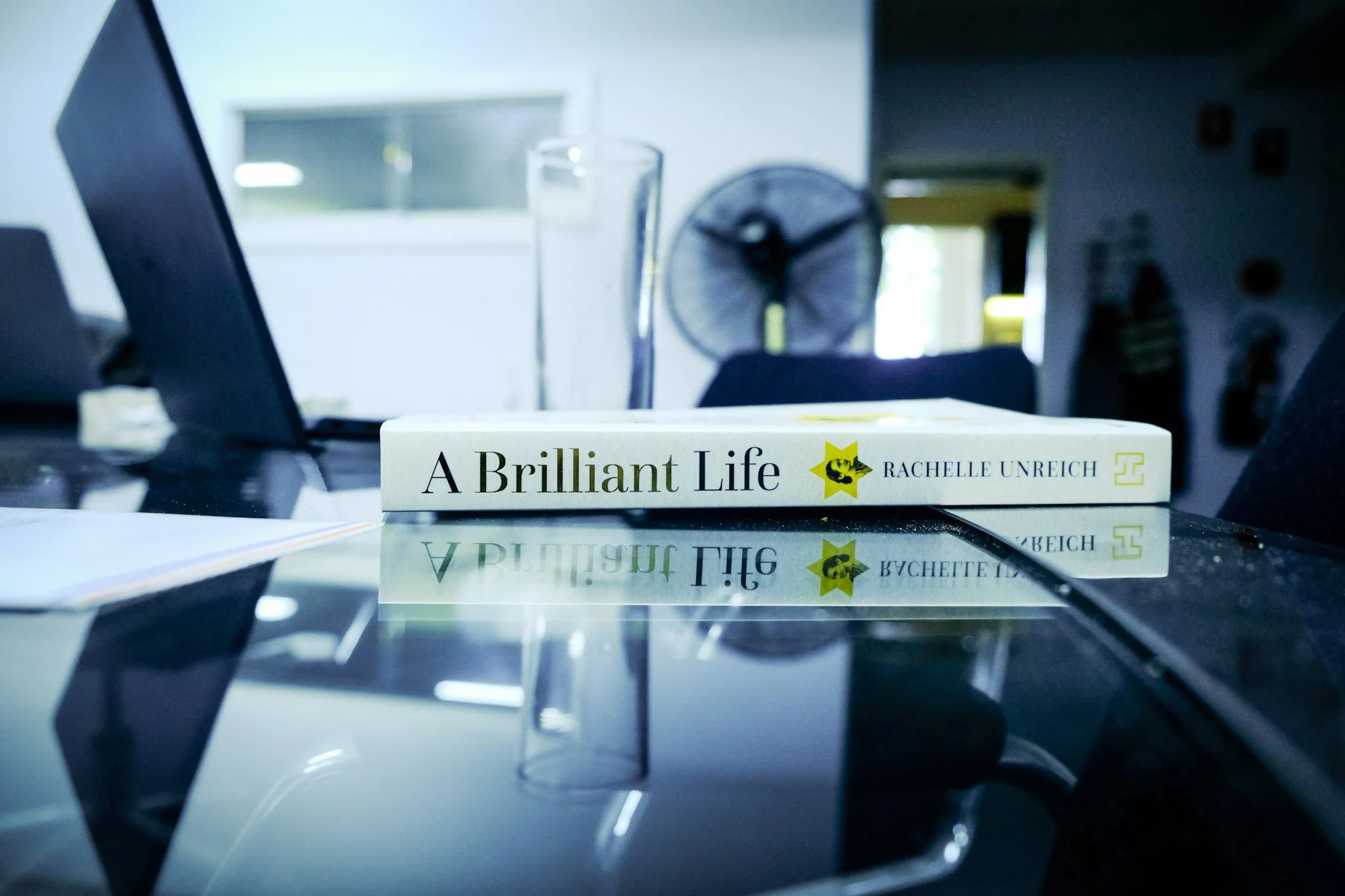
A BRILLIANT LIFE by Rachelle Unreich
A daughter's account of Melbourne Holocaust survivor Mira Unreich - and her extraordinary belief in the goodness of people.
RUPTURED Lee Kofman and Tamar Paluch
Powerful collection of essays, thirty-six women, including Ramona Koval, Dani Valent, Kylie Moore-Gilbert, Kerri Sackville, Deborah Conway and Rachelle Unreich, reveal how their lives in Australia were irrevocably changed by the events of October 7.
For Education Providers
Students and educators in non-Jewish secondary schools — Catholic, independent and government.
Workshop participation satisfies VIT requirements for 20 hours of annual professional learning in inclusive education. Post-workshop resources embed Upstander vocabulary into existing Humanities and Arts curricula, and provide Principal risk-mitigation support under the expanded school safety powers legislated in July 2025.
For Jewish Creative Professionals
The systemic silencing of Jewish voices in Australia's arts sector since October 2023 has removed from our institutions the very people best placed to address rising antisemitism. Language of Flowers offers a paid, professional platform for Jewish artists to work as educators — not as objects of debate, but as leaders of pedagogy.


Session 1: The Anchor
Goal: To establish the historical and moral context of the workshop.
The Vessel Briefing: Students are pre-briefed to source an 'irrational' or 'hostile' vessel—such as a boot, old handbag, or briefcase.
Conceptual Prime: This task begins the process of 'framing' by asking students to consider an object that is fundamentally unsuited to support life.
Immersion Pathways
The Museum Foundation: Ideally, students have participated in a visit to the Melbourne Holocaust Museum (MHM). This provides the primary evidence of the real-world consequences of dehumanising propaganda.
On-Site Preamble: For schools where a visit is not feasible, Triple Axel Creative facilitates a 20-minute immersive film and session. This frames the 'safety landscape' for Jewish Australians today and anchors the workshop in current events.
Resource Distribution
The Upstander’s Tool-Kit: Each student receives materials required
Foundational Content: The kit includes learning resources The Upstanders Workbook, journalling supplies and texts - Ruptured or A Brilliant Life (TBC)
Framework: These materials are used throughout the program to record reflections and develop 'Upstander Skills’
Session 2: The Beautiful Lie
Goal: To physically construct and document the mechanics of propaganda by transforming a terminal reality into an aesthetic illusion.
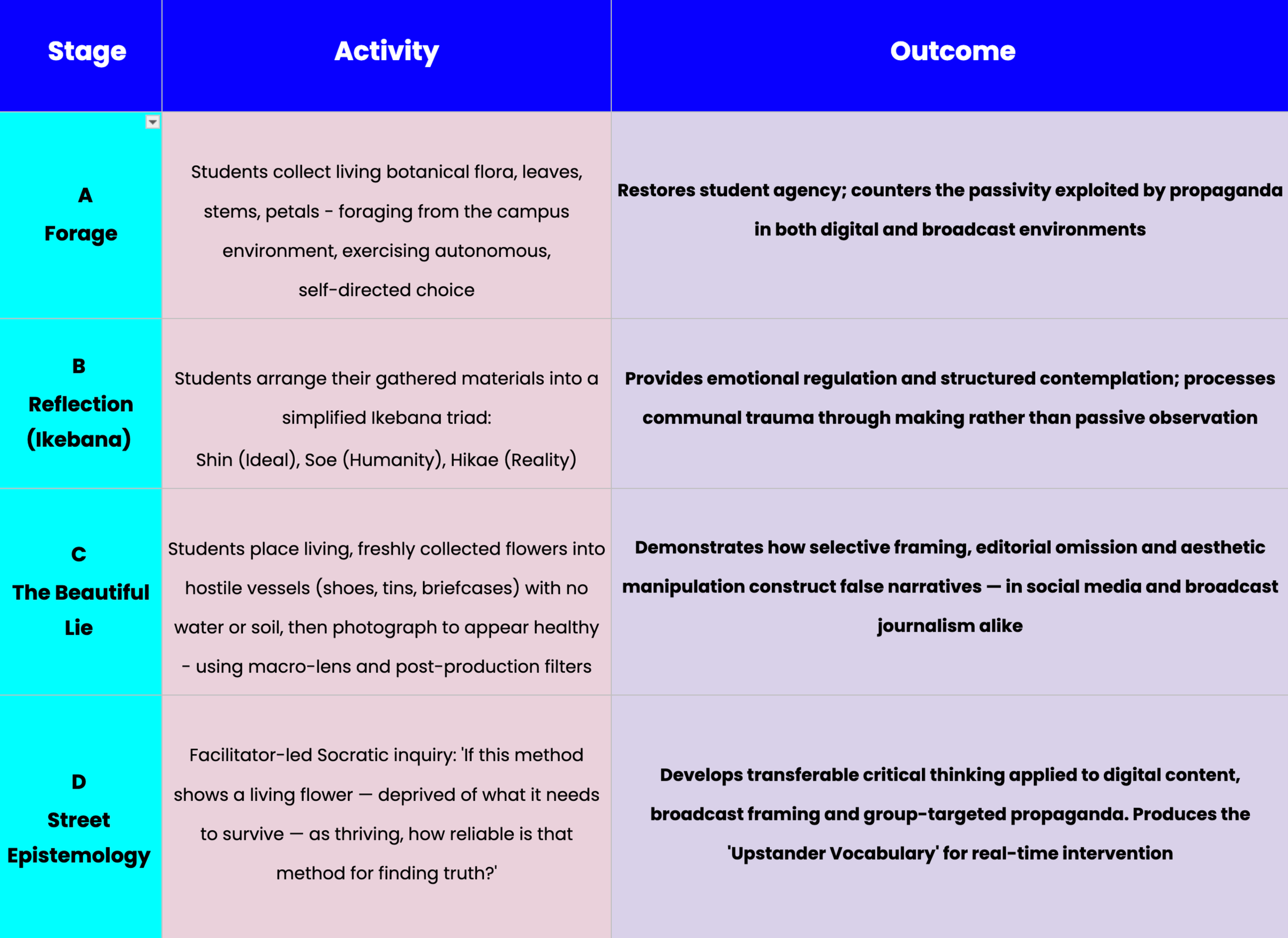
The Forage & Reflection
The Forage: Students exercise active agency by collecting living botanical flora from the campus environment. This act of 'selection' counters the passivity often exploited by propaganda.
Reflection (The Truthful Arrangement): Before the 'Lie' begins, students engage in a simplified Ikebana practice to provide space for emotional regulation and the processing of communal trauma.
The Ikebana Triad in context of The Language of Flowers
Shin - The Ideal / Truth: The tallest branch, representing the spine of the arrangement and the highest point of moral clarity.
Soe - The Human / Perspective: The middle branch, representing the human experience and how we perceive the world around us.
Hikae The Reality / Earth: The lowest branch, representing the grounded reality—the 'vessel' in which we find ourselves.
Construction of the Lie
Goal: To use professional media techniques to mask a fatal reality with an aesthetic 'frame'.
The Hostile Transition: Students take their 'truthful' arrangements and transplant them into their pre-sourced 'hostile vessels' (e.g., a boot, handbag, or tin). By deliberately omitting water, soil, and sunlight, the environment becomes fundamentally unsustainable.
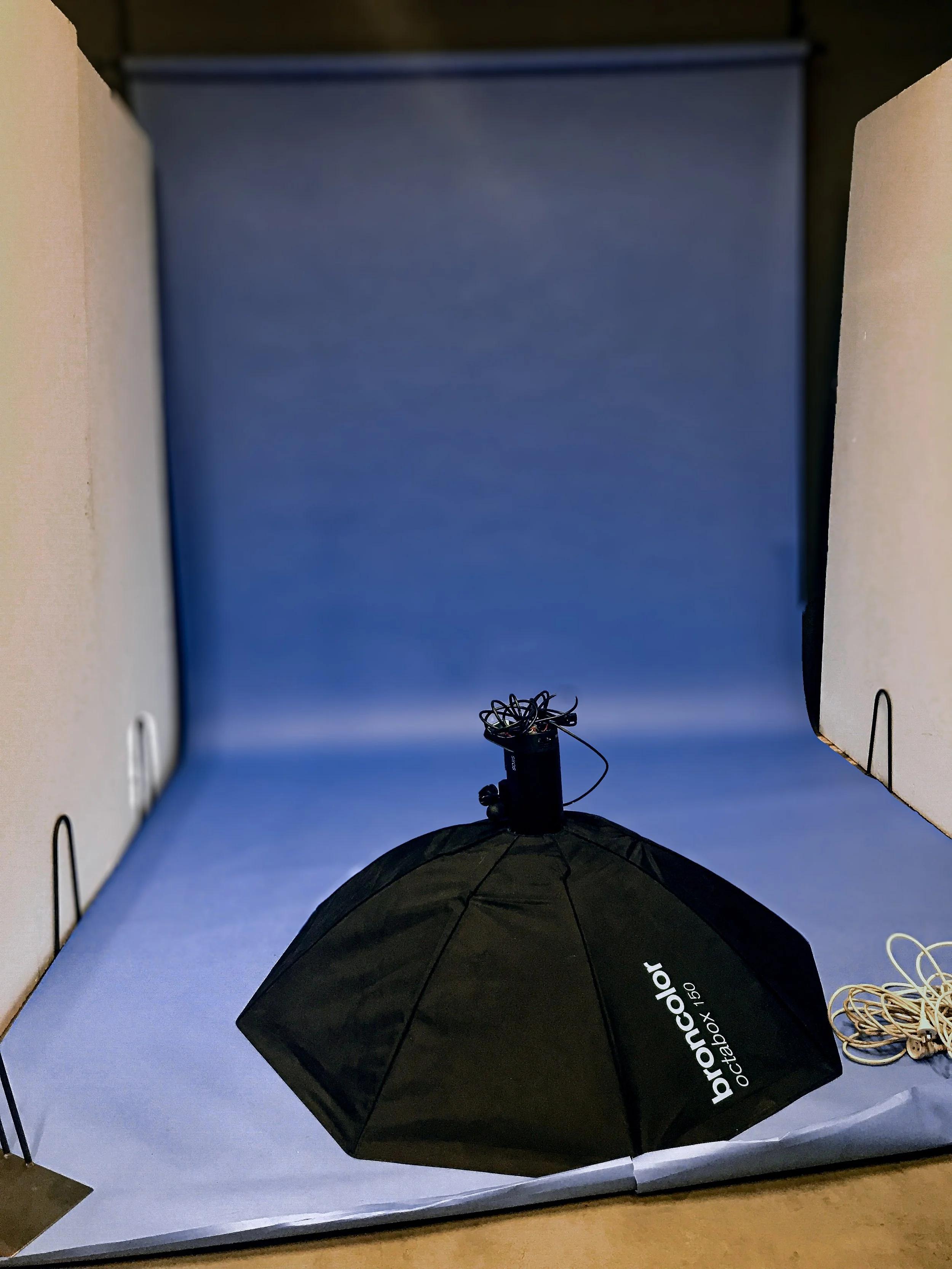
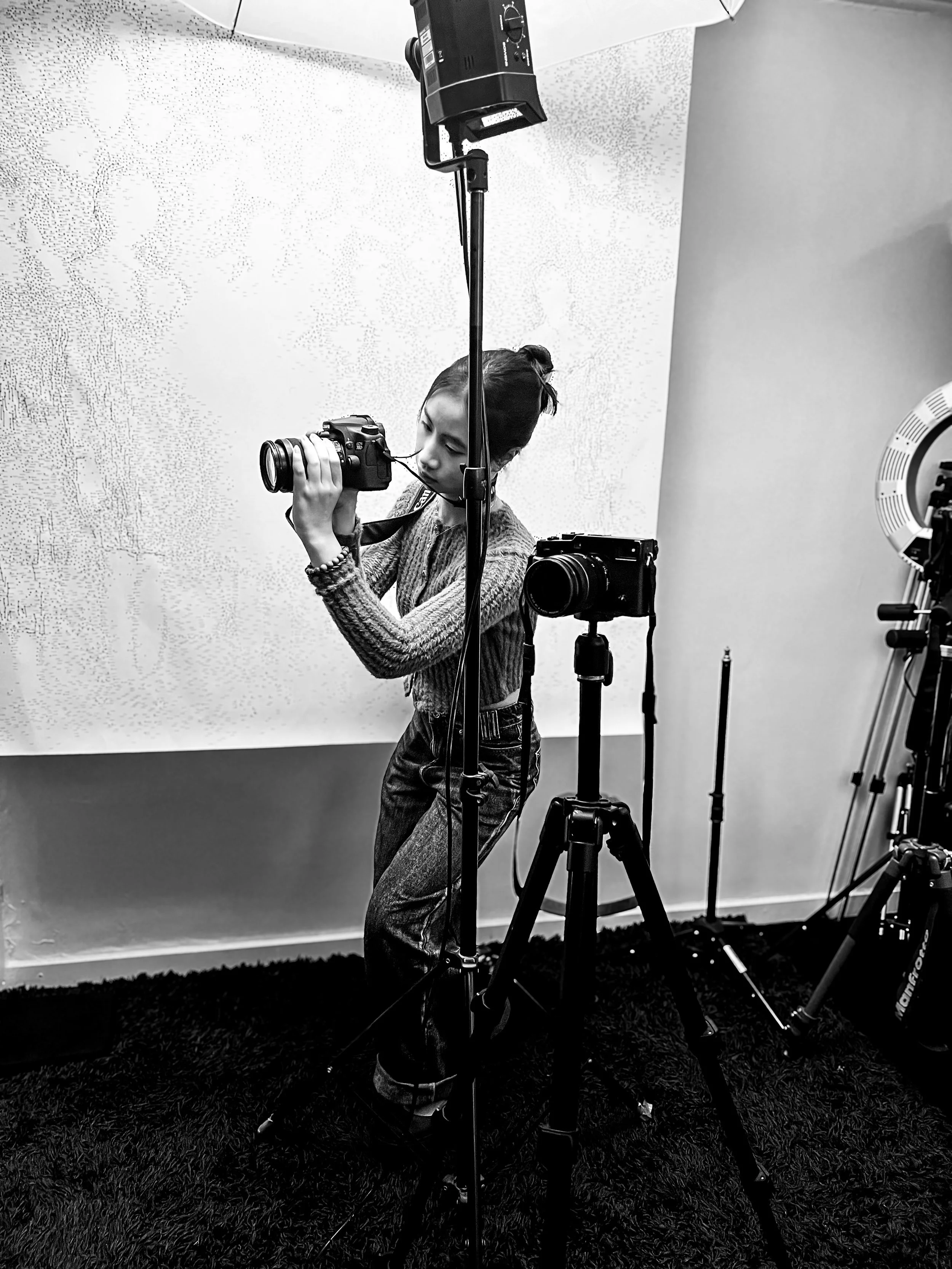
Triple Axel Mobile Studio: We provide the physical infrastructure to elevate students' work to a professional standard:
Studio Lights: Students are taught lighting techniques (such as high-key lighting) to wash away shadows and create an artificial 'glow' of health.
Props & Backdrops: Using our suite of coloured backdrops, students learn how to 're-contextualise' their hostile vessel, making it appear as part of a curated, high-end environment rather than a trash or utility item.
Production & Collaboration: Working in pairs or threes, students collaborate on styling, lighting and camera angle strategies. They learn to manipulate the angle of the flora and framing to ensure the arrangement appears vibrant and thriving, effectively hiding the evidence of the truth.
Session 3: Street Epistemology to Poetry
Goal: To use digital manipulation and marketing strategies to perfect 'The Beautiful Lie’ and develop the critical literacy to dismantle manufactured truths.
Post-Production: Manufacturing the Truth
Students use professional editing techniques to scrub the remaining 'flaws' of reality from their images, experiencing first-hand how digital tools prioritise aesthetic over evidence.
Digital Editing & Colour Grading: Students are taught to enhance the saturation of petals and adjust lighting levels to mask the dulling effects of dehydration.
Retouching: Using 'healing' and 'clone' tools to remove wilting edges or visual 'noise' from the hostile vessel, ensuring the final image is polished and persuasive.
Marketing Strategies: Slogans & Brand Identity
Learning Objective: To critically analyse the nexus between digital manipulation and linguistic framing, developing the 'epistemological hygiene' necessary to navigate contemporary propaganda.
Post-Production: The Manufacture of Consensus
In this terminal phase, students utilise industry-standard digital editing to reconcile the 'flaws' of reality with the desired aesthetic outcome. This simulates the 'correction' process used in broadcast and digital propaganda.
Digital Editing & Chromatic Correction: Students apply colour grading to enhance the saturation of petals, artificially masking the physiological decline caused by dehydration.
Retouching & Erasure: Using retouching tools to eliminate 'visual noise'—such as wilting edges or the structural reality of the hostile vessel—ensuring the final artifact is both polished and persuasive.
Branding Strategies
Students apply professional branding frameworks to their 'vibrant' images to illustrate the weaponisation of visual imagery through language.
The Slogan: Referencing iconic, globally-recognised campaigns—such as Nike’s 'Just Do It' or Apple’s 'Think Different'—students craft succinct, high-recall phrases to define their arrangement’s brand identity. This demonstrates how professional marketing bypasses the rational mind to evoke an uncritical emotional response.
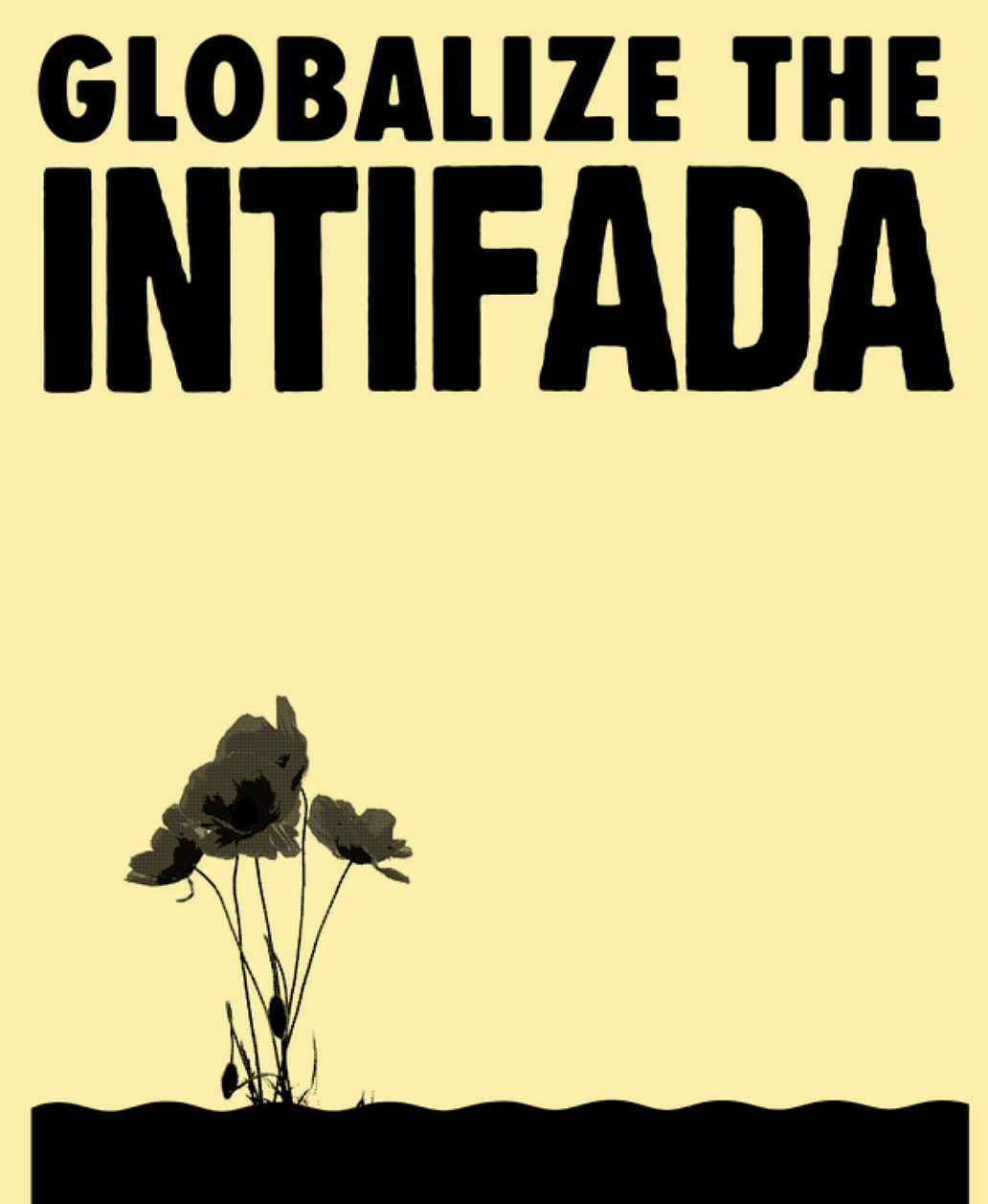
Mirroring the Rhetoric: Students engage in a controlled experiment, mirroring the 'Marketing DNA' of extremist slogans—such as 'Globalise the Intifada'. By deconstructing terms like 'Globalise' or 'Revolution', students explore how strategic linguistics are used to re-contextualise hostile or terminal acts as 'virtuous' or 'heroic' movements.
The Narrative Construct: Students synthesise these elements to create a 'Beautiful Lie’—a digital artifact where the headline and image collaborate to sell 'resilience' while the subject remains fundamentally unsustainable.
The POET In Street Epistemology
The intervention culminates in a facilitator-led Socratic dialogue. Moving from the role of 'producer' to 'analyst', students use their own manufactured deceptions to evaluate the reliability of media.
P – Pause: Objective observation of the aesthetic artifact.
O – Outcome: Acknowledging the persuasive power of the 'thriving' image.
E – Evidence: Re-introducing the evidence suppressed by the frame (the lack of water, the hostile vessel).
T – Test: A critical evaluation of the methodology: 'If a method can be used to present a dying subject as thriving, how reliable is that method for determining truth?'
Cognitive Outcomes
By creating the deception themselves, students develop sophisticated 'Upstander Vocabulary'. They transition from passive consumers of digital content to active 'interveners' who can identify the 'Beautiful Lie' in real-time, asking: 'What has been edited out of this frame to make this image appear hospitable and healthy?'

Glossary
1. The Beautiful Lie | Aesthetic Propaganda
The act of using high production value—lighting, filters, and selective framing—to mask an unsustainable or terminal reality. In the workshop, this is represented by the flower in the waterless vessel. In the digital world, it is the virtuous slogan masking a violent intent.
2. The Crop | Selective Framing
A tactical decision of what to exclude from the frame. The Crop is the primary tool of misinformation. By removing context—the root system—an image of distress can be reframed as an image of aggression, or vice versa.
3. Doxa vs. Epistēmē
Doxa: Common belief or opinion that is accepted without questioning. An example is seeing a hateful symbol on a desk and dismissing it as just a prank.
Epistēmē: Justified true belief or knowledge. This is the transition from feeling that something is wrong to knowing the systemic history and harm it represents.
4. Street Epistemology
A conversational technique based on the Socratic method. Instead of telling someone they are wrong, which triggers defensiveness, students learn to ask: What is the method you used to arrive at that conclusion, and is that method reliable?
5. The P.O.E.T. Protocol
The core diagnostic tool for digital literacy:
P – Pause: Stop the emotional reaction triggered by the image.
O – Outcome: Identify what the creator wants you to feel or do.
E – Evidence: Look for what is missing from the frame such as water, roots, or context.
T – Test: Ask: If this same technique was used by someone I disagreed with, would I still believe it?
6. Peaceful Agency
The ability to remain logically grounded and ethically active in a polarised environment. It is the transition from being a passive consumer of media to an active architect of school culture.
7. Upstander Vocabulary
A specific set of scripts and terms students use to intervene in real time. This replaces generic anti-bullying phrases with precise language to identify dog whistles, coded propaganda, and dehumanisation.
8. Irrational or Hostile Vessel
A metaphor for environments that cannot support life, such as a shoe, a briefcase, or a digital echo chamber. It represents the structural reality that is often hidden beneath the aesthetic glow of a polished media post.
Provisions Included For Schools
1. Expert Facilitation & Pedagogy
Specialist Team: Delivery by three high-level practitioners - Belle Stewart, Eva Migdal and Lee Kofman (with guest artists from Jewish cancelled cohort) .
Pedagogical Framework: A multidisciplinary curriculum based on Belle Stewart’s RMIT 'The Beauty Myth' program, adapted for secondary students to build critical thinking and communication skills.
Research & Development: Access to a framework developed over 18 months specifically to address social cohesion and combat antisemitism in the current Australian 'intervention phase'.
2. The 'Upstander’s Tool-Kit’
Foundational Texts: Physical copies of either Ruptured or A Brilliant Life
Propaganda Workbook: Eva Migdal’s specialised Wellness Workbook - wellness mindset strategies for decoding visual, social media and peer misinformation.
Creative Supplies: High-quality materials for journaling, poetry, and reflective practice, including coloured pencils, felt tips and adhesive tape.
3. Mobile Media & Production Studio
Professional Lighting: Full studio lighting kits
Cinematic Backdrops: A suite of professional coloured backdrops
Ancillary Hardware: Props & Backup vessels (shoes, briefcases, tins)
4. Content & Immersive Resources
Film & Media: Exclusive access to a 20-minute immersive preamble & short film (for schools not opting for the MJHM site visit) to anchor historical context.
Supervised Foraging: Guided facilitation of the campus 'forage,' ensuring student agency is exercised safely within school grounds.
Socratic Inquiry Resources: Facilitator-led 'Street Epistemology - Poet’ sessions, developed 'Upstander Vocabulary' for real-time intervention
School Requirements
Space: A standard classroom or studio space that can be darkened for film screening/lighting setup.
AV: A screen and projector for the 'Stage 0' preamble.
Devices: Student mobile phones or school digital cameras.
Post Production - Adobe Express or PhotoShop
The 'Vessel': Students are briefed to bring their own 'irrational' vessel (e.g., a shoe or briefcase) as part of their pre-workshop engagement.
Photography as a Tool of Deception
Roland Barthes observed that a photograph says this was — not this was true. The camera records without interpreting, which means the interpretation is supplied entirely by context: caption, crop, placement, sequence. Remove the context and you can make any image mean almost anything.
Susan Sontag argued that photographic images of suffering do not build empathy — they exhaust it. The image substitutes for understanding rather than producing it. We see, we feel briefly, we scroll. Social media has perfected this mechanism. The infinite scroll of images simulates witness while producing numbness — which is precisely the condition in which propaganda thrives.
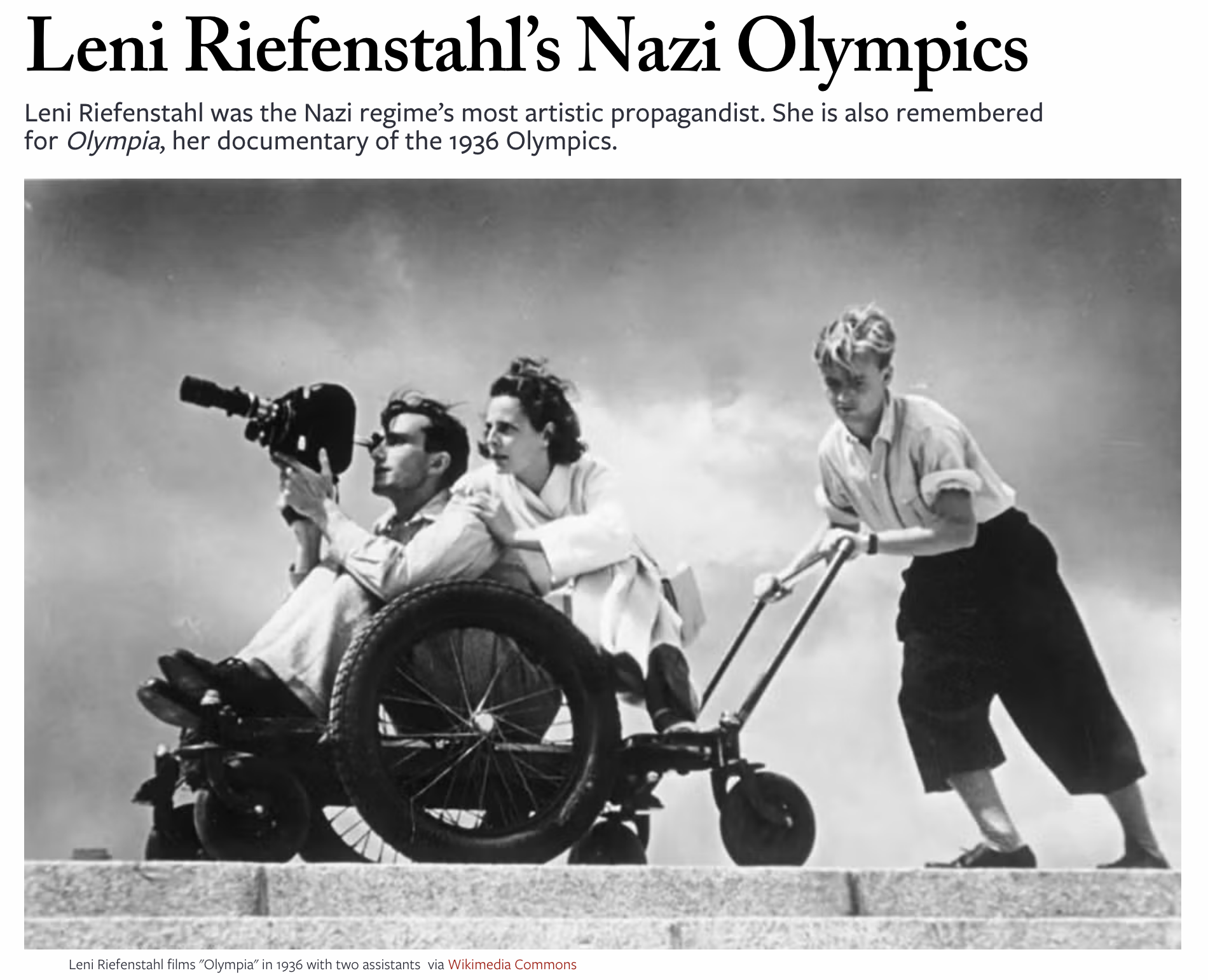
Leni Riefenstahl's Triumph of the Will (1935) remains the definitive demonstration of what happens when aesthetic beauty is weaponised as moral argument. The film is cinematically extraordinary — its use of light, mass movement and scale is genuinely powerful — and it is in service of extermination. The beauty was not incidental. It was the case. The film said: this movement is sublime, therefore it is right. Pleasure was made to function as persuasion.
When students photograph their arrangements — flowers in a shoe, in a briefcase, in a tin, with no water and no soil — they are working in this grammar. The resulting image looks considered, even beautiful. It gives no indication that the flowers are already dying. The crop has done its work.
The uncropped image shows the vessel, the absence of water, the fact of death already in progress. The cropped image shows beauty. Both are photographs of the sCalibrating for secondary and university cohorts
The workshop is designed to operate at two levels simultaneously, allowing facilitators to calibrate depth without changing the core activity.
For secondary students, the emphasis is on the immediate and concrete: what does this image make you feel, what information does it hide, and where have you seen this technique used against you today. The Riefenstahl reference can be introduced simply — a film that made something evil look beautiful — without requiring prior knowledge of the period.
For university cohorts, the workshop opens into the theoretical frameworks directly: Barthes on the rhetoric of the image, Sontag on the exhaustion of empathy, the specific history of antisemitic visual propaganda from 19th-century caricature through to contemporary social media targeting. Students at this level can be asked to bring their own examples — images they have encountered in the past week — and apply the three questions to material from their own feeds.
In both settings the physical exercise is identical. The intellectual depth is adjusted by the facilitator's questioning, not by the activity itself.
For teachers: key references
Roland Barthes — Camera Lucida (1980)
Susan Sontag — On Photography (1977) and Regarding the Pain of Others (2003)
Leni Riefenstahl — Triumph of the Will (1935, dir.)
Jacques Ellul — Propaganda: The Formation of Men's Attitudes (1965)
Errol Morris — Believing is Seeing: Observations on the Mysteries of Photography (2011)
MIRRA Report — Antisemitism in the Cultural and Creative Industries (Monash ACJC, 2024)


From Silos to Integration:
The Case for a Unified Ecosystem
Many advocates in the community recognise a central challenge: Melbourne's Jewish cultural and educational institutions — each excellent in their own right — operate in separate silos.
The result is potentially, a fragmented response to a coordinated threat.
The Language of Flowers is designed to be the connective tissue that links these institutions into one integrated, student-facing educational ecosystem. Critically, the physical infrastructure for this integration already exists in our extraordinary ecosystem.
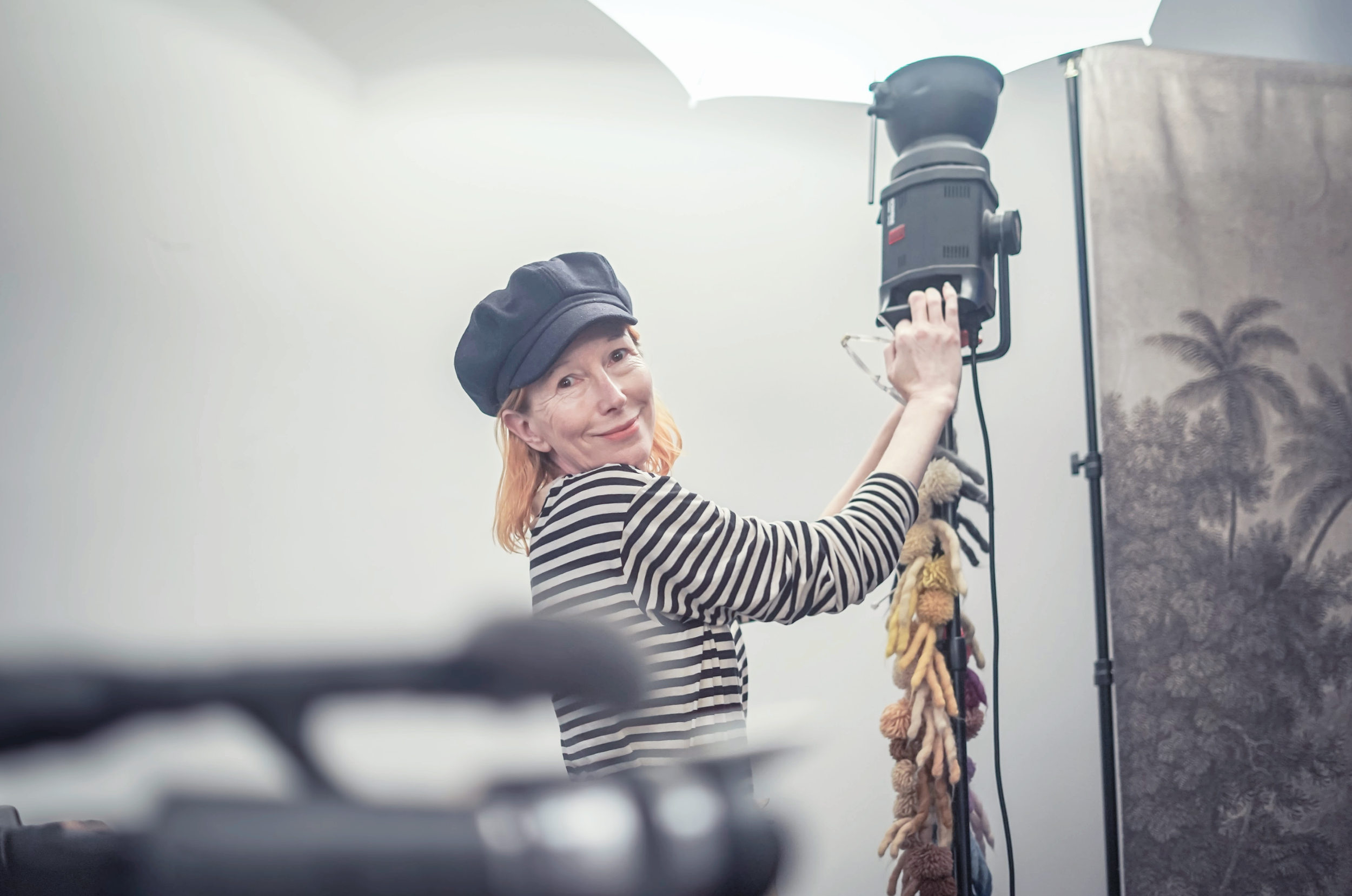
Belle Stewart
Belle Stewart is an Australian photographer and educator with extensive experience across the creative media and education sectors. Educated within Melbourne’s Catholic school system, her practice is informed by a strong ethical framework and a long-standing commitment to storytelling, witnessing, and responsibility.
Stewart has taught and mentored across universities, creative institutions, and community settings, and is an active advocate against antisemitism, working through arts-led education to address prejudice, strengthen empathy, and build cultural literacy. Her approach prioritises active creation over passive instruction, empowering young people and educators to engage with complex social issues with clarity and care.