
The history of Laurie Levy’s activism is a testament to the power of a single individual to reshape the legal and ethical landscape of a nation. Levy’s legacy is double-edged: he is the architect of the constitutional freedom of symbolic protest and the primary antagonist of a tradition that he has successfully rebranded as a relic of a less compassionate era.
Coalition Against Duck Shooting, Levy successfully navigated the transition from a marginal group of fifteen rescuers to a movement that forced a major parliamentary inquiry and the near-unanimous recommendation of a ban by a Select Committee.
While a total ban in Victoria remains elusive as of 2026, the activity of recreational duck hunting has been fundamentally transformed.
The semi-automatic weapons of the 1980s are gone; lead shot has been banned; mandatory proficiency and cultural training are being implemented; and the social license of the activity is at an all-time low.
The movement’s transition into the mid-2020s suggests that the war of attrition begun by Levy in 1986 is nearing its final phase.
Whether the current regulatory shifts can sustain the industry against the backdrop of catastrophic biodiversity decline and shifting urban values remains the central question for the Victorian government in the years ahead.
But or Levy his role remains the same as it was in 1980.
To transform the battlefield back into the splendour of the wetlands, returning the country to the people who will honour it.
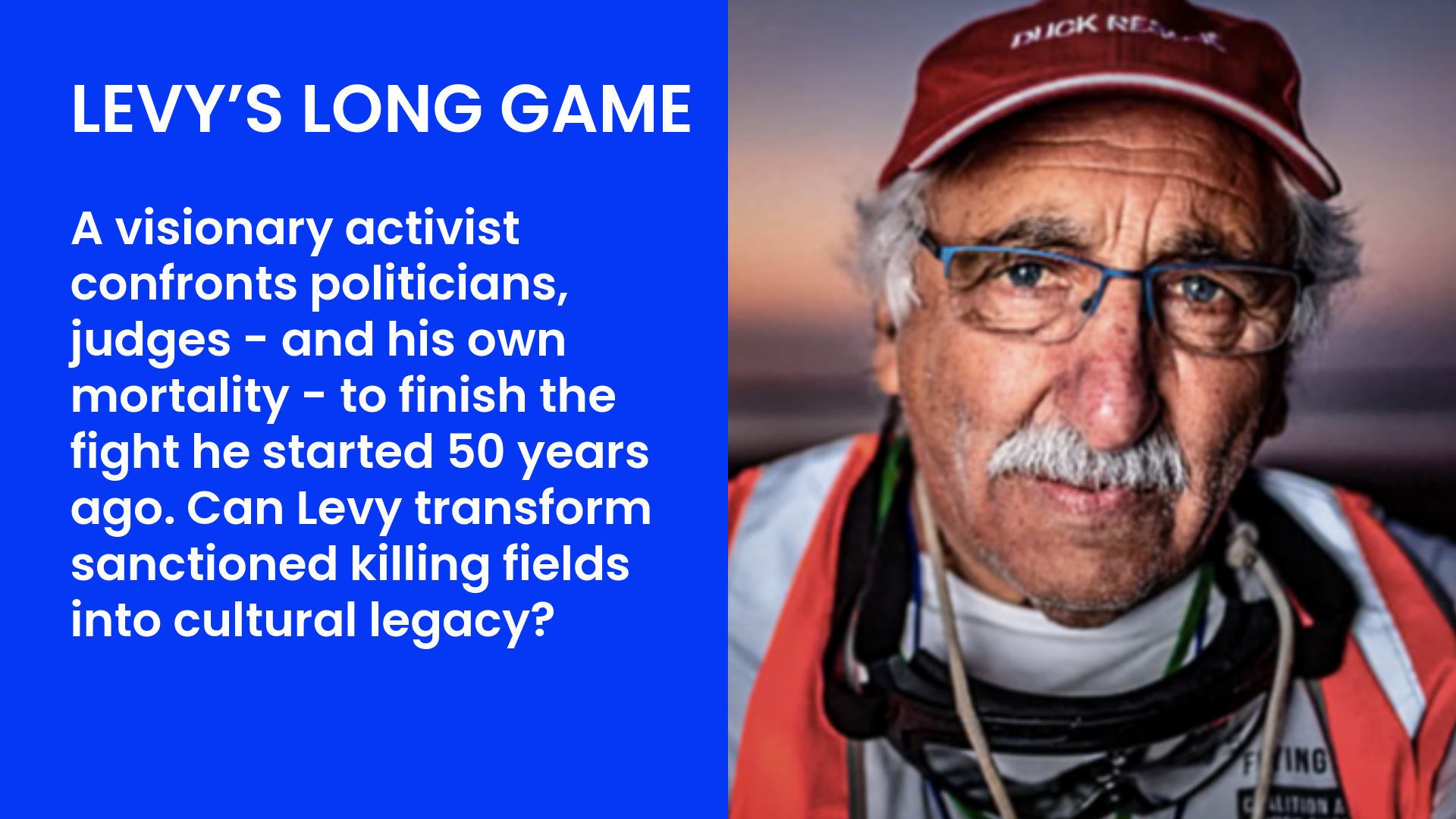
With nine arrest warrants and a looming state government election, 85-year-old activist Laurie Levy executes a high-stakes political gambit to end a 50-year war.
Targeting the Premier’s own seat, Levy’s strategy forces a ban on duck shooting and paves the way for a multi-million dollar, First Nations-led eco-sanctuary.
Levy’s Long Game is a tender investigative portrait of a man who bypassed convention, money and his own family to drive a 50year campaign on the frontlines.
The narrative is anchored by exclusive family access, featuring candid dialogues with his niece and nephew that interrogate the uncompromising personal cost of his radical immersion.
We track Laurie’s final, most audacious manoeuvre: a tactical play for the November election.
Laurie’s hyper-focus is transfixed on the goal. Replace a dying, negligible blood sport with an Indigenous led Victoria’s Kakadu sanctuary.
Partnering with Dja Dja Wurrung Elders, Laurie aims to prove that the lens remains the ultimate instrument for First Nation culture and economic reconciliation.
Through conversations with his niece and great-nephew, the engine behind Levy’s fifty-year fight is laid bare.
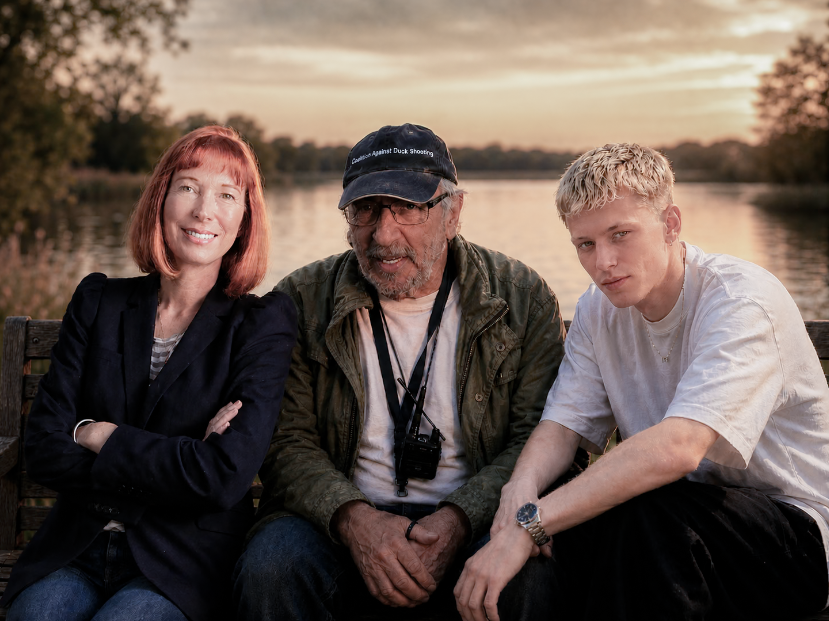
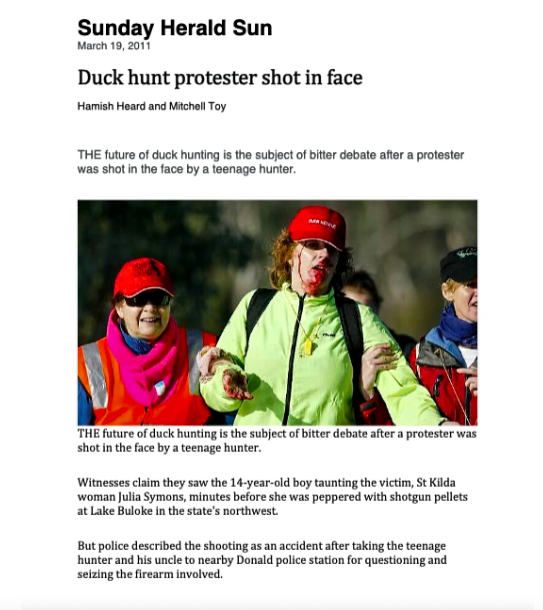
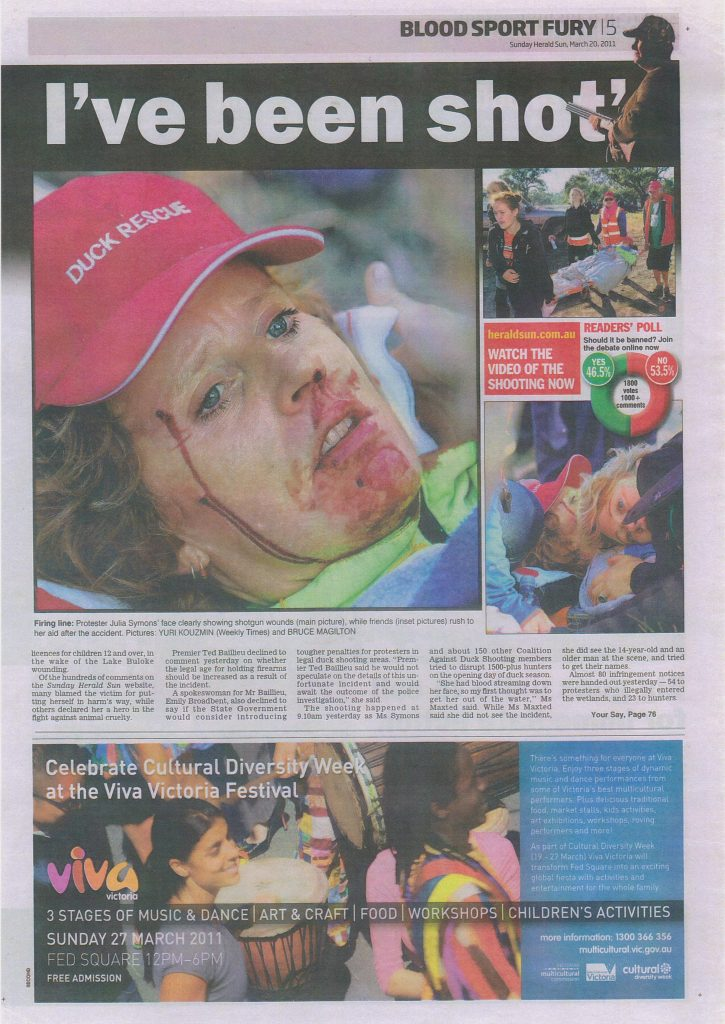
Victoria’s Kakadu eco-tourism plan is a strategic proposal to transform the Kerang Ramsar Wetlands and Lake Boort into a First Nations-led, world-class cultural and nature-based tourism destination.
The plan argues that while recreational duck shooting is a declining activity supported by less than 0.2% of the population, a professionally managed tourism industry could attract over one million visitors annually, injecting millions—and potentially billions—into the regional Victorian economy.
Core Objectives
The proposal seeks to move beyond the conflict of duck shooting by establishing a sustainable economic model based on Self-Determination and Conservation.
Cultural Restoration: Handing the management of the wetlands back to the Dja Dja Wurrung and other Traditional Owners.
Economic Transition: Replacing a "dying" blood sport with a high-growth tourism sector that creates long-term regional jobs.
Healing Country: Using tourism as a vehicle for environmental repair and the protection of Aboriginal cultural heritage, such as scar trees and ancient cooking mounds.
The Tourism Concept
The plan envisions a "world-class experience" that mirrors the success of the original Kakadu National Park in the Northern Territory, adapted for the unique ecology of Victoria’s northwest.
Cultural Immersion: First Nations-led tours focusing on storytelling, traditional knowledge, and the history of the world’s oldest continuing civilisation.
Eco-Tourism: Professional waterbird watching, boardwalks, and interpretive walks through Ramsar-listed wetlands.
Living Culture: Experiences involving indigenous food (bush tucker), art galleries, and stargazing sessions led by Traditional Owners.
Infrastructure: Sensitive development of facilities to support domestic and international visitors without compromising the wilderness.
An 84-year-old filmmaker executes a final, high-stakes political gambit to dismantle Australia’s sanctioned killing fields.
Trading conventional life for a fifty-year media war, Levy bridges a generational divide to convert a dying blood sport into a First Nations-led economic powerhouse: Victoria’s Kakadu.
Levy’s career begins within the Australian film and television industry. As a filmmaker and cameraman in the 1960s and 70s, he masters the mechanics of constructing a narrative. 1980 he turns his lens towards animal rights activism, identifies a blind spot in the national psyche a theatre of injustice hidden behind the veil of tradition.
Levy’s innovation is the weaponisation of media. Rejecting traditional protest, he applies his professional craft to rebrand the wetlands as a televised war zone.
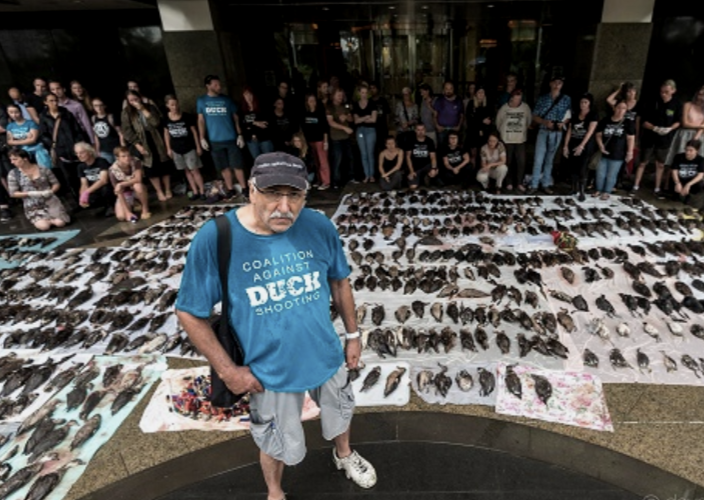
By deploying rescuers in high-visibility orange to retrieve wounded birds under fire, he creates an undeniable visual contrast that bypasses legislative debate and forces its way into the heart of the national news cycle.
However, this mastery of old school media births a permanent Digital Frontline. For decades, Levy’s archives serve as a lightning rod for visceral, unedited vitriol. This subcultural resistance—a toxic mix of "Ocker" defiance and defensive heritage—serves as the film’s central antagonist. The narrative utilises this digital noise as a recurring graphic motif: a low-fidelity scroll of hostility that interrogates the cultural chasm Levy spends half a century trying to bridge.
The cost of this radical immersion is the total rejection of a private life. To sustain a fifty-year presence on the frontlines, Levy bypasses marriage and fatherhood, trading a biological lineage for a movement. Through candid, investigative dialogues with his niece (55) and his great-nephew Hector (18), the film probes the psychology of a man who trades a family tree for a national cause.
Now 84 the "Long Game" enters its final act. Facing eight active arrest warrants and a sharp political reversal from the government, Levy moves beyond protest into nation-building. In a visionary partnership with the Dja Dja Wurrung Elders, he brokers a transition from a negligible shooting economy to a multi-million-dollar nature-based sanctuary. As Hector interrogates the digital vitriol of the past and the political stakes of the 2026 election, the film asks: when a pioneer gives everything to the wild, what remains of the man, and who carries the torch once the pioneer is gone?
Ticking Clock: The film follows Levy in real-time .
Digital Conflict: The vile YouTube comments as an active character, representing the current-day cultural friction in regional Victoria.
Legacy in Action: Hector serves as the future lens, ensuring the story isn't just about what Levy did, but what he is doing.
Now 85, the fight has reached a critical junction. Witness a visionary man racing against a ticking clock.
Working alongside Dja Dja Wurrung Elders to replace the violence of the season with Victoria’s Kakadu - a permanent, billion dollar eco-system led by its Traditional Owners.
The 2023 Parliamentary Inquiry Into Duck shooting recommended a ban, yet the government faltered, opting to keep the season alive.
Levy’s response is his most aggressive tactical move yet: a direct political intervention in the Premier’s own seat of Bendigo East. He is no longer just pleading for mercy for the birds; he is pitching a sophisticated economic transition.
Through candid conversations with his niece and his great-nephew Hector, the film uncovers the internal engine of this fifty-year endurance test.
1994 Illegal Tape
Late one night towards the end of 1994, two duck shooters, one a senior member of gun club Field & Game Australia (FGA), made the mistake of mentioning on their Analog mobile phones that a Liberal Minister in the
Kennett Government had asked the senior FGA member “to design a season which is acceptable scientifically and that he can sell”.
At that time, Victoria was in serious drought.
The conversation was accidentally picked up by a ham radio scanner. He didn’t quite understand the implications, but contacted Laurie Levy at 2am one morning to say he had just picked up a random conversation which might be relevant to helping native waterbirds. At first, Levy thought he was being targeted in a duck shooter prank, but after asking that the tape be played over the phone, he immediately recognised the distinctive voice of the senior FGA member.
Levy obtained the tape and had a legal transcript made. He then told his lawyer he was going to send copies to The Age newspaper and to top-rating radio presenter, Neil Mitchell at radio station 3AW. Following the furore over a previous illegally taped conversation between the then Opposition leader Jeff Kennett and Federal MP Andrew Peacock, Levy was advised by his lawyer that releasing the tape would probably result in him going to jail. The Australian Federal Police had cracked down not only on the illegal taping of conversations, but also on providing copies to the media.
However, knowing how important this was to native waterbirds, Levy sent the tape and transcript to Neil Mitchell and The Age, although he didn’t expect the illegally taped conversation to be aired. Mitchell ran with it as his lead story, until 3AW lawyers stopped the recording being broadcast after about 25 seconds on air because of its illegal nature. Mitchell, though, then read out the official legal transcript and followed by interviewing the senior Field & Game official (who refused to confirm or deny that it was his voice on the tape).
Levy was then informed by the Department of Conservation that the Minister wanted to listen to the tape, so a copy was immediately forwarded to the Department and was subsequently handed to the Minister.
Consequently, the 1995 duck shooting season was cancelled (and Levy never heard from the Australian Federal Police).
APPENDIX
The history of environmental and animal welfare activism in Australia is largely the history of the evolution of the "media protest" as a tool for legislative change. At the centre of this evolution is Laurie Nathan Levy, a figure whose career mirrors the shifting ethical sensibilities of the Australian public from the late twentieth century into the mid-twenty-first.
Levy’s activism, which began in the anti-war and anti-nuclear movements of the 1960s, eventually focused on a singular, decades-long campaign: the abolition of recreational duck hunting in Victoria.
This movement is not merely a chronicle of animal rescue but a complex legal and social narrative that has redefined the constitutional limits of political communication in Australia and challenged the cultural hegemony of rural hunting traditions.
The Formative Years: 1966–1979 and the Genesis of Discontent
To understand the methodology of the Coalition Against Duck Shooting (CADS), one must first examine the professional and ideological origins of its founder.
Laurie Levy’s initial engagement with the Australian public sphere was through the lens of a television cameraman for Channel Nine. This role was critical; it provided him with a sophisticated understanding of semiotics—how images are constructed, how they are consumed by a mass audience, and how they can be used to generate political pressure.
During the 1960s and 1970s, Levy was active in the counter-cultural movements of the era, siding with the "underdog" in anti-war demonstrations and early conservation efforts.
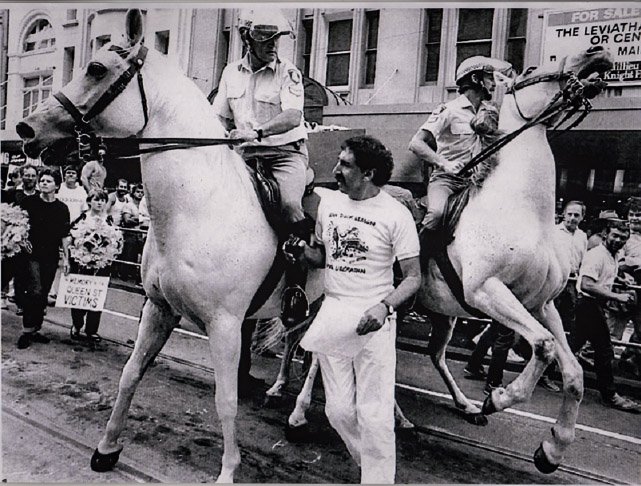
His transition from observer to participant began in earnest with Project Jonah, an international organization dedicated to the protection of whales and dolphins. Levy’s work in the late 1970s focused on maritime conservation, specifically developing methods for whale rescue that would eventually be adopted as standard government policy. In September 1981, as a spokesman for Project Jonah, Levy was involved in a high-profile rescue of beached whales, arguing that the social nature of the animals led them to follow a lost leader into danger. This period established the tactical precursor to his later work: the concept of the "rescue team" that enters a dangerous or controversial environment not just to protest, but to provide direct, tangible aid to victims.
The Shift to Wetlands: 1980–1986 and the Founding of CADS
The pivotal moment in Levy’s career occurred in 1985 when he visited the Victorian wetlands during the opening of the duck hunting season. He reported being profoundly shocked by the scale of the "violence and brutality" he witnessed. At that time, duck hunting was a pervasive cultural fixture in Victoria, with an estimated 100,000 licensed shooters participating in the annual season. Levy perceived a disconnect between the reality of the wetlands and the public’s perception of the activity.
In 1986, Levy founded the Coalition Against Duck Shooting (CADS). The inaugural rescue mission involved only fifteen individuals, a stark contrast to the tens of thousands of armed participants they were confronting. Levy’s strategy was to bridge this numerical gap using media leverage. He utilized his experience as a cameraman to ensure that the rescuers’ actions were "TV-perfect," providing news outlets with compelling imagery that contrasted the "duck shooter, dressed in camo gear... shooting down a small defenseless bird" with the "rescuer coming out of the water with a wounded bird".
Comparative Visual Strategies in Wetland Protest
The conflict on the wetlands was fought as much through aesthetics as through physical intervention. The following table illustrates the contrasting visual markers established by Levy to frame the debate for the media.
By 1989, these tactics had been refined. At Lake Buloke, Levy brought a large contingent of protesters and media, documenting the deaths of black swans and other protected species that were shot alongside game birds. This documentation led to the first major shifts in public opinion and editorial calls for bans on the activity.
Legislative Dominoes: The National Context (1990–2005)
Levy’s campaign in Victoria served as the ideological engine for bans in other Australian jurisdictions. While Victoria remained the "heartland" of hunting, the political pressure generated by CADS's media campaign provided the necessary impetus for other state leaders to act.
Western Australia (1990): The Premier declared the recreational shooting of native waterbirds "unacceptable in the 1990s," citing community opposition to cruelty and environmental damage.
New South Wales (1995): The state government enacted a permanent ban, following years of pressure regarding the impact on endangered species.
Queensland (2005): The government banned the "sport," stating it was time to end the recreational slaughter of ducks and quail.
The persistent success in these states created a narrative of Victorian exceptionalism, which Levy and his allies used to further pressure the Victorian Labor and Liberal-National parties, both of which had historically supported hunting.
The Constitutional Landmark: Levy v State of Victoria (1997)
The most enduring contribution of Laurie Levy to Australian society may not be his environmental work but his role in defining constitutional law. In 1994 and 1995, Levy intentionally entered hunting areas at the beginning of the season without a license, specifically to collect dead and wounded birds to show the media. He was charged under the Wildlife (Game) (Hunting Season) Regulations 1994 (Vic), which prohibited unauthorized persons from entering these zones for the first two days of the season.
Levy challenged the validity of these regulations in the High Court of Australia, arguing they infringed on the "implied freedom of political communication".
Legal Analysis and the "Lange" Test
The High Court's decision in Levy v Victoria HCA 31 was unanimous in its dismissal of Levy's challenge but historic in its reasoning. The Court applied the test established in Lange v ABC, which requires a two-pronged inquiry:
Does the law effectively burden the freedom of communication about government or political matters?
If so, is the law reasonably appropriate and adapted to serve a legitimate end in a manner compatible with the maintenance of the constitutionally prescribed system of representative and responsible government?.
The Court's findings included a revolutionary recognition of symbolic conduct:
Freedom of Conduct: The Court admitted that "political communication" is not limited to words but includes "signs, symbols, gestures and images". Levy’s presence on the wetlands was a form of non-verbal communication intended to influence political judgment.
Legitimate End: However, the Court ruled that the regulation’s primary purpose was to protect the safety of the public and the protesters themselves in an area where high-velocity firearms were being used.
Proportionality: The Court found the two-day ban was a "reasonably appropriate and adapted" measure to ensure safety, even if it incidentally burdened Levy’s ability to protest.
This case entrenched the idea that the right to protest in Australia is not an absolute "personal right" but a structural freedom that can be limited by concerns for public order and safety. It established the "proportionality" framework that continues to govern how Australian courts balance individual freedoms against the "public interest".
The Conflict of 2014: Lake Elizabeth and the Rise of Banning Orders
By 2014, the relationship between activists, hunters, and the state had become increasingly litigious and adversarial. The opening of the 2014 season at Lake Elizabeth and Woolshed Swamp at Boort served as a flashpoint for new, tougher regulations aimed at protesters.
On March 15, 2014, the Victorian duck hunting season opened with what authorities described as a "quiet start," but the regulatory aftermath was significant [User Query]. Approximately 15,000 hunters were expected for the weekend, but numbers at specific sites like Lake Elizabeth were low due to a lack of birds [User Query]. Despite the low bird count, the enforcement of new "banning orders" became the primary story.
The 2014 Regulatory Clashes
MetricHuntersProtestersInfringement Notices Issued23 [User Query]10 [User Query]Banning Orders Issued05 [User Query]Major OffencesShooting a protected freckled duck (1 hunter) [User Query]Illegal entry into wetlands (multiple) [User Query]Maximum Penalty Noted$35,000 fine or two years' jail [User Query]Seasonal ban from wetlands [User Query]
Laurie Levy was among those fined ($360) and banned from the Lake Elizabeth wetland. He admitted that he and his team entered the water earlier than allowed, primarily to "avoid compliance officers" and begin their rescue work before the shooting started [User Query]. Levy described the new powers of compliance officers—who could ban a person for a day, week, month, or the entire season—as "insidious" and "dangerous," threatening to take the matter once again to the High Court.
This perspective was directly challenged by the hunting lobby. Bill Paterson, chairman of Field and Game Australia (FGA), argued that the regulations were essential for safety and called for even tougher action against "extremists" who showed "total disregard" for the law. Meanwhile, the Premier at the time, Denis Napthine, reaffirmed the government's stance that duck hunting had a "legitimate place" in Victoria, provided participants acted responsibly [User Query].
The 2015–2016 Prosecution and the Strategy of Martyrdom
The escalation of legal penalties against Levy continued into the next year. In December 2015, at the age of 74, Levy appeared in the Melbourne Magistrates' Court following incidents on the 2015 opening day (March 21). He was fined $250 for entering the water and $500 for obstructing a game officer.
Crucially, the court imposed a six-month ban from all Victorian wetlands and state game reserves. This was a calculated attempt by the judicial system to neutralize Levy's influence during the 2016 season. Levy’s response was a masterclass in coalition building; he announced that Lyn White of Animals Australia, a high-profile campaigner known for her work on live exports, would take his place on the wetlands. This move ensured that the "Levy ban" actually increased the media visibility of the campaign by involving other major animal welfare organizations.
The 2017–2022 Period: Scrutiny and the "Pegasus" Findings
In 2017, a major shift in the debate occurred with the release of a report by Pegasus Economics, commissioned by the Game Management Authority (GMA) itself. The report was a watershed moment for Levy’s narrative, as it documented that "non-compliance with hunting laws is commonplace and widespread".
The 2017 season at Koorangie State Game Reserve saw the discovery of pits containing roughly 200 unrecovered shot birds, nearly 300 of which were protected species including the endangered Freckled Duck. Levy was once again fined in 2017 for entering the water to help an injured bird, but the focus had moved to the GMA’s perceived failure to regulate the industry. In 2018, Levy appeared in a Swan Hill court, pleading guilty to breaching the Wildlife Act but avoiding a conviction. He used the hearing to highlight the lack of RSPCA access to wetlands, and the magistrate, noting his history, placed him on a good behaviour bond with minimal costs.
The Biodiversity Crisis and "Climate Denier" Rhetoric
By 2022, Levy’s messaging had integrated climate science into animal welfare arguments. He publicly characterized the GMA as "just another climate change denier" if it continued to recommend hunting seasons despite dangerously low waterbird levels and prolonged drought. This strategy successfully moved the debate from a simple "cruelty" argument to a "sustainability" and "extinction" argument, aligning the CADS mission with broader global environmental concerns.
The documentation of the 2022 season at Lake Bael Bael included reports of black swans abandoning their nests and eggs due to the noise of gunfire, a point CADS used to argue that the mere presence of hunters, even when not shooting protected birds, caused irreparable ecological harm.
The 2023 Select Committee Inquiry: A "Betrayal" and a Turning Point
The decades of advocacy by Levy and his allies culminated in the 2023 Select Committee on Victoria’s Native Bird Hunting Arrangements. This inquiry was historic in its scope, receiving over 10,000 submissions—the largest in Victorian parliamentary history.
Stakeholder Positions During the 2023 Inquiry
The inquiry revealed a deeply polarized landscape, which the government attempted to navigate with varying degrees of success.
Stakeholder GroupCore ArgumentRecommended OutcomeCoalition Against Duck Shooting
Hunting is "legalized animal abuse" and ecological vandalism.
Complete and permanent ban.
Field and Game Australia
Hunting is a heritage activity with significant conservation and economic benefits.
Maintenance of the season with improved science-based management.
Traditional Owners
Focus on self-determination, protection of scar trees and cultural sites.
Greater control over land management and heritage protection.
Select Committee Majority
Sustainability and cruelty concerns make the "sport" untenable.
End recreational hunting from 2024.
The Committee’s final recommendation in August 2023 was for a complete ban on recreational duck and quail shooting on both public and private land from 2024. For Levy, this was a validation of nearly 40 years of work. However, in January 2024, the Victorian Government, under Premier Jacinta Allan, officially rejected the ban. Minister for Outdoor Recreation Steve Dimopoulos announced that hunting would continue, framed as a "legitimate activity" that mattered to thousands of Victorians, but with "common-sense changes".
The 2024–2026 Regulatory Landscape: Mandatory Proficiency and "AHM"
The government's decision to continue hunting in 2024 and beyond was accompanied by a suite of new regulations that represent a partial victory for the pressures exerted by Levy. These changes, enacted through the Wildlife (Game) Regulations 2024, are designed to increase the "social license" of the activity by mandating higher standards of behavior.
Key Reforms of the 2024 Regulations
The new framework introduces several structural changes that directly address issues Levy has highlighted for decades:
Mandatory Training: From 2025, all hunters must undergo mandatory education and proficiency testing, including species identification and humane dispatch methods.
Adaptive Harvest Management (AHM): The government has committed to a science-based AHM system to set annual season dates and bag limits, theoretically removing political interference from the process.
Ammunition Restrictions: The ban on lead shot has been extended to quail hunting, and further investigations into plastic pollution from cartridges are underway.
Traditional Owner Inclusion: The Traditional Owner Game Management Strategy (TOGMS) will be implemented to ensure cultural heritage protection and the recognition of Indigenous hunting rights.
Cultural Heritage and Indigenous Perspectives
A relatively recent and potent element of the anti-hunting movement is the focus on Aboriginal cultural heritage. During the 2024 season, Levy and CADS documented damage to "Aboriginal scar trees" at Lake Boort, claiming that hunters were responsible for the destruction. This led to police investigations and a fine for at least one individual for illegally cutting down a tree.
The government's 2024 response specifically addresses this by mandating cultural awareness training for hunters. This reflects a shift in the political landscape where the rights of Traditional Owners to protect their land and heritage are becoming a central part of the regulatory framework. Experts have noted that while the intent is positive, the actual "pathway or timeline" for these amendments remains vague, leaving some environment and Indigenous groups disappointed.
The Philosophy of Persistence: "Kindness Always Trumps Violence"
As Laurie Levy entered his 80s, his role shifted from the primary tactical leader to a mentor for a new generation of activists and politicians. Member of the Legislative Council Georgie Purcell has described Levy as a figure whose "persistence and passion" provides a source of resilience against political betrayals. Purcell famously has Levy’s motto—"kindness always trumps violence"—tattooed on her arm, symbolizing the institutionalization of Levy’s 1986 philosophy into the Victorian Parliament.
This philosophical framing is central to Levy’s success. By consistently positioning himself not as an "anti-hunter" but as a "pro-rescuer," he was able to maintain a level of public sympathy that a more aggressive or misanthropic campaign might have lost. Even his harshest critics in the SSAA acknowledge his status as a "serial pest," a term that ironically highlights his effectiveness in keeping the issue on the political agenda year after year.
Conclusion: The Legacy of Laurie Levy (1966–2026)
The history of Laurie Levy’s activism is a testament to the power of a single individual to reshape the legal and ethical landscape of a nation. Through CADS, Levy successfully navigated the transition from a marginal group of fifteen rescuers to a movement that forced a major parliamentary inquiry and the near-unanimous recommendation of a ban by a Select Committee.
While a total ban in Victoria remains elusive as of 2026, the activity of recreational duck hunting has been fundamentally transformed. The semi-automatic weapons of the 1980s are gone; lead shot has been banned; mandatory proficiency and cultural training are being implemented; and the social license of the activity is at an all-time low. Levy’s legacy is double-edged: he is the architect of the constitutional freedom of symbolic protest and the primary antagonist of a tradition that he has successfully rebranded as a relic of a less compassionate era.
The movement’s transition into the mid-2020s suggests that the "war of attrition" begun by Levy in 1986 is nearing its final phase. Whether the current regulatory "tweaks" can sustain the industry against the backdrop of catastrophic biodiversity decline and shifting urban values remains the central question for the Victorian government in the years ahead. For Laurie Levy, the campaign director for the Coalition Against Duck Shooting, the role remains the same as it was in 1986: to go into the "war zone" and bring the reality of the wetlands into the living rooms of the Australian people.
In Conversation with Laurie Levy - Coalition Against Duck Shooting - Voiceless
duck.org.au
meets the his wetland battlegrounds evaporate.. - Coalition Against Duck Shooting
Opens in a new window
duck.org.au
Levy v State of Victoria – High Court - Coalition Against Duck Shooting
Opens in a new window
duck.org.au
What is political speech? Levy v. Victoria V Research Note 2 1997-98
Opens in a new window
dailyiowan.lib.uiowa.edu
Daily Iowan (Iowa City, Iowa), 1981-09-10
Opens in a new window
duck.org.au
Anti-duck shooting
Opens in a new window
alv.org.au
It's Time – Ban Duck Shooting | Animal Liberation Victoria | Fighting ...
Opens in a new window
fieldandgame.com.au
2026 Duck Season – Wetland Closures and What Hunters Need to Know
Opens in a new window
fieldandgame.com.au
2026 Victorian Duck Season Summary - Field & Game Australia
Opens in a new window
cog-live.s3-ap-southeast-2.amazonaws.com
Annual Report 2012-13 Field & Game Australia - AWS
Opens in a new window
unsw.edu.au
Why duck shooting season still isn't on the endangered list - UNSW
Opens in a new window
casenote.au
Levy v Victoria - [1997] HCA 31 - Case - CaseNote AU
Opens in a new window
s3.studentvip.com.au
TOPIC H: IMPLIED FREEDOM OF POLITICAL COMMUNICATION - StudentVIP
Opens in a new window
theguardian.com
Duck hunting season opens with tougher laws aimed at protesters - The Guardian
Opens in a new window
sbs.com.au
Vic duck hunt fight to continue: opponents | SBS News
Opens in a new window
sbs.com.au
Duck defender banned from Vic wetlands | SBS News
Opens in a new window
gma.vic.gov.au
Coalition Against Duck Shooting - Game Management Authority
Opens in a new window
ssaavic.com.au
Communications | SSAA Victoria
Opens in a new window
ssaavic.com.au
Laurie Levy let off lightly - SSAA Victoria
Opens in a new window
gma.vic.gov.au
Coalition Against Duck Shooting - Game Management Authority
Opens in a new window
vic.animaljusticeparty.org
Recreational duck shooting ban key recommendation from Victorian parliamentary inquiry
Opens in a new window
parliament.vic.gov.au
Victoria's recreational native bird hunting arrangements
Opens in a new window
parliament.vic.gov.au
Victorian Government response to the Legislative Council Select ...
Opens in a new window
vic.gov.au
Wildlife (Game) Regulations 2024 - Regulatory Impact Statement - State Government of Victoria
Opens in a new window
premier.vic.gov.au
Continuing Recreational Duck Hunting In Victoria | Premier
Opens in a new window
arr.news
Continuing recreational duck hunting in Victoria: Dimopoulos
Opens in a new window
gma.vic.gov.au
Duck season arrangements - Game Management Authority
Opens in a new window
pbo.vic.gov.au
Economic impact of banning duck and quail hunting - Victorian Parliamentary Budget Office
Opens in a new window
issuu.com
Loddon Herald 13 June 2024 - Issuu
Opens in a new window
biodiversitycouncil.org.au
No ambition from Victorian Government to bring 50-year-old Wildlife Act in line with modern attitudes
Opens in a new window
parliament.vic.gov.au
Duck hunting - 16 October - Parliament of Victoria