
Witnessing a City into Being Edmund ‘Garryowen’ Finn and the Insurgent Infrastructure of Jewish Belonging in Colonial Victoria.
This project interrogates the adversarial practices of Edmund ‘Garryowen’ Finn (1819–1898) as a vital mechanism for Jewish civic integration in 19th-century Australia.
While colonial historiography often treats Finn as a mere Irish-born raconteur, this study theorises his work as a philosophically didactic intervention.
Inspired by fellow Irish Catholic Leader Daniel O’Connell, Finn utilises the press as ‘insurgent infrastructure’ to secure complex territorial and social legitimacy for Melbourne’s Jewish community, effectively countering the structural antisemitic, anti-Catholic strategies employed by the ‘Protestant Ascendancy’ of British rule.
1. The O’Connellite Framework: Decoupling Confession and Franchise Finn’s ideological foundation was built upon the O’Connellite blueprint: the radical decoupling of civic rights from religious identity. This study will explore how Finn transposed Irish Catholic struggles for emancipation onto the Australian Jewish experience. It argues that Finn represented the Jewish minority - not as an act of incidental generosity, but as a strategic prerequisite for a true democracy. Grounded in this framework, we examine how Finn reframed the Jewish community from ‘alien subalterns’ to ‘foundational citizens’.
Transplanting Emancipation: The O’Connellite Ideology
To understand Finn’s disposition toward Melbourne’s minorities, one must analyse the O’Connellite political culture that forms him. Born in County Tipperary in 1819 a region he remarks ‘never leaves the boot’ Finn is intellectually, politically and spiritually shaped by the campaign for Catholic Emancipation.
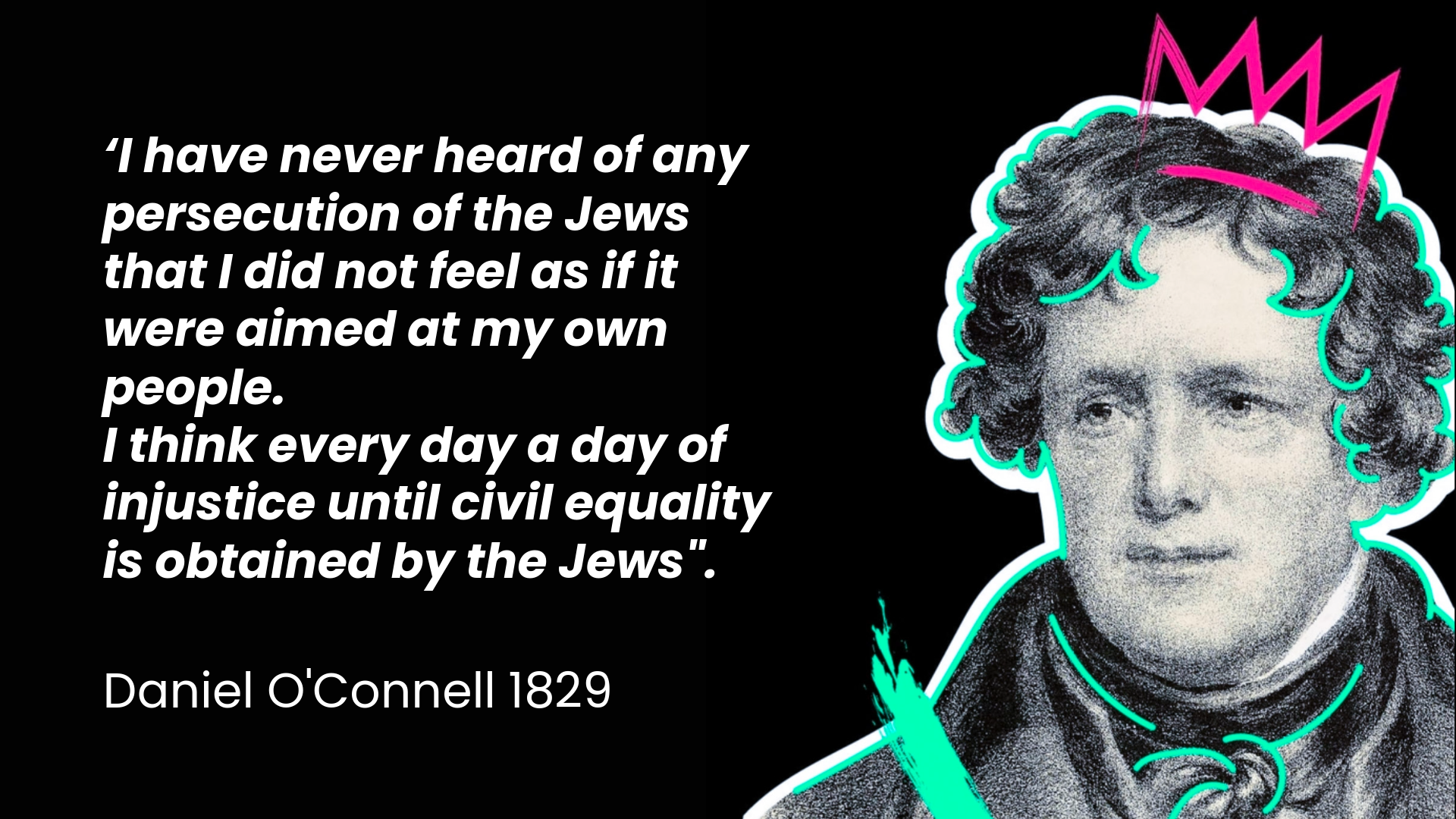
Daniel O’Connell famously decouples civic rights from religious and racial identity, declaring:
‘I have never heard of any persecution of the Jews that I did not feel as if it were aimed at my own people.’
Two decades later by a river known as Yarra Yarra flowing through the fertile village of N’aarm - Finn critiques the establishment as ‘gilded ruffians’ who ‘wear the silk of the scholar but possess the soul of the slaughter-man.’
Finn uses journalism as a form of dissent, resolving that:
‘To stay silent is to be a co-conspirator. If I cannot shout in the streets with a pike, I will whisper in the columns of the Herald until the governor’s ears bleed with the truth of his own incompetence.’
3. Institutional Birth: Territorial and Civic Legitimacy
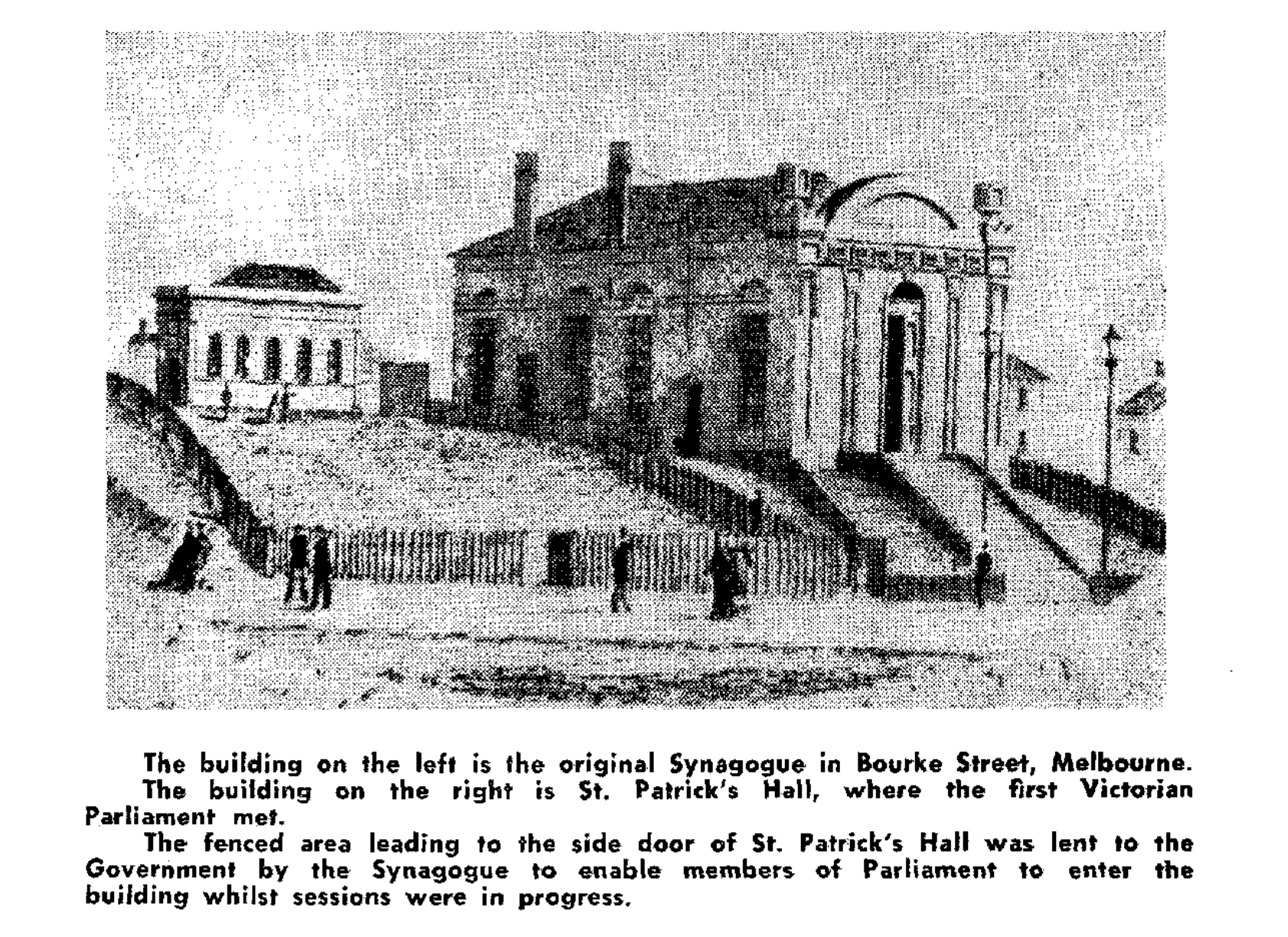
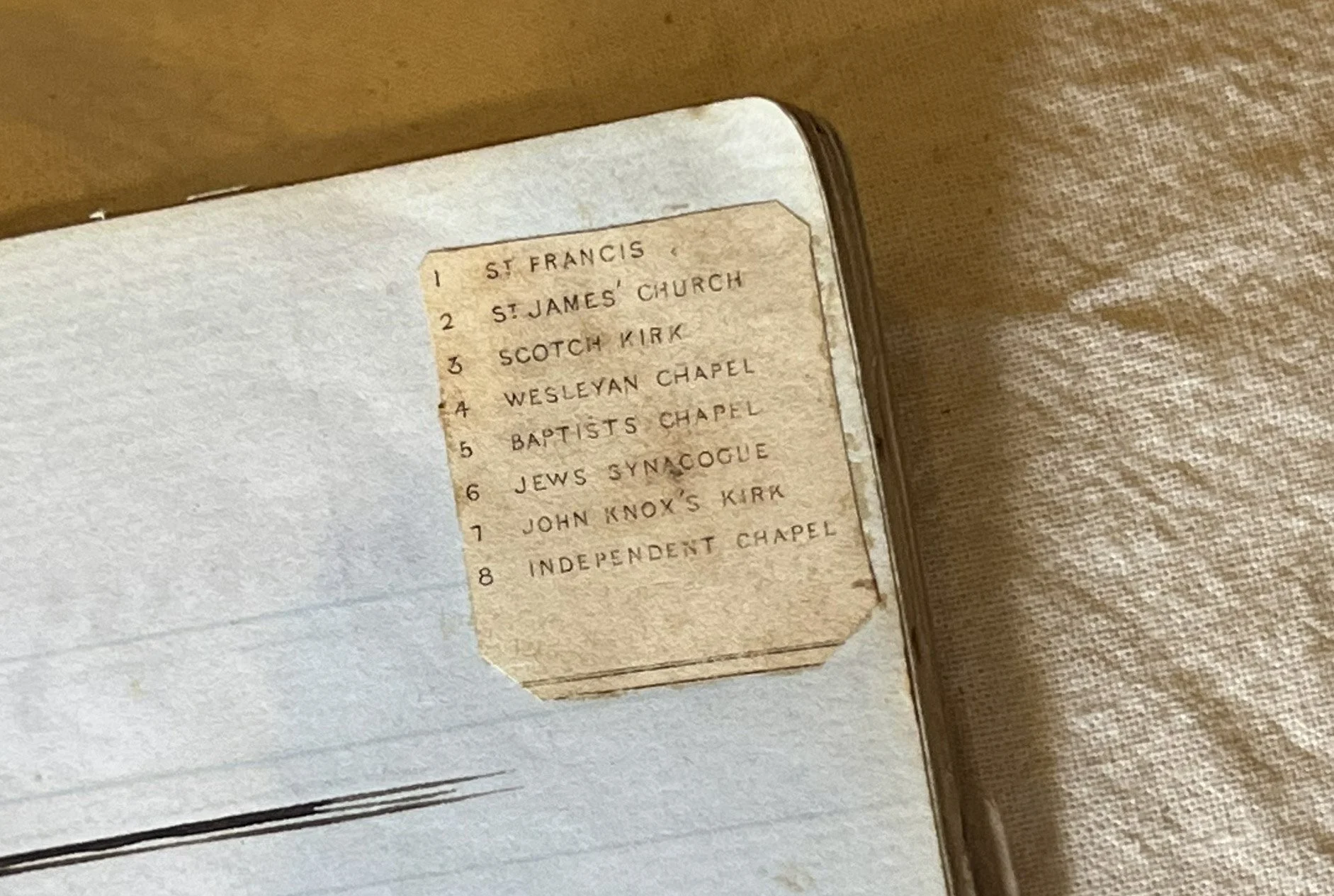
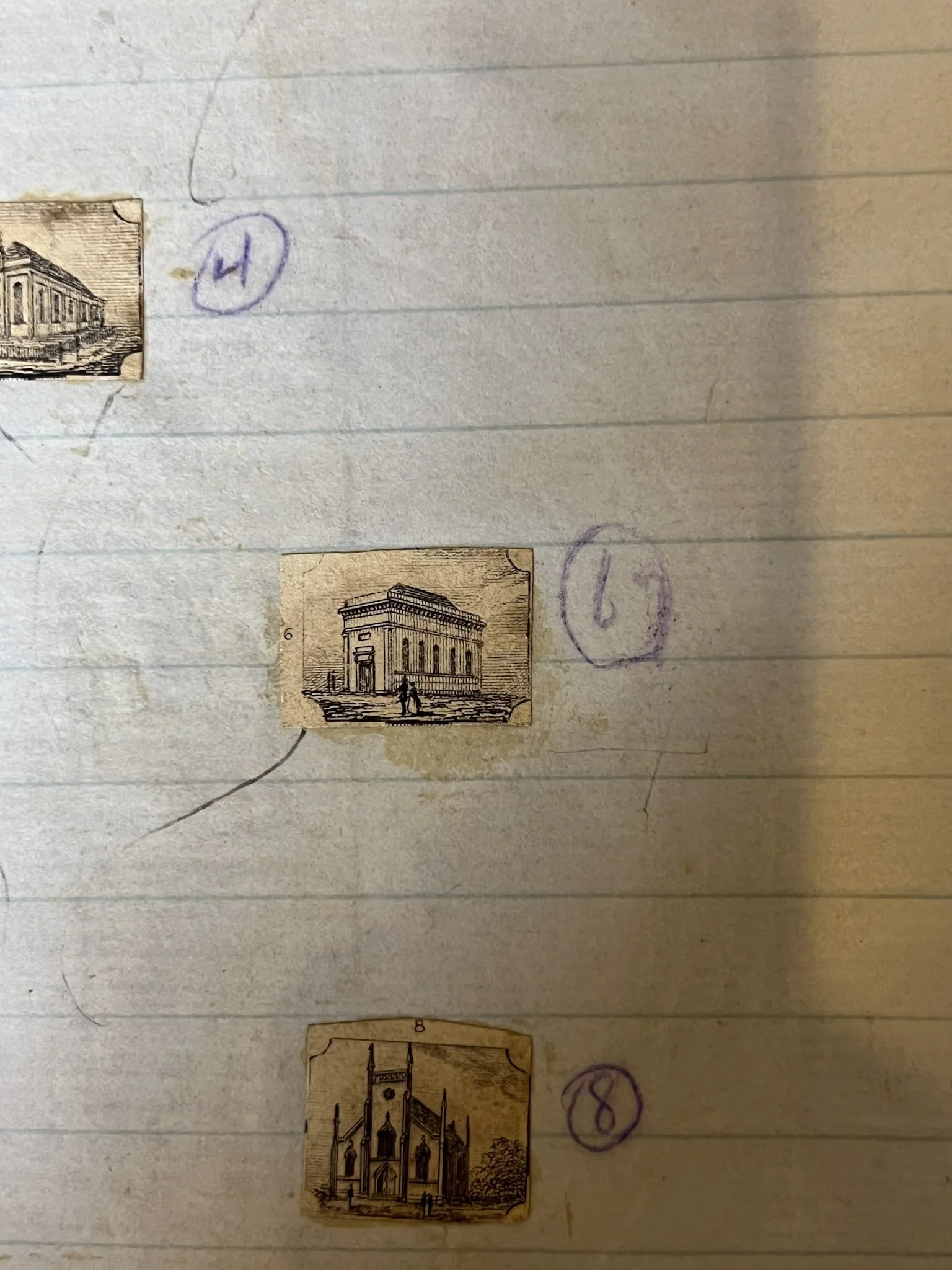
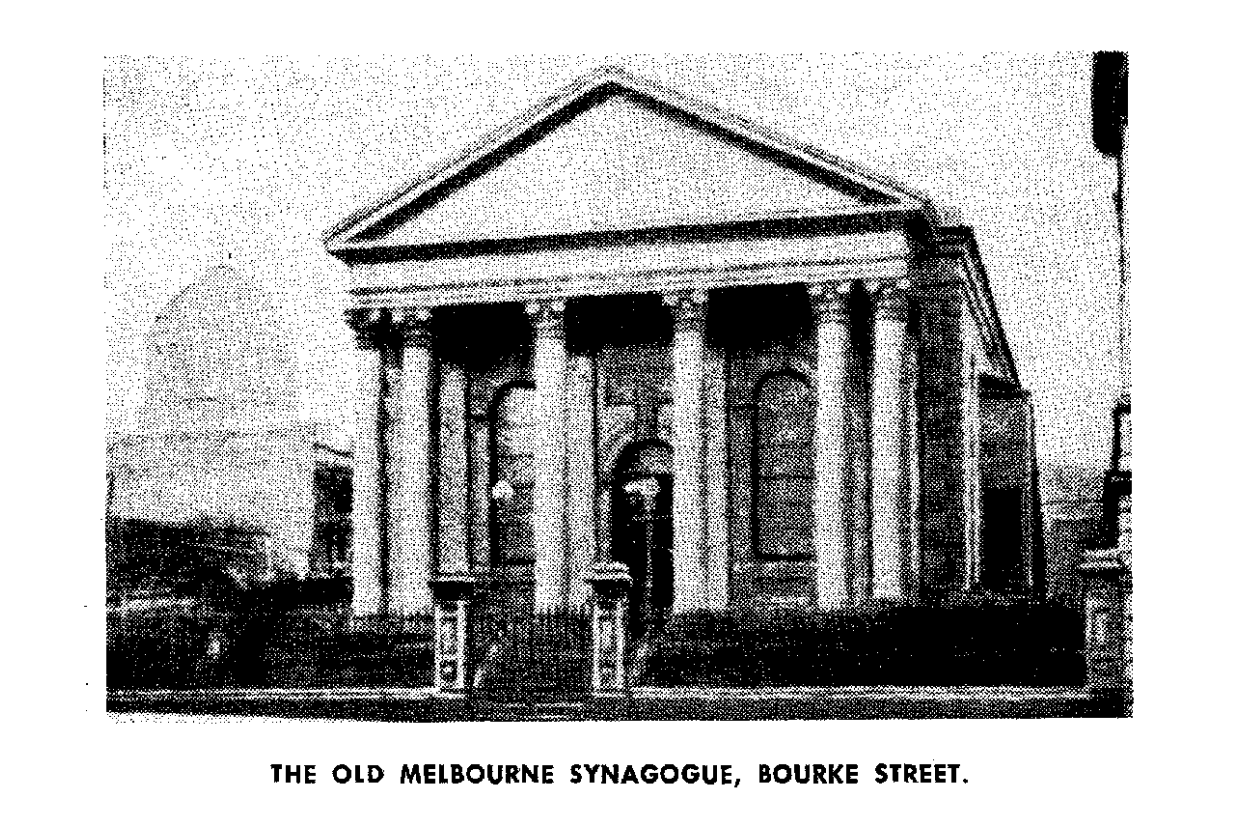
The Jewish connection to Melbourne predates the city’s formal foundation. By 1841, the Melbourne Hebrew Congregation is formally constituted. Finn’s contribution is decisively practical. Leveraging his proximity to Superintendent Charles La Trobe, Finn lobbies the administration to grant the congregation a site. This leads to the 1844 grant and the 1847 opening of the synagogue at 472 Bourke Street.
Central to Finn’s ‘philosophically didactic’ nature is his friendship with Melbourne’s first Rabbi Moses Rintel.
Ethos and pathos personified. The 24 yo Hebrew speaking Irishman and The Rabbi epitomise the higher order thinking of The Talmud.
Regarding the weight of this task, Finn notes:
‘I have been often lone and lonesome, but never more so than when, in the gathering twilight of my life, the figures of the past start up like spectres around me, demanding that their names be not blotted out from the book of the living.’
For the following historical sketch I am indebted to an honoured member of the Jewish Faith, and one of the most respected of our citizens:
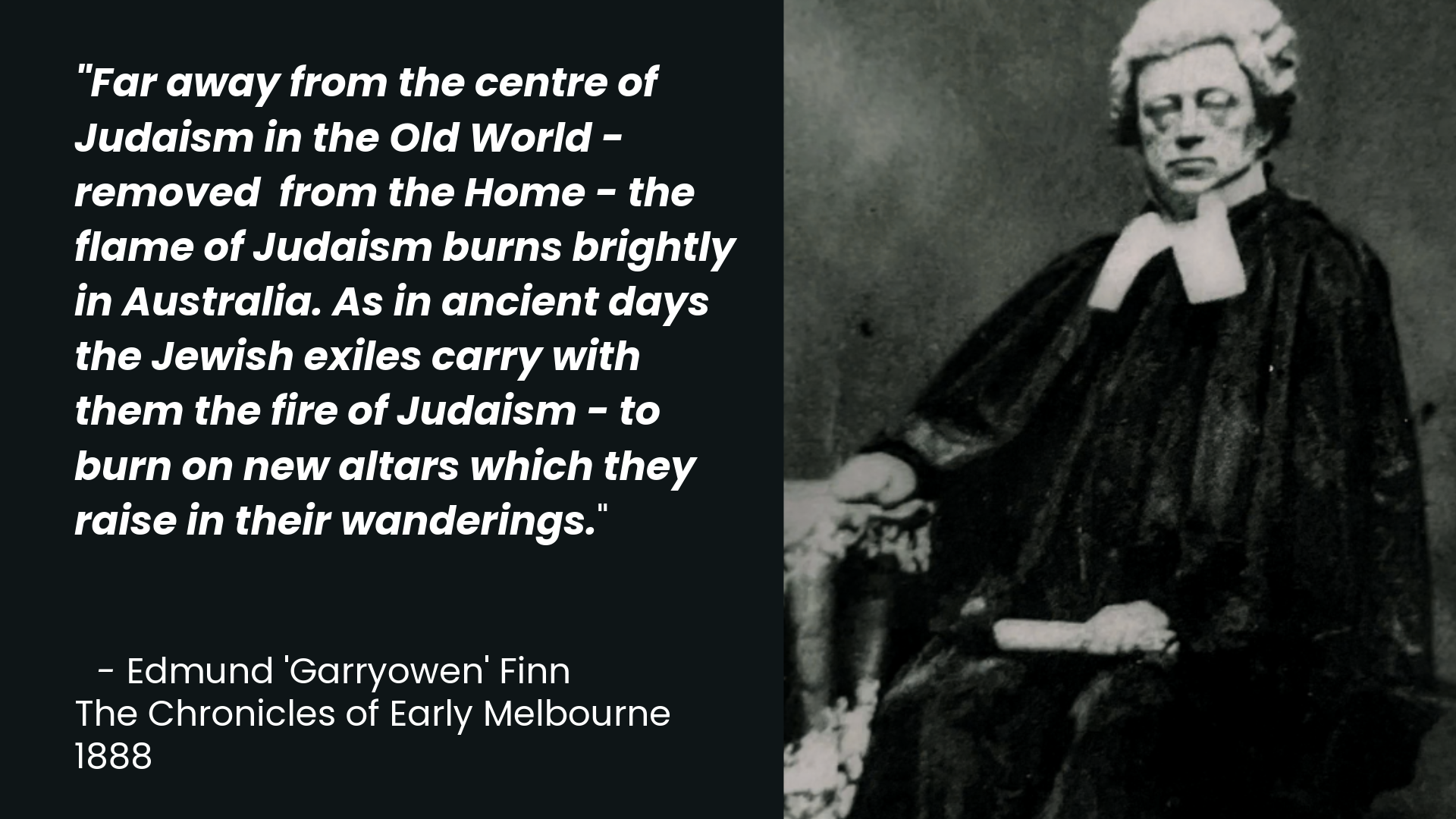
"Far away from the centre of Judaism in the Old World, and removed by leagues of land and sea, by change of climate, thought and habit, from the 'Home' the flame of Judaism yet burns brightly in Australia. As in ancient days the Jewish exiles carried fire from their altars to the strange land whither they went forth to dwell, so do the Jews of the present day, whithersoever they wander, carry with them the fire of Judaism, to burn on the new altars which they raise in their wanderings.
Yes, even in this 'Ultima Thule' this remote region, where the Jew must turn Westward rather than Eastward if he would look towards Jerusalem—where Passover occurs in the Autumn, and the Feast of Tabernacles in the Spring of the year—still, longing eyes are lifted towards the 'Holy Home,' and pious hearts beat for the Restoration.”
Edmund Finn’s Advocacy for Early Melbourne’s Jewish Community
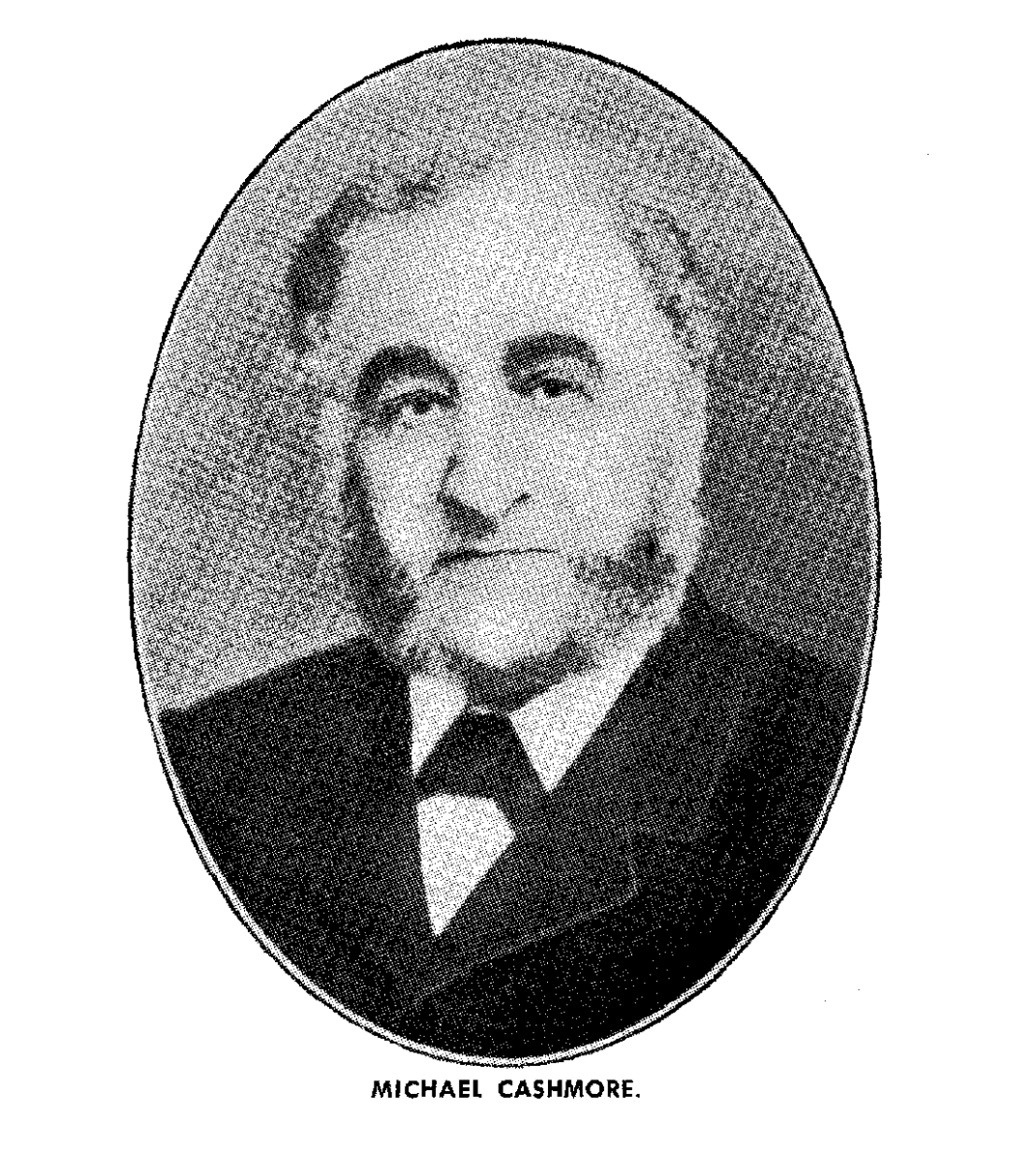

Witnessing a City into Being: Edmund ‘Garryowen’ Finn and the Architecture of Social Cohesion in Colonial Victoria
Abstract
Edmund Finn (1819–1898), writing under the pseudonym ‘Garryowen’, occupies a singular position in the historiography of colonial Melbourne. His two-volume Chronicles of Early Melbourne 1835 to 1852 (1888) constitutes the foundational primary record of the settlement's formative decades. This study interrogates the proposition that Finn's representation of Melbourne's Jewish community, the Wurundjeri, and the Irish subaltern transcends mere reportage to function as a purposive project of civic pluralism. Through a close hermeneutic analysis of the Chronicles alongside biographical and legislative contextualisation, this paper argues that Finn's inclusive documentary practice is rooted in an O’Connellite political formation and a coherent editorial philosophy that positions minority citizens as integral participants in the making of urban colonial society.
1. Introduction: The Chronicler and the Colonial Record
When Edmund Finn arrives in Melbourne on 19 July 1841, he enters a settlement of fewer than 8,000 inhabitants. During his thirteen-year tenure as a journalist for the Port Phillip Herald, Finn maintains an exhaustive record of the settlement’s development. He characterises his role as:
‘A spectator of almost everything that went on, whether the burning of a house or the founding of a Church, a a charity sermon or an execution, a public dinner or a corroboree.’
While The Argus in 1944 retrospectively dismisses Finn as ‘the Walter Winchell of his time; a merry debunker’, this characterisation ignores the empirical rigour of his work. Scholar Elizabeth Rushen identifies the Chronicles as ‘a highly original attempt at an urban social survey’, focused on the intersection of institutional growth and civic belonging. For Finn, the act of writing is not merely an exercise in nostalgia, but a necessary preservation of the city's diverse and often contested origins.
2. Transplanting Emancipation: The O’Connellite Ideology
To understand Finn’s disposition toward Melbourne’s minorities, one must analyse the O’Connellite political culture that forms him. Born in County Tipperary in 1819—a region he remarks ‘never leaves the boot’—Finn is intellectually shaped by the campaign for Catholic Emancipation.
Daniel O’Connell famously decouples civic rights from religious confession, declaring:
‘I have never heard of any persecution of the Jews that I did not feel as if it were aimed at my own people.’
This formation produces a profound antipathy toward colonial elitism. Finn critiques the Melbourne establishment as ‘gilded ruffians’ who ‘wear the silk of the scholar but possess the soul of the slaughter-man.’ He views his journalism as a form of adversarial civic engagement, resolving that:
‘To stay silent is to be a co-conspirator. If I cannot shout in the streets with a pike, I will whisper in the columns of the Herald until the governor’s ears bleed with the truth of his own incompetence.’
3. Institutional Birth: Territorial and Civic Legitimacy
The Jewish connection to Melbourne predates the city’s formal foundation. By 1841, the Melbourne Hebrew Congregation is formally constituted.
Finn’s contribution is decisively practical. Leveraging his proximity to Superintendent Charles La Trobe, he lobbies the administration to grant the congregation a site. This leads to the 1844 grant and the 1847 opening of the synagogue at 472 Bourke Street. Central to this is Finn’s ‘philosophically didactic’ friendship with Reverend Moses Rintel, the congregation's first minister. In an era of religious friction, the Irishman and the Rabbi model the very social cohesion Finn champions. Regarding the weight of this task, Finn notes:
‘I have been often "lone and lonesome," but never more so than when, in the gathering twilight of my life, the figures of the past start up like spectres around me, demanding that their names be not blotted out from the book of the living.’
4. The Universalist Gaze: The Wurundjeri and the Subaltern
Finn’s advocacy is remarkably consistent across the social spectrum.
The Wurundjeri:
Finn documents the 1839 Campaspe Plains massacre where perpetrators remain ‘unwhipt of justice.’ He famously observes:
‘We took the soil they called mother and turned it into a ledger. My heart sickens to see the campfire extinguished by the surveyor’s chain.’
The Irish Famine Orphans:
Between 1848 and 1850, Finn defends the ‘Earl Grey’ orphans against a press that treats them as ‘cattle’. He asserts:
‘These girls came with nothing but virtue and grief... They are the seeds of a new world, and I will be the fence that protects them.’
5. Narrative Integration and Social Cohesion
Finn practises what sociologists now define as social cohesion. Robert Putnam’s concept of ‘bridging capital’ maps directly onto Finn’s practice of embedding Jewish citizens within a shared narrative. Similarly, Jürgen Habermas’s theory of communicative action illuminates Finn’s use of the press as an instrument of civic recognition.
By recording the first Jewish cemetery at Merri Creek, Finn performs an act of historiographical preservation, asserting that the right to bury one’s dead in consecrated ground is ‘foundational—written into the earth of the settlement at its earliest moment.’
6. Conclusion: A Map of the Soul: The Spiritual Mandate of the Witness
Finn’s final reflection reveals a man who perceives his archival labour as a sacred, rather than merely secular, obligation. He views himself as ‘not unlike a pilgrim after a toilsome, though not disagreeable, journey,’ eventually reaching a metaphorical summit where, as at a shrine, he hangs his ‘memorial tablet.’ This imagery elevates the Chronicles from a journalistic compendium to a votive offering—a testament to a city’s birth intended to outlast its architect.
Though he claims no present adherence to ‘Spiritism,’ Finn admits to ‘abiding in a spiritual world’ during the compilation of his work. This is not a mere metaphor for memory, but a description of documented visitations from the dead. He describes an involuntary process of ‘holding communion with friends and foes alike,’ re-animating a ‘region dead and gone’ through the power of a disciplined, mystical recollection.
This 'communion' is the key to his inclusive practice; by re-acting the ‘scenes’ of the past with those who lived them, he refuses to let the subaltern voices of early Melbourne—the Jewish pioneer, the displaced Wurundjeri, and the Irish orphan—be silenced by the ‘prosaic terra firma’ of a later, more exclusionary Victorian era. Finn acts as a medium for a vanished pluralism, asserting that these figures still ‘demand’ their place in the record.
Finn writes for the ‘children of tomorrow,’ ensuring that pluralism is not a modern imposition but the city’s essential, ancestral character. He remains steadfast in the conviction that historical honesty is the only soil in which a true community can take root. For Finn, the ‘inevitable word’—the Finis that concludes all mundane existence—is mitigated by the enduring life of the record. He leaves behind a map of the soul of the city, predicated on the belief that a society’s maturity is measured by the depth of its memory and its willingness to listen to the ghosts of its foundation.
As he concludes his life’s witness:
‘I write not for the men of today, but for the children of tomorrow. I am leaving a map of the soul of this place. If they do not know where the blood was spilled, they will never know why the grass grows so green on Emerald Hill. I hear the ancients calling me. They tell me that this city is not new—it is merely the latest layer of a story that began in the dust. I am not a writer; I am a witness to a recurring truth.’
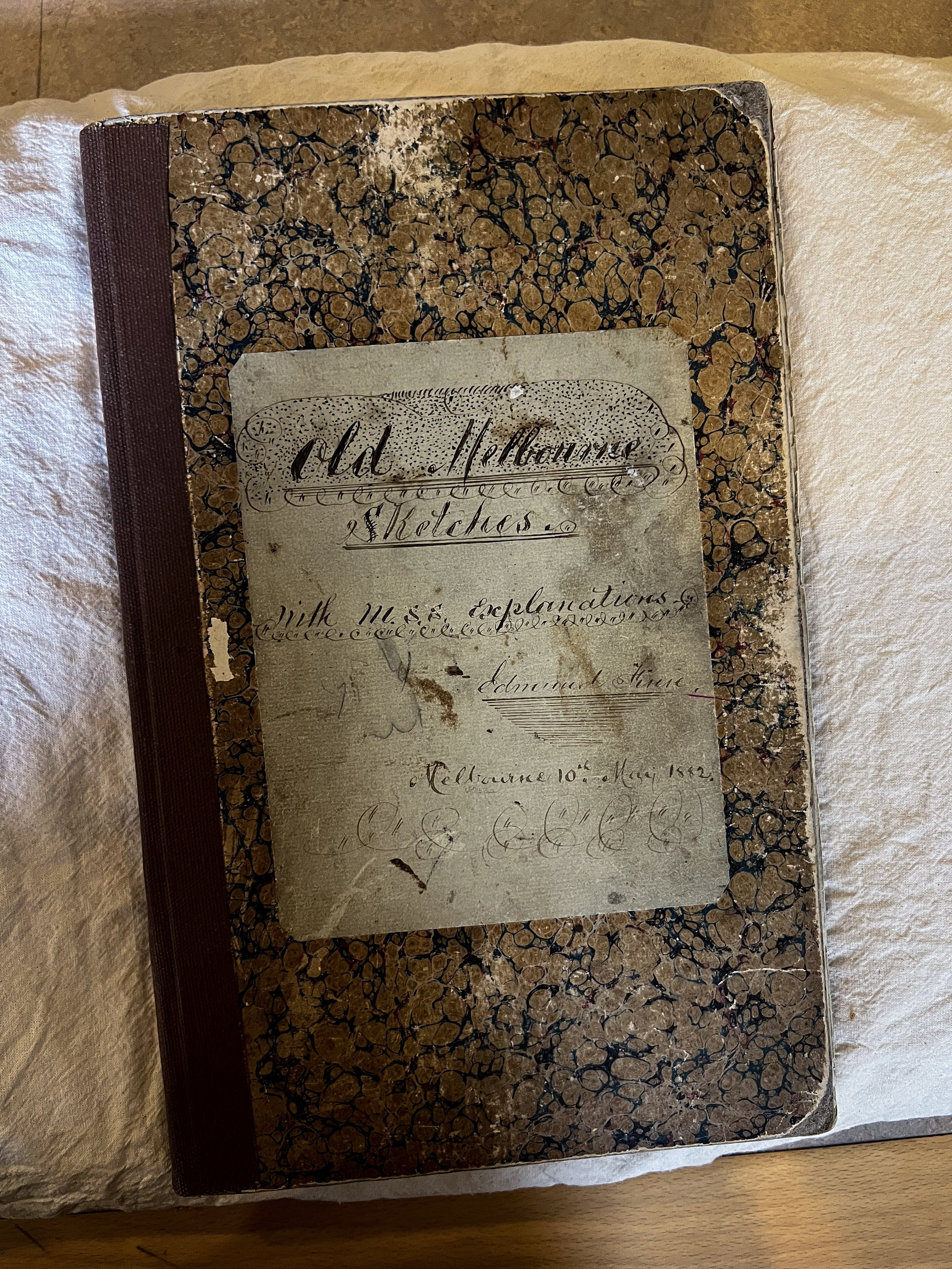
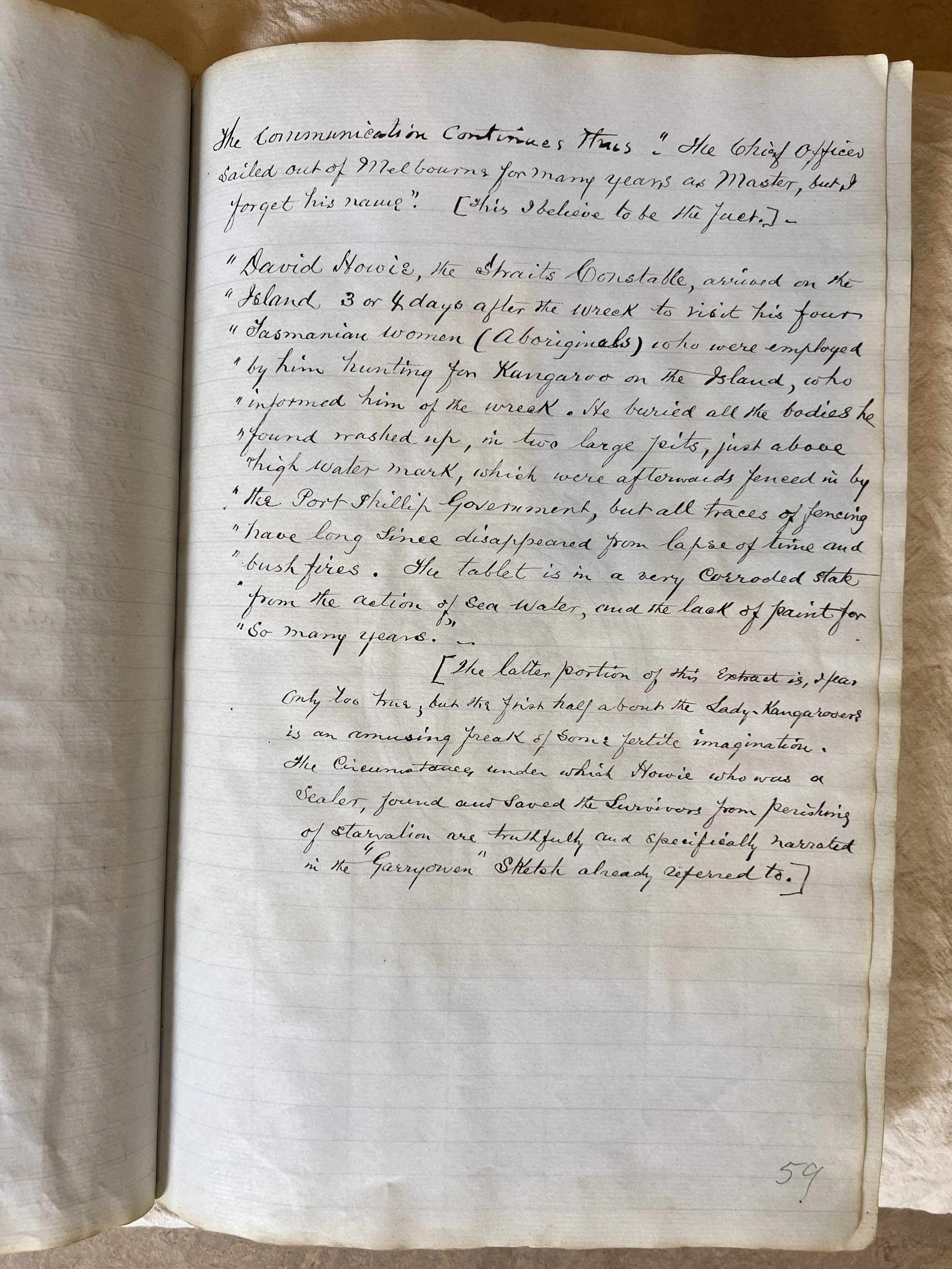
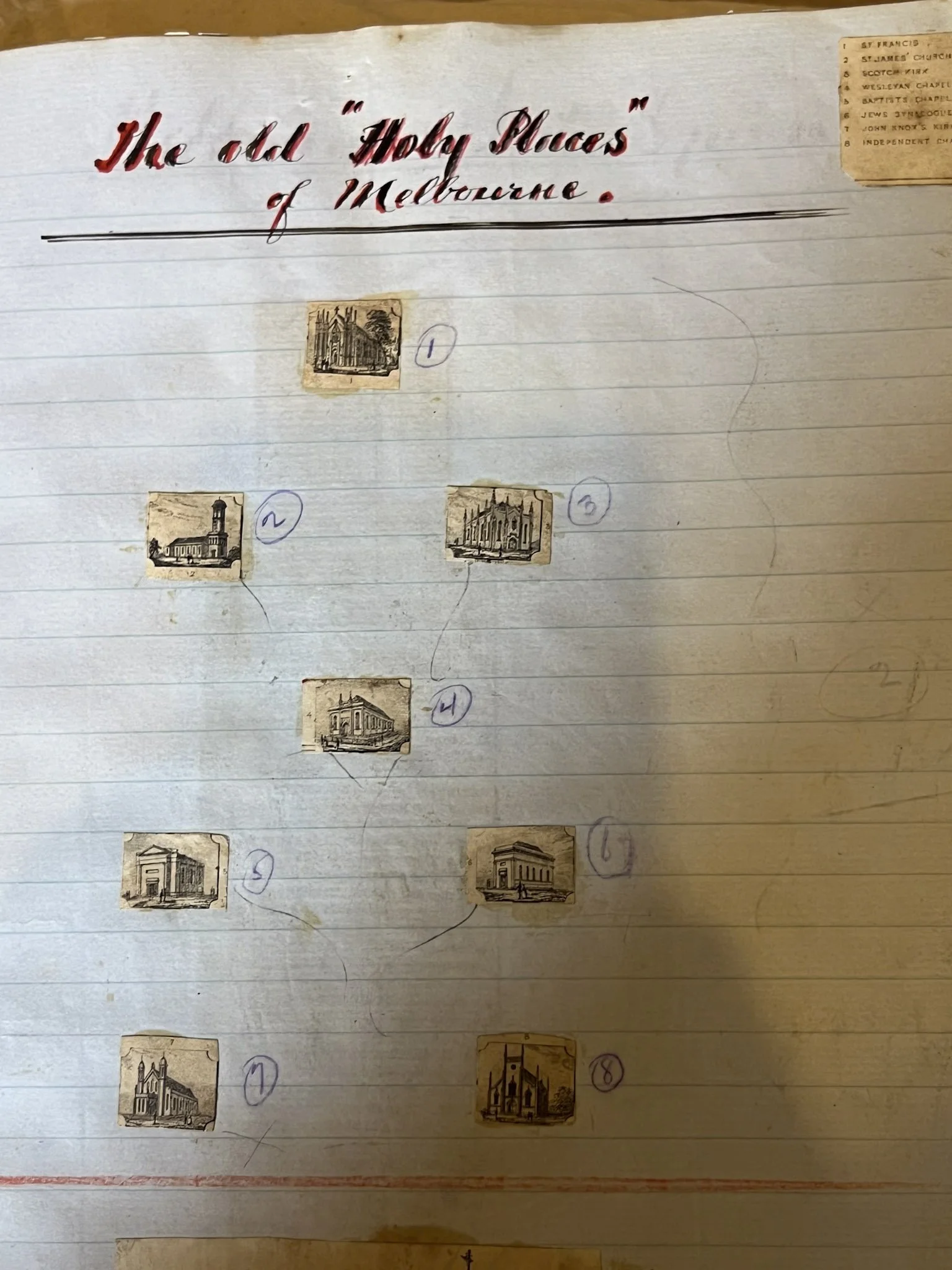
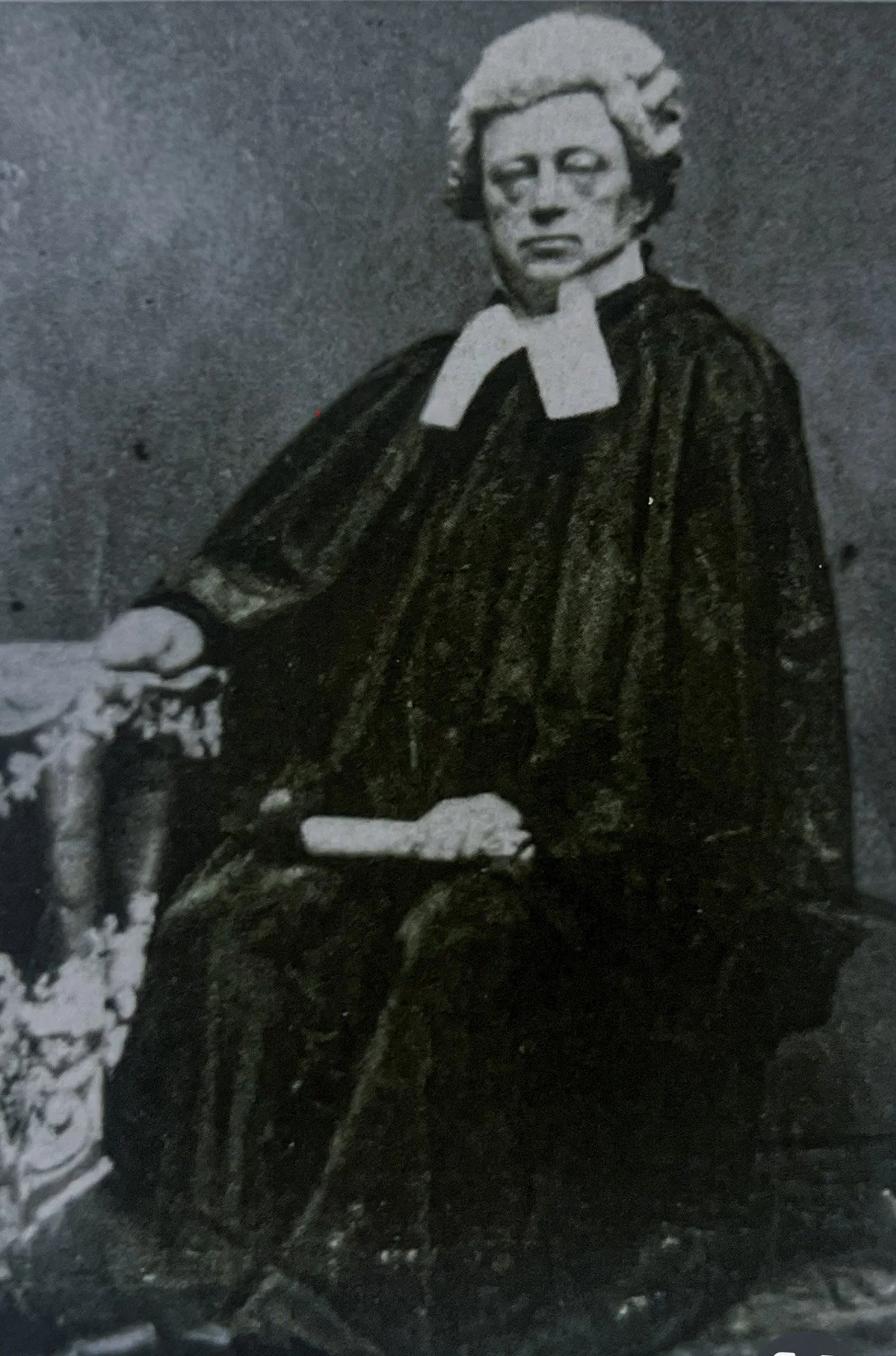
Edmund Finn
DOCUMENTING VICTORIA’S COLONIAL Jewish Community
Edmund Finn arrived in Melbourne in July 1841, twenty-one years old, educated at the prestigious Abbey School, Tipperary. With a ‘savant-level’ memory processing speed Finn would master Latin, Greek Hebrew, Shakespeare and The Classics.
An unusual formation for an ‘outsider’ Irish Catholic colonial journalist, and one that would define the fifty years of engagement with Melbourne's Jewish community documented in his private journals, in the Chronicles, and in the administrative record of the colony.
Trained within an English Protestant institutional framework Finn occupied a position from which the mechanics of colonial governance were directly visible and, on occasion, directly operable; and it is within that context — of access exercised on behalf of communities outside the established order — that his sustained relationship with Melbourne's early Jewish settlers is most accurately understood.
By the time Finn lost his sight in 1886 and retired to Leicester Street, Fitzroy, to dictate the Chronicles from memory, Dr Elizabeth Rushen's research in the State Library of Victoria private journals records that he was dreaming in Hebrew — a detail that measures, more precisely than any administrative record, the depth and duration of the relationship.
II. Hebrew in Colonial Melbourne
Melbourne's early Jewish settlers arrived primarily from Britain and Central Europe, with Yiddish as their vernacular tongue; Hebrew, by contrast, was not a language of daily commerce or domestic life but the language of Torah, of liturgy, and of the sacred legal record of the faith, and Finn's fluency was therefore specifically liturgical and scholarly — he had learned to read the community's most authoritative texts in their own terms, at a time when Jewish residents in Port Phillip were formally excluded from State Aid to Religion and occupied a position, as the Chronicles would record, 'somewhat outside the pale of official favour.'
III. Before the Congregation
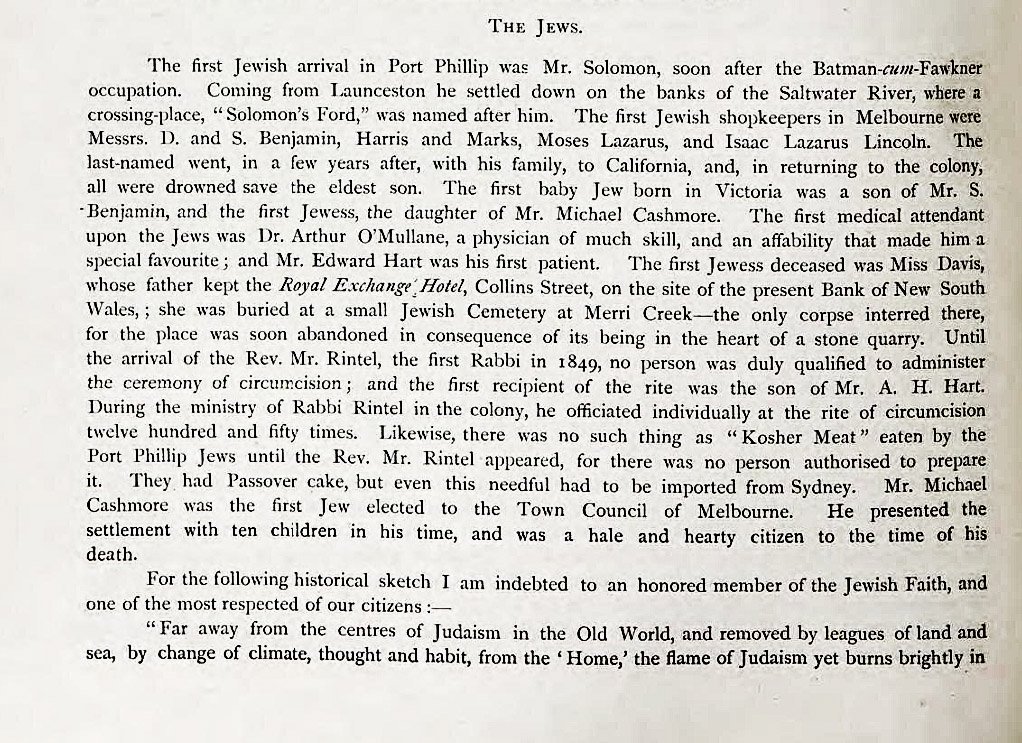
Finn's account of the Jewish community in Chapter XIV of the Chronicles begins not with the formal establishment of the congregation but with the earliest Jewish presence in the colony — a single man, Mr Solomon, who arrived from Launceston shortly after the Batman and Fawkner settlements, settled on the banks of the Saltwater River, and gave his name to a ford that appears in the geographical record before any congregational structure existed to document it.
‘The first Jewish arrival in Port Phillip was Mr. Solomon, soon after the Batman-cum-Fawkner occupation. Coming from Launceston he settled down on the banks of the Saltwater River, where a crossing-place, 'Solomon's Ford,' was named after him.’
— Garryowen, Chronicles of Early Melbourne, Chapter XIV
The first Jewess to die in Port Phillip, Miss Davis — daughter of the proprietor of the Royal Exchange Hotel in Collins Street — was buried at a small cemetery at Merri Creek, the only burial made there before the site was abandoned as unusable, having been found to occupy the centre of a working stone quarry; Finn records her full identity, her father's name and address, and the precise circumstances of the burial ground's abandonment.
‘She was buried at a small Jewish Cemetery at Merri Creek — the only corpse interred there, for the place was soon abandoned in consequence of its being in the heart of a stone quarry.’
— Garryowen, Chronicles of Early Melbourne, Chapter XIV
IV. The First Minyan and the Naming of the Congregation
The first minyan in Port Phillip was held on the New Year Festival of 1840, completed when Edward and Isaac Hart arrived from Sydney a few days before the New Year and brought the number of adult male worshippers to the required quorum of ten; Finn records it with the Hebrew calendar date given alongside the colonial date, the two chronologies placed as equal designations of the same event.
‘On the New Year Festivals of 1840, Divine Service with a full Minyon was held for the first time in Port Phillip, Messrs. Edward and Isaac Hart having arrived a few days before the New Year, they completed the number (10) of male adults required for that purpose.’
— Garryowen, Chronicles of Early Melbourne, Chapter XIV
On the 21st of January 1844 — the 29th of Tiveth, 5604 in the Hebrew calendar — a general meeting resolved to name the congregation, adopting 'The Holy Congregation of a Remnant of Israel' as its formal designation, with A. H. Hart as President, S. Benjamin as Treasurer, and Michael Cashmore as Honorary Secretary.
‘At a general meeting held on Sunday the 29th day of 'Tiveth,' 5604 a.m. (21st January, A.D. 1844) it was unanimously resolved: That this congregation be designated — 'The Holy Congregation of a Remnant of Israel.'’
— Garryowen, Chronicles of Early Melbourne, Chapter XIV
Finn publishes details about his ‘dear friend’ - A. H. Hart — Asher Hymen Hart — as the congregation's essential founding figure, having served as Honorary Lay Reader for years before any ordained Rabbi could be secured, performing ministerial functions in the absence of any ordained authority.
‘This gentleman must be regarded as the pioneer who cleared the way and acclimatised, so to speak, the practices and ordinances of the Jewish religion in this Colony. He not only gave time and means in aid of the congregation, but also acted for many years in the capacity of Honorary Lay Reader, and performed the functions of a Minister until the services of a duly authorised and properly qualified Rabbi could be secured.’
— Garryowen, Chronicles of Early Melbourne, Chapter XIV — on A. H. Hart
V. The 1847 Land Grants
In 1847, serving simultaneously as Honorary Secretary of the St Patrick's Society and Clerk of the Legislative Council, Finn's name appears in the inscription placed in the foundation stone of St Patrick's Hall in West Bourke Street in March of that year; five months later, in August, the foundation stone of the first synagogue in Melbourne was laid in Bourke Street West, the scroll placed in the cavity translated in full in the Chronicles alongside the prayer spoken at the ceremony.
‘In 1844 a valuable and central piece of land, situated in Bourke Street West, was procured from the Government, mainly through the exertions of the zealous and indefatigable Mr. A. H. Hart. In 1847 an unpretentious but suitable brick building was erected thereon. This was the first structure erected for public Jewish worship in this Colony.’
— Garryowen, Chronicles of Early Melbourne, Chapter XIV
‘May this structure prove to us the happy effects of brotherly love. May it teach us to embrace the pure doctrines of our Holy faith, as a means whereby we may learn to be happy. May it teach us to practice charity in its purest sense, which inculcates 'Love thy neighbour as thyself,' whereby we may live in the bonds of harmony and peace.’
— Foundation Stone Prayer — translated in Chronicles, Chapter XIV
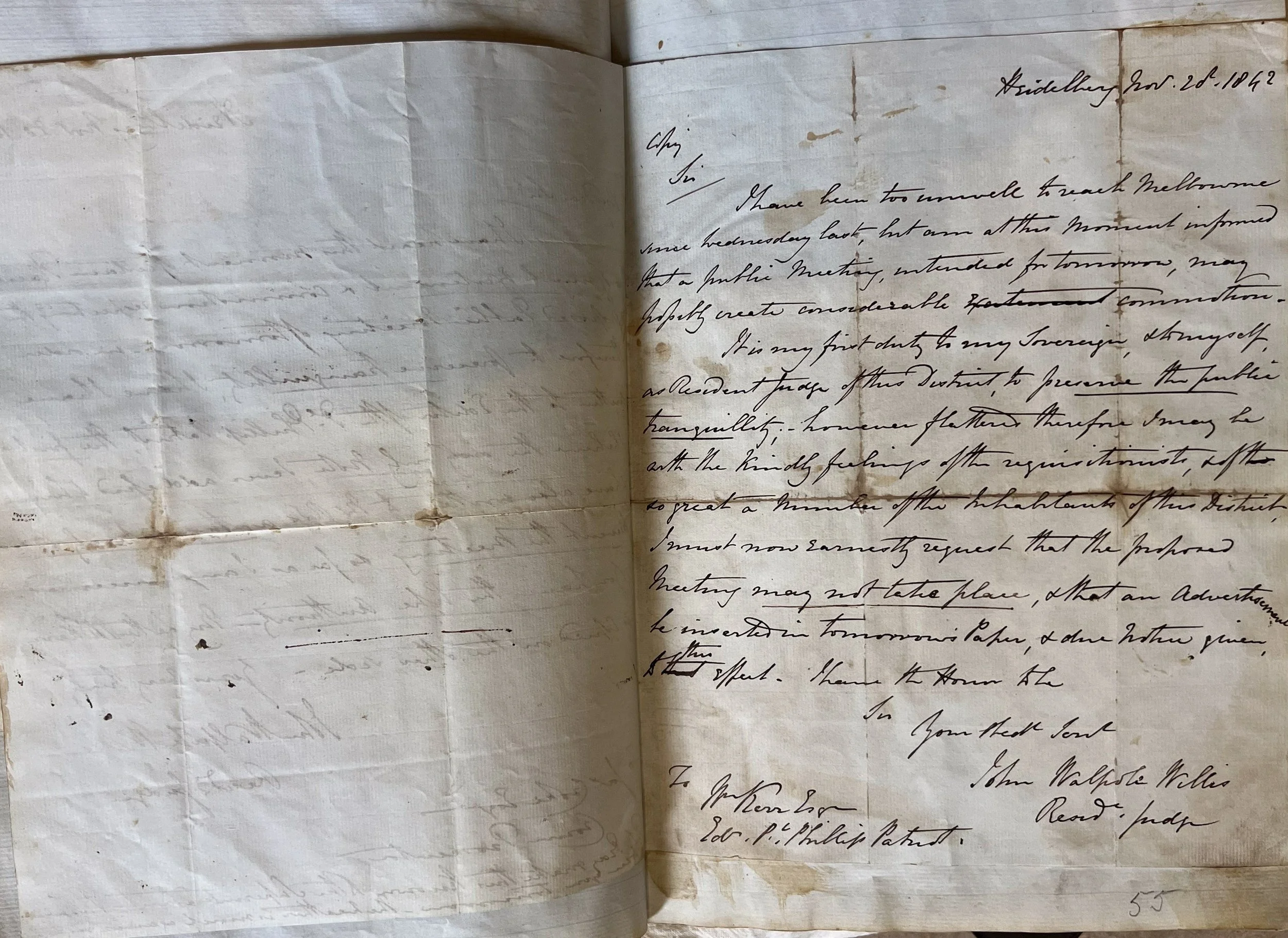
Three years later, the New South Wales Executive formally refused the Jewish community of Port Phillip a grant of five hundred pounds from the State Aid for Religion Fund; a public meeting was convened on the 25th of August 1850 to protest the decision — the anniversary of the synagogue's foundation stone.
VI. The Editorial Act
Chapter XIV contains an extended historical account of Melbourne's Jewish community included in full, and published in the Chronicles with an explicit attribution —
'For the following historical sketch I am indebted to an honoured member of the Jewish Faith, and one of the most respected of our citizens'
‘ placing the community's own account of its history inside the foundational document of colonial Melbourne at a time when Jewish residents had been formally refused State Aid and had buried their dead in a stone quarry.
‘Far away from the centres of Judaism in the Old World, and removed by leagues of land and sea, by change of climate, thought and habit, from the 'Home' the flame of Judaism yet burns brightly in Australia. As in ancient days the Jewish exiles carried fire from their altars to the strange land whither they went forth to dwell, so do the Jews of the present day, whithersoever they wander, carry with them the fire of Judaism, to burn on the new altars which they raise in their wanderings.’
— Voice of 'an honoured member of the Jewish Faith' — published by Finn in Chronicles, Chapter XIV
Rebecca Catherine Finn's Editor's Preface of December 1888 describes her father as 'the recognised Ultima Thule of archaic reference in the Colony,'
noting that
'in the archives of his brain lie concealed mental registrations of anterior events such as, probably, have no other existence' a characterisation that applies with particular force to the Jewish community documentation, given that Finn's Chapter XIV account remains the primary published record of the congregation's foundation.
VII. Leicester Street, Fitzroy — Christmastide, 1888
Finn signed his preface to the Chronicles at Leicester Street, Fitzroy, at Christmas 1888 — two years into his blindness, the text compiled by dictation with his daughter Rebecca Catherine Finn transcribing — and signed it not as Garryowen but as Edmund Finn, describing the Chronicles as 'a votive offering to hang before her shrine' and offering, in a single subordinate clause, his most precise account of his relationship to the city: 'a city which, through all its ups and downs, and manifold vicissitudes, I liked better than it liked me.'
‘A city which, through all its ups and downs, and manifold vicissitudes, I liked better than it liked me.’
— Edmund Finn, Preface to The Chronicles of Early Melbourne, Christmastide 1888
APPENDIX
1. Edmund Finn ('Garryowen'), The Chronicles of Early Melbourne 1835 to 1852: Historical, Anecdotal and Personal, 2 vols (Melbourne: Fergusson and Mitchell, 1888), Preface.
2. 'Edmund Finn (Garryowen)', The Argus, December 1944, cited in 'Edmund (Garryowen) Finn', Australian Media Hall of Fame, Melbourne Press Club, 2017.
3. Elizabeth Rushen, 'Memorialising Early Melbourne: Garryowen's Historical, Anecdotal and Personal Perspective', Monash University Research Repository (2022).
4. Elizabeth Rushen, Garryowen Unmasked: The Life of Edmund Finn (Melbourne: Anchor Books Australia, 2022), p. 12.
5. Religious Opinions Relief Act 1846 (9 & 10 Vict. c. 59). The Act extended civil protections to Jewish subjects throughout British possessions.
6. Melbourne Hebrew Congregation, 'Early History', melbournesynagogue.org.au; Victorian Parliament, Oaths of Office Simplification Bill 1857.
7. John Batman, Journal, 8 June 1835, cited in 'Jews and Judaism', eMelbourne: The Encyclopedia of Melbourne Online, emelbourne.net.au.
8. Melbourne Hebrew Congregation, 'Early History'.
9. 'Jews and Judaism', eMelbourne.
10. Sue Silberberg, A Networked Community: Jewish Melbourne in the Nineteenth Century (Melbourne: Royal Historical Society of Victoria, 2024), p. 3.
11. Melbourne Hebrew Congregation, Wikipedia, last modified 2025.
12. Darebin Libraries, 'Jewish Cemetery, Northcote', libraries.darebin.vic.gov.au.
13. Martin Flanagan, cited in 'Edmund (Garryowen) Finn', Australian Media Hall of Fame.
14. Robert D. Putnam, Bowling Alone: The Collapse and Revival of American Community (New York: Simon & Schuster, 2000), pp. 22–24.
15. Jürgen Habermas, The Structural Transformation of the Public Sphere, trans. Thomas Burger (Cambridge: MIT Press, 1989), pp. 27–31.
16. Darebin Libraries, 'Jewish Cemetery, Northcote'.
17. Silberberg, A Networked Community, passim; Rushen, Garryowen Unmasked, pp. 89–102.
Bibliography
Primary Sources
Finn, Edmund ('Garryowen'). The Chronicles of Early Melbourne 1835 to 1852: Historical, Anecdotal and Personal. 2 vols. Melbourne: Fergusson and Mitchell, 1888.
Finn, Edmund ('Garryowen'). The 'Garryowen' Sketches: Historical, Local and Personal. Melbourne: A. McKinley & Co., 1880.
Secondary Sources
Habermas, Jürgen. The Structural Transformation of the Public Sphere. Translated by Thomas Burger. Cambridge: MIT Press, 1989.
O'Grady, P. E. 'Edmund Finn (Garryowen)'. Victorian Historical Magazine 15 (1935): 108–110.
Putnam, Robert D. Bowling Alone: The Collapse and Revival of American Community. New York: Simon & Schuster, 2000.
Rushen, Elizabeth. Garryowen Unmasked: The Life of Edmund Finn. Melbourne: Anchor Books Australia, 2022.
Rushen, Elizabeth. 'Memorialising Early Melbourne: Garryowen's Historical, Anecdotal and Personal Perspective'. Monash University Research Repository, 2022.
Silberberg, Sue. A Networked Community: Jewish Melbourne in the Nineteenth Century. Melbourne: Royal Historical Society of Victoria, 2024.
Reference Works & Institutional Sources
'Edmund (Garryowen) Finn'. Australian Media Hall of Fame. Melbourne Press Club, 2017.
'Finn, Edmund (1819–1898)'. Australian Dictionary of Biography. National Centre of Biography, Australian National University. First published 1966.
'Jews and Judaism'. eMelbourne: The Encyclopedia of Melbourne Online. emelbourne.net.au.
Melbourne Hebrew Congregation. 'Early History'. melbournesynagogue.org.au.
Melbourne Hebrew Congregation. Wikipedia. Last modified 2025.
History of the Jews in Australia. Wikipedia. Last modified 2025.
Darebin Libraries. 'Jewish Cemetery, Northcote'. libraries.darebin.vic.gov.au.
State Library Victoria. 'Garryowen'. ergo.slv.vic.gov.au.
Victoria. 'Jewish Community Profile'. vic.gov.au.
World Jewish Congress. 'Community in Australia'. worldjewishcongress.org.
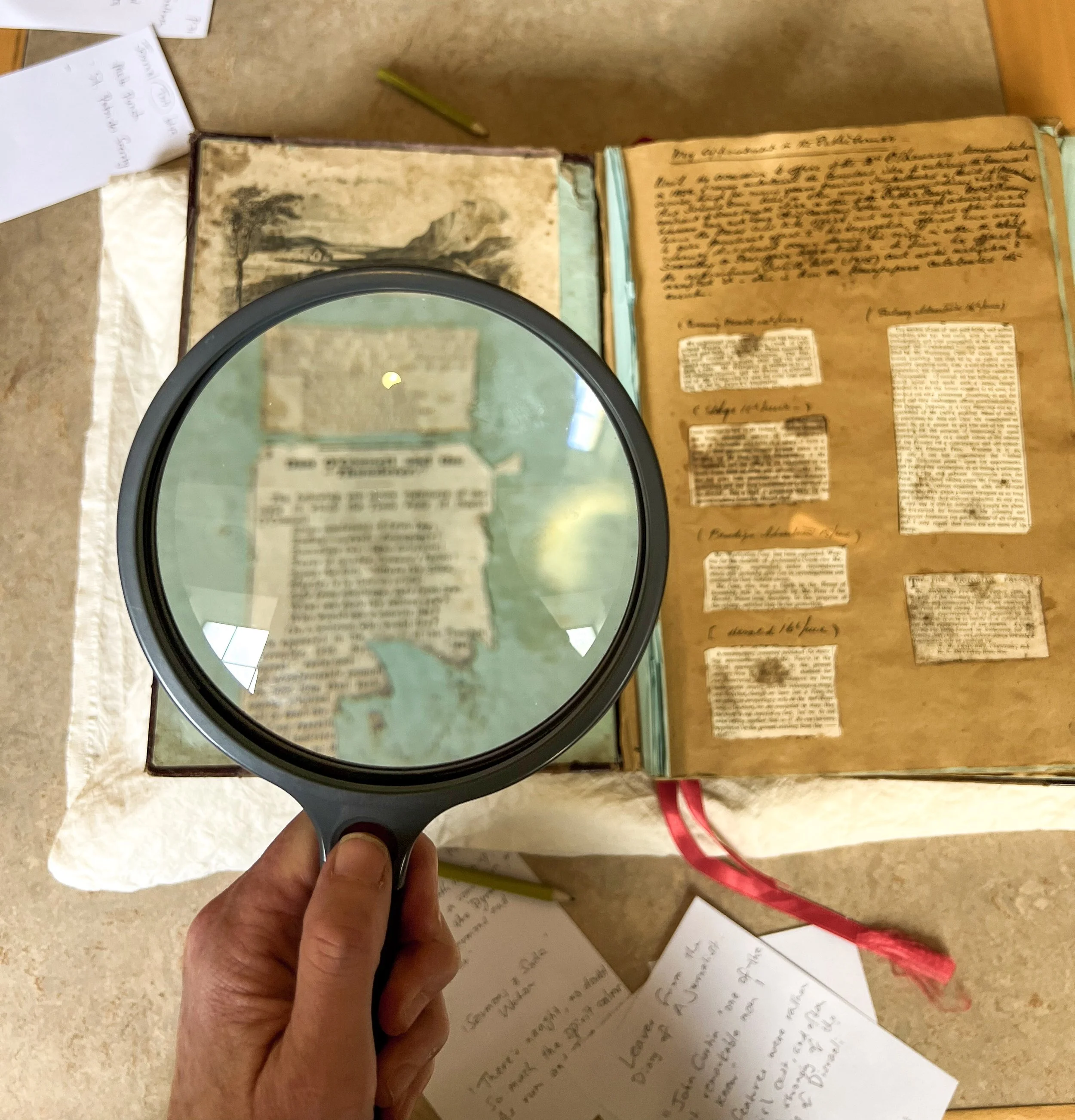
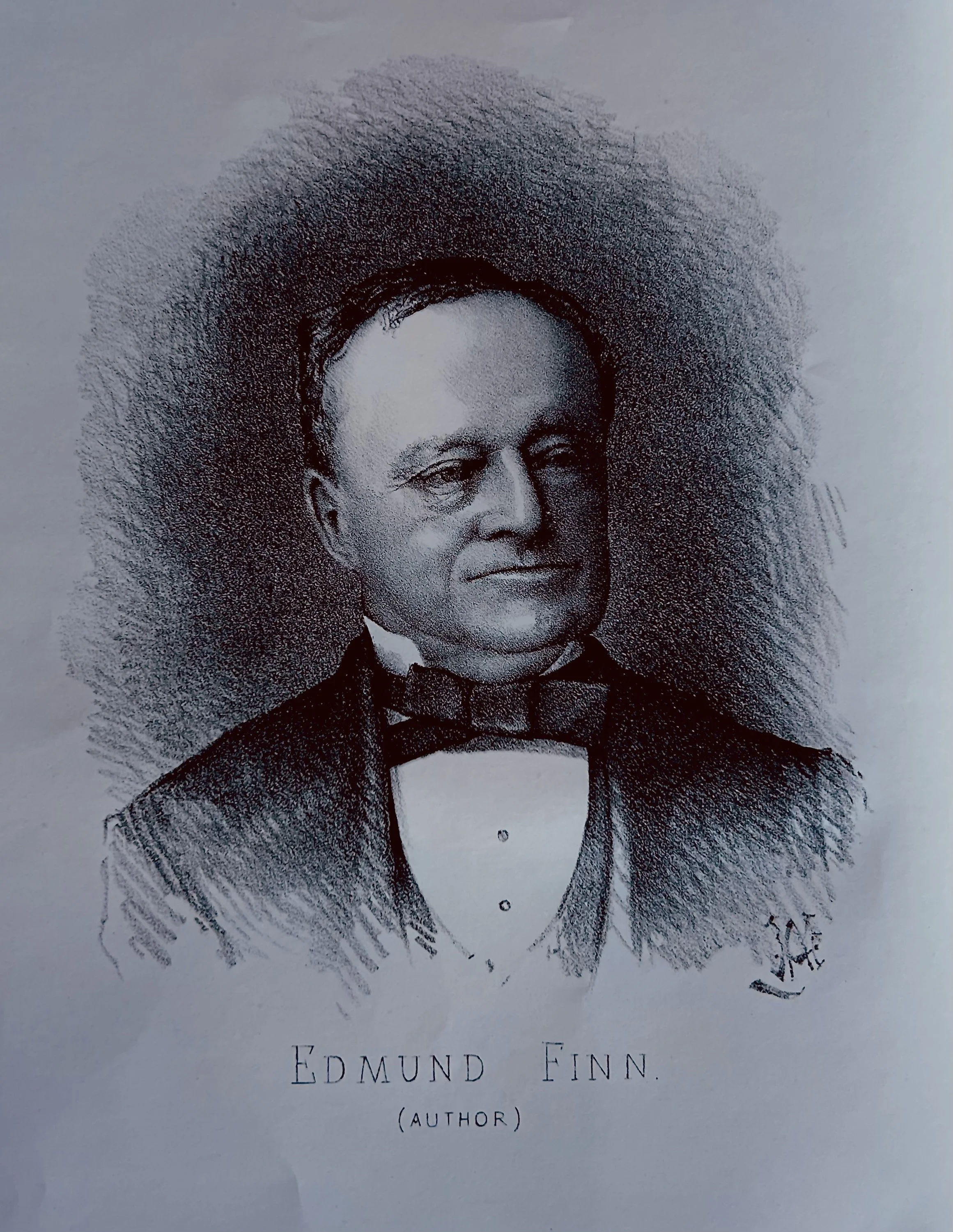
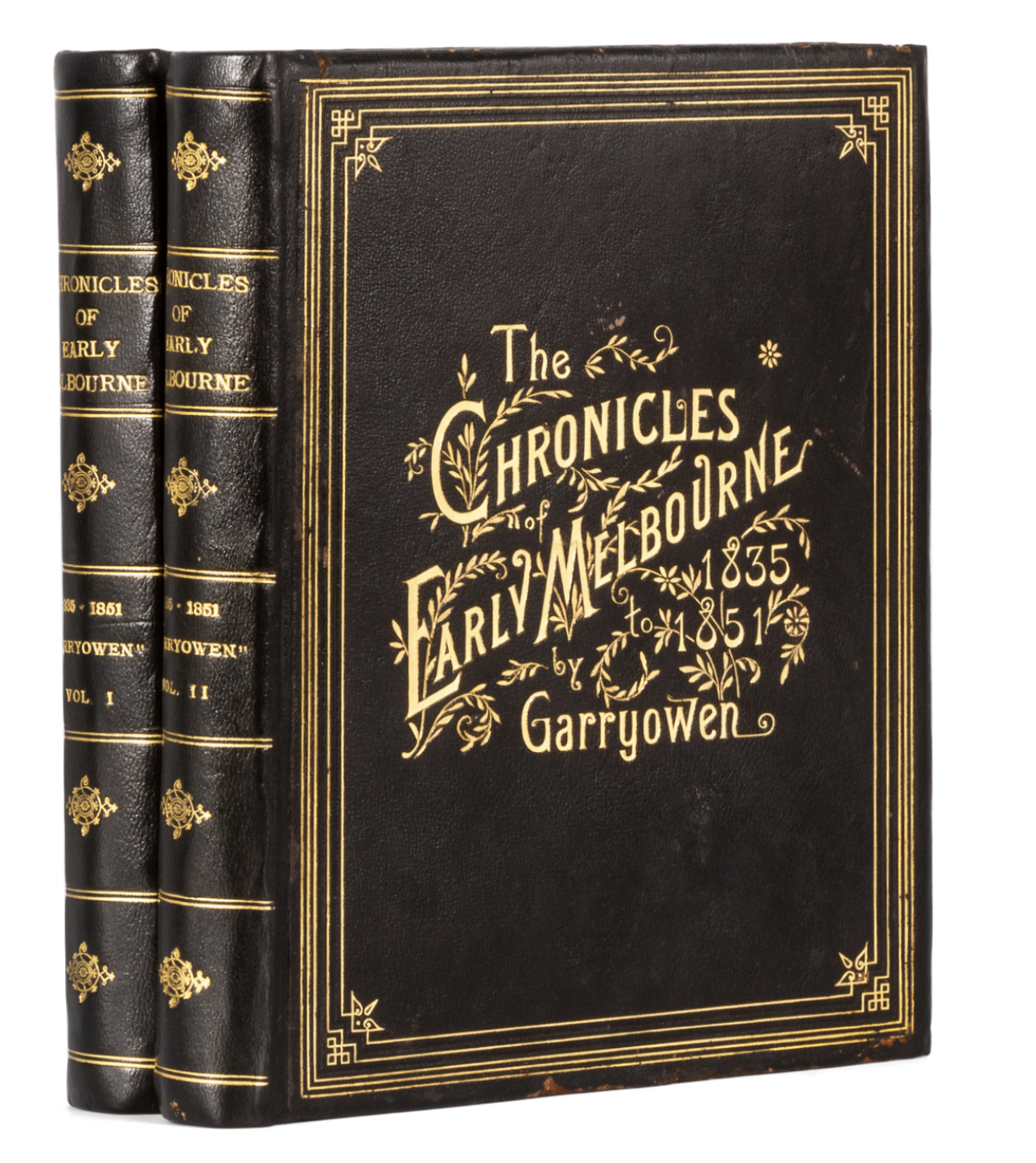
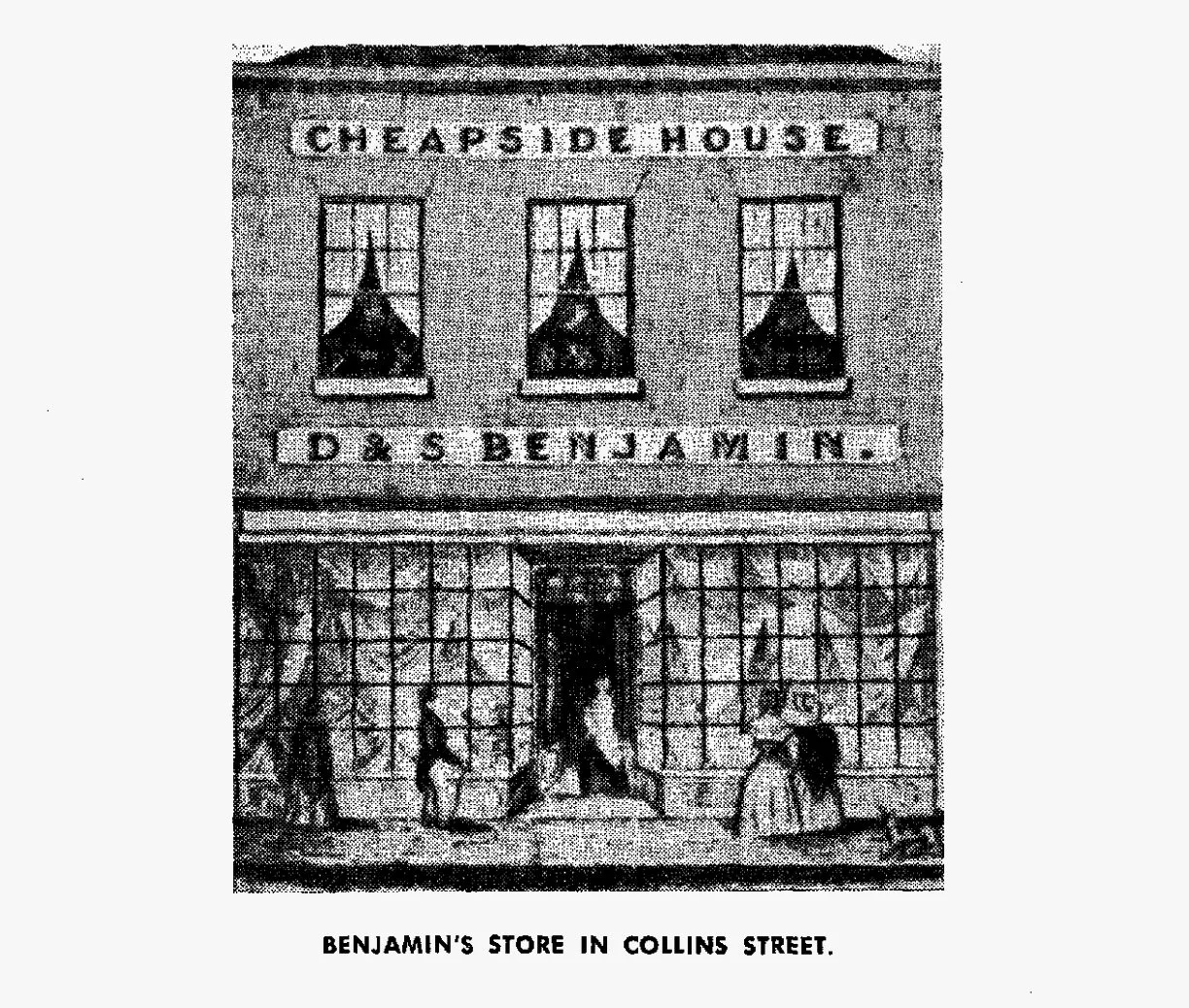
For the following historical sketch I am indebted to an honored member of the Jewish Faith, and one of the most respected of our citizens:
"Far away from the centres of Judaism in the Old World, and removed by leagues of land and sea, by change of climate, thought and habit, from the 'Home' the flame of Judaism yet burns brightly in Australia. As in ancient days the Jewish exiles carried fire from their altars to the strange land whither they went forth to dwell, so do the Jews of the present day, whithersoever they wander, carry with them the fire of Judaism, to burn on the new altars which they raise in their wanderings. Yes, even in this 'Ultima Thule' this remote region, where the Jew must turn Westward rather than Eastward if he would look towards Jerusalem—where Passover occurs in the Autumn, and the Feast of Tabernacles in the Spring of the year—still, longing eyes are lifted towards the 'Holy Home,' and pious hearts beat for the Restoration.